
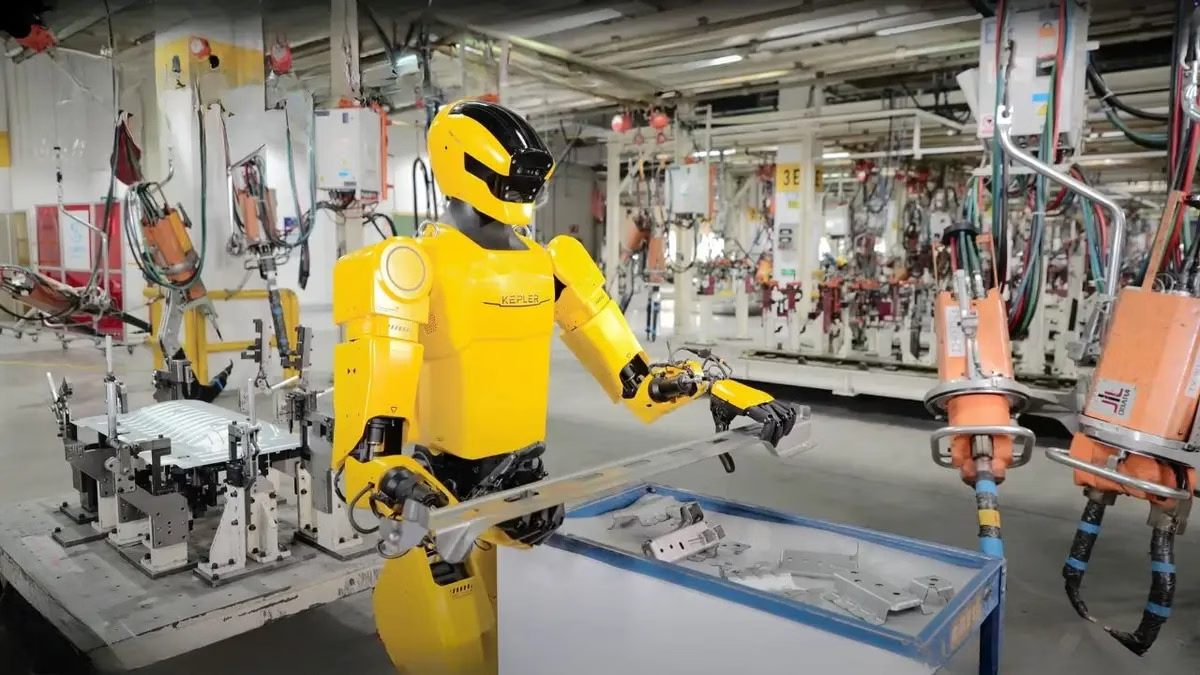

General Motors has installed around 50 robotic arms at its Factory Zero plant in Detroit. However, nearly 1,300 workers remain temporarily laid off from the facility. The decision has sparked criticism from the United Auto Workers (UAW).
The newly installed robotic arms were manufactured by Japan’s FANUC. They will assist vehicle assembly by attaching components during production. Meanwhile, employees affected by March layoffs have not returned to work.
Union Criticizes Growing Factory Automation
The UAW argued GM should recall laid-off workers before expanding automation. Local 22 President James Cotton said more than 1,000 union members remain laid off indefinitely. Therefore, he questioned the company’s decision to deploy additional robots.
The March layoffs followed permanent job cuts affecting another 1,200 Factory Zero employees. Those reductions took place in October 2025. Consequently, union leaders continue raising concerns over workforce reductions.
Worker representatives believe automation should improve workplace safety and productivity. However, they argue companies increasingly use technology to reduce labor costs.
Automakers Continue Investing in Robotics
GM joins several major automakers expanding factory automation across the United States. Stellantis and Ford have also deployed FANUC robotic arms in their production facilities. As a result, automation continues growing throughout the automotive industry.
Meanwhile, Hyundai plans to introduce Atlas humanoid robots at its Georgia EV factory by 2028. Boston Dynamics developed Atlas before Hyundai acquired the robotics company in 2020.
Union organizer Andrew Bergman said automation could shorten working hours without reducing wages. Nevertheless, he argued companies primarily use advanced technology to increase profits while cutting jobs.

