
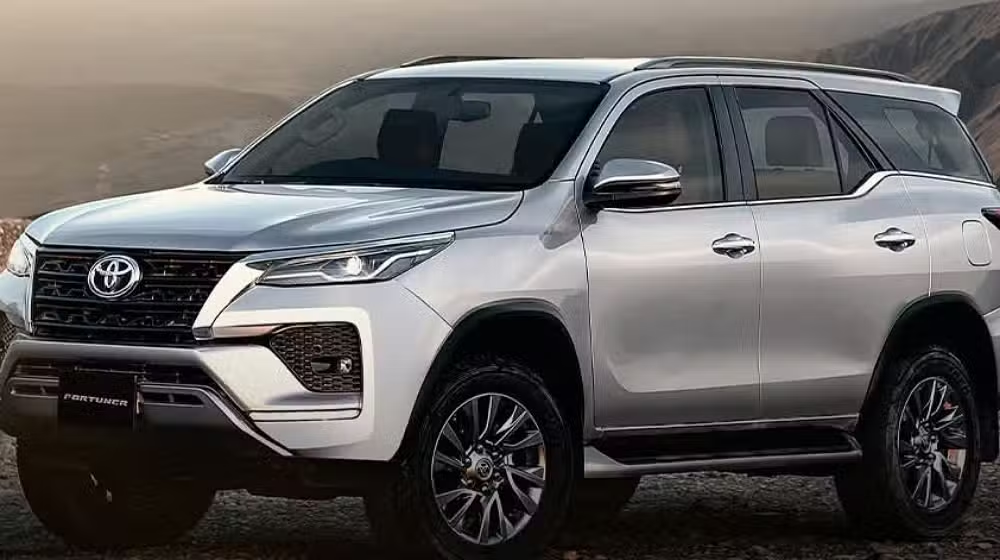

Indus Motor Company (INDU) has raised concerns over the classification of some range-extended electric vehicles (REEVs) in Pakistan. The company believes some competitors may be declaring vehicles under the REEV category to benefit from lower GST rates. Regulators, including the Federal Board of Revenue (FBR), are reviewing the matter.
Indus Motor management expects the issue to be resolved soon, potentially creating more consistent tax treatment across competing vehicles.
Indus Motor Raises REEV Classification Concerns
The company discussed the issue during its 37th Annual General Meeting, following the release of its FY2026 financial results.
Management said the regulatory review could help create a more level playing field for automakers.
A REEV uses an electric motor to drive the wheels. However, it also carries an internal combustion engine that generates electricity to recharge the battery.
This differs from a conventional battery electric vehicle, which relies entirely on electricity stored in its battery.
Why REEV Classification Matters
The classification has significant implications because different vehicle categories can face different GST rates. Pakistan’s Customs Classification Committee previously placed REEVs under the same HS code as battery electric vehicles. The decision focused on the fact that an electric motor alone drives the vehicle’s wheels.
However, the Pakistan Automotive Manufacturers Association (PAMA) challenged this classification.
PAMA argued that REEVs function as series hybrids because they still contain an internal combustion engine and require fuel.
Therefore, the ongoing regulatory review could affect the tax treatment of several vehicles entering Pakistan’s growing electric vehicle market.
Toyota Awaits New Auto Policy
Indus Motor also discussed its future electric and plug-in hybrid vehicle strategy. Management said Toyota offers vehicles across global segments using the latest technologies. However, the company will finalise its local launch strategy after the government approves and announces the new auto policy.
The policy will therefore play an important role in determining Toyota’s future EV and PHEV plans for Pakistan.
Meanwhile, automakers continue to monitor changes in taxation, localisation requirements and incentives for cleaner vehicles.
Indus Motor Plans Rs5 Billion FY2027 Investment
Indus Motor also outlined its investment plans for the coming financial year. The company expects to spend between Rs4 billion and Rs5 billion in FY2027. A significant focus will remain on increasing the localisation of vehicle parts and components.
Higher localisation could help the company strengthen its domestic supply chain and reduce dependence on imported components.
Gross Margins Decline in FY2026
Indus Motor’s financial performance also came under discussion during the annual meeting. The company’s gross margin declined to 10.3% in the fourth quarter of FY2026, compared with 13.3% during the same period a year earlier. The margin also stood below the 15.5% recorded in the third quarter of FY2026.
Management attributed the decline to strategic pricing and higher dealer incentives aimed at supporting marketing and vehicle sales.
Company Builds Inventory Amid Shipment Delays
Indus Motor also increased its inventory to manage shipment delays linked to the ongoing geopolitical situation. The company said higher inventory levels could reduce the risk of production disruptions if supply chains face further delays.
At the same time, Hilux sales declined during FY2026, partly because government purchases fell amid the ongoing war.
The company continues to monitor external risks that could affect shipments, production and vehicle demand.
REEV Decision Could Shape Auto Competition
The regulatory review of REEV classification remains important for Pakistan’s automotive industry. If regulators change or clarify the existing classification, automakers could face different tax implications depending on how their vehicles qualify. For Indus Motor, resolving the issue could help address differences in GST treatment between competing products.
At the same time, the company is preparing for the next phase of Pakistan’s automotive market through greater localisation and potential EV and PHEV launches.
The final regulatory decision, along with the government’s new auto policy, could therefore influence how manufacturers position electric and hybrid vehicles in Pakistan.
For the latest updates, visit and follow The Truth International website (www.thetruthinternational.com) and subscribe to the YouTube Channel.

