
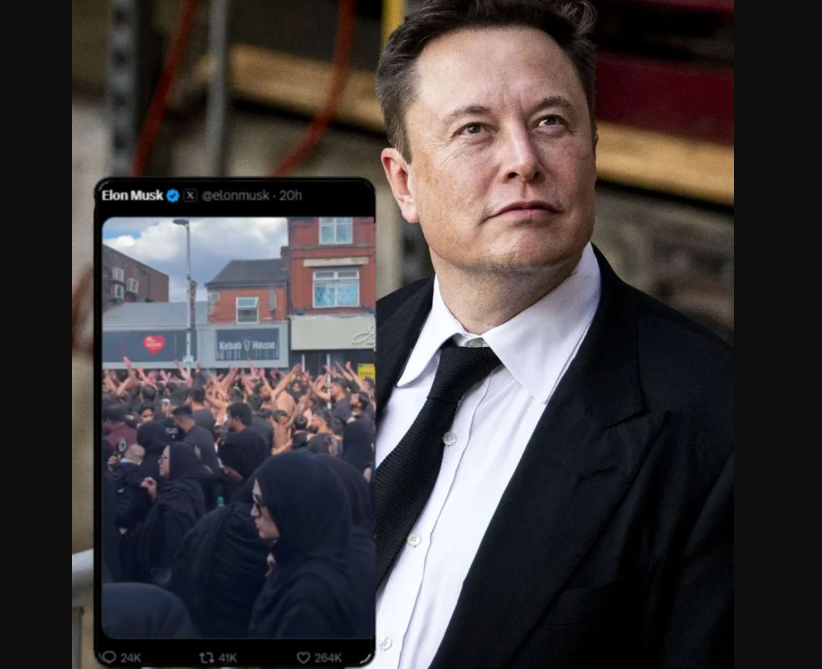

Elon Musk faced widespread criticism on social media this week after sharing a post related to a Muharram procession held somewhere in the West. The post quickly gained attention and triggered a heated online debate, with users questioning its context and intent.
As reactions intensified, thousands of comments appeared across the platform. While some users defended Musk’s right to share content freely, others argued that the post reflected selective attention toward Muslim religious gatherings.
Social Media Users Question the Context
Several users challenged the reason behind sharing the post and asked whether similar content involving other religious communities receives equal attention.
One user directly accused Musk of bias and questioned the motivation behind publishing the content without additional explanation.
Among the most engaged replies was a comment stating, “Bet he won’t share this clip from NYC,” accompanied by footage showing a large Jewish gathering in New York.
The user argued that religious gatherings take place regularly across different communities and should not be treated differently.
As a result, discussions moved beyond the original post and expanded into broader conversations about fairness and online narratives.
Debate Expands Beyond the Original Post
Another widely circulated reply included a meme that questioned migration patterns in the region.
The post suggested that many families had been displaced because of conflict and military action.
At the same time, another user posted: “Shia’s are the worst nightmare of Epstein class,” alongside an old photograph of Iran’s Supreme Leader, Ayatollah Ali Khamenei.
Meanwhile, another commenter directly criticised Musk and wrote, “Just say you are racist, no need to hide anymore.”
These reactions reflected growing divisions among users over how influential public figures discuss religion and public gatherings online.
Users Raise Questions About Equal Treatment
Many commenters argued that large religious events are common around the world and should not become controversial simply because of the faith involved.
One widely shared response stated:
“What exactly is your point? I don’t understand. This photo shows tens of thousands of Jews gathered in the heart of New York. So what is the issue with thousands of Muslims gathering in a society that includes tens of millions of Christians to observe one of their religious rituals?”
Supporters of this view argued that context matters when public figures share images or videos involving religious communities.
Others maintained that social media reactions often become polarised before the original message is fully understood.
Online Reactions Remain Divided
The discussion continued to grow as users debated whether the response would have been different if another religious group had been involved.
Some viewed the criticism as justified and called for greater responsibility from influential online personalities.
Others argued that sharing public content should not automatically be interpreted as endorsement or hostility.
As the debate unfolded, the conversation shifted from one social media post to broader questions about perception, public influence, and how religious discussions unfold online.
The controversy once again highlighted how quickly online platforms can turn a single post into a wider conversation about identity, fairness, and public accountability.

