
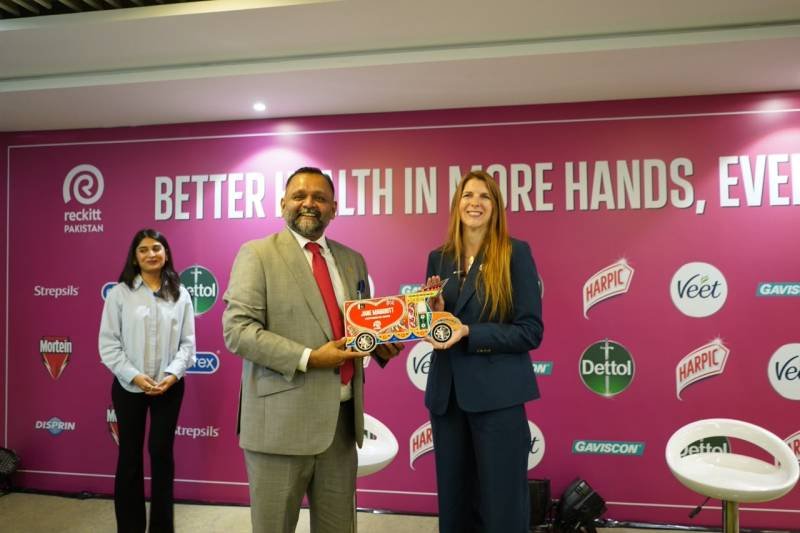

British High Commissioner Jane Marriott visited Reckitt Pakistan’s head office in Karachi to discuss public health and hygiene initiatives.
During the visit, she met the company’s leadership team and employees. The discussions focused on Pakistan’s evolving public health landscape and improving access to health and hygiene solutions.
The visit also highlighted Reckitt Pakistan’s more than 70-year presence in the country. The company reaffirmed its commitment to improving health outcomes through trusted brands and community-focused programmes.
Focus on Health and Hygiene Challenges
Officials discussed some of Pakistan’s most pressing public health challenges. They explored opportunities to improve health outcomes through awareness, accessibility and innovation.
Reckitt shared details of its expanding social impact agenda. The company aims to increase access to health and hygiene solutions across communities nationwide.
A key topic involved the role of trusted hygiene products in everyday life. Company representatives highlighted how products such as Dettol Antiseptic Liquid continue supporting household health and safety.
The discussions also emphasised the importance of practical solutions that help families maintain healthier lifestyles.
Leaders Highlight Importance of Partnerships
Speaking during the visit, Reckitt Pakistan General Manager Asif Hashmi reaffirmed the company’s long-term commitment to the country.
He said Reckitt continues improving lives through trusted brands, strategic partnerships and purpose-driven initiatives. He added that these efforts create meaningful impact across communities.
Meanwhile, Jane Marriott praised the company’s school hygiene programme. She said practical initiatives can deliver measurable benefits for children and local communities.
The British High Commissioner noted that better health and hygiene support stronger educational outcomes and future opportunities. She also stressed the importance of partnerships that transform commitments into real-world impact.
The visit reinforced the value of collaboration between public and private stakeholders. It also highlighted the need for long-term efforts to address Pakistan’s evolving public health challenges and build healthier communities.

