
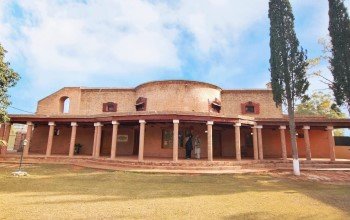

A 174-year-old British-era administrative compound in Bannu has been restored after decades of neglect and deterioration. The project aims to preserve the region’s historical heritage while returning the site to official government use.
The compound was built in 1852 during the tenure of British officer John Nicholson. It served as the main administrative and judicial centre for southern districts, where officials managed government affairs, conducted court proceedings and held tribal jirgas.
Known as the deputy commissioner’s compound, the complex includes a courthouse, judicial buildings, a jirga hall, a guardhouse and several government offices. Consequently, it remained the region’s administrative hub for nearly two centuries.
Restoration Project Preserves Historic Landmark
Bannu Division Commissioner Khalid Mahmood said the restoration project cost Rs138.4 million. The Khyber Pakhtunkhwa government fully funded the initiative.
Mahmood said the project focused on preserving the compound’s historical importance while making the buildings suitable for modern government operations. Furthermore, he described the site as a significant part of the subcontinent’s administrative history.
“The Bannu historic compound is far more than a collection of bricks and stones,” Mahmood said. He added that restoring the landmark would help preserve its legacy for future generations.
Historic Buildings Gain Modern Facilities
According to senior official Kifayatullah, Bannu served as the administrative headquarters of present-day southern Khyber Pakhtunkhwa during British rule. Therefore, the compound played a central role in managing regional affairs.
After Pakistan’s creation, the buildings received limited maintenance and gradually fell into disrepair. However, the divisional administration launched a comprehensive restoration programme several months ago.
The project included structural repairs, conservation work and extensive renovations while preserving the original architectural character. Meanwhile, officials equipped the restored buildings with modern facilities without altering their historic design.
The restored compound now combines colonial-era architecture with contemporary amenities. As a result, it has become an attractive destination for visitors, historians and heritage enthusiasts.

