
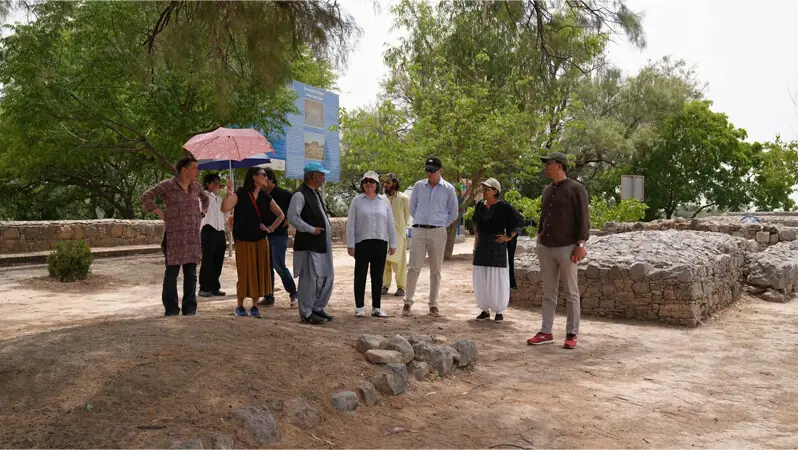

ISLAMABAD: A delegation led by Mamta Murthi visited Taxila Museum and key UNESCO World Heritage sites on Sunday, reflecting growing international interest in Pakistan’s archaeological, cultural and religious heritage.
Officials from the Department of Archaeology welcomed the delegation in Taxila and briefed members on the museum’s extensive collection of Gandharan antiquities, Buddhist relics and rare archaeological artefacts. They also highlighted Taxila’s historical role as a major centre of learning, culture and trade that flourished at the crossroads of ancient civilisations for centuries.
Delegation Explores Gandharan Heritage and Conservation Efforts
During the visit, the delegation toured multiple galleries inside the museum and reviewed ongoing preservation and conservation work designed to protect the region’s archaeological treasures. Officials shared updates on sustainable heritage management efforts and measures aimed at preserving historical assets for future generations.
The visiting team also received detailed briefings on the importance of Taxila’s ancient heritage and its continuing appeal for scholars, researchers and tourists from around the world.
UNESCO Sites Reflect Taxila’s Historic Role in Buddhism
Later, the delegation visited Sirkap and Dharmarajika Stupa, both recognised as UNESCO World Heritage sites. Officials explained the historical, cultural and architectural significance of the ancient ruins and their role in the spread of Buddhism across South and Central Asia.
The visit underscored the importance of preserving Pakistan’s diverse civilisational legacy. It also highlighted increasing international cooperation in protecting historical landmarks and promoting cultural heritage conservation throughout the country.

