
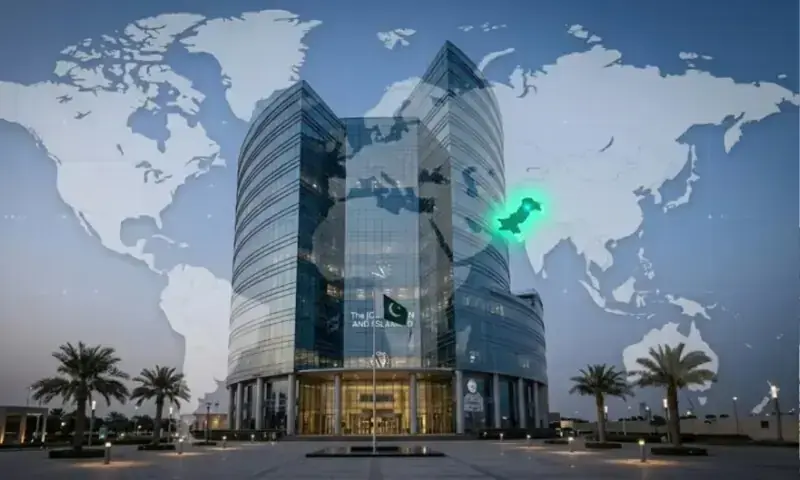

Islamabad: The World Bank has reassigned Pakistan from its South Asia grouping to a newly expanded regional bloc named MENAAP, a move analysts say could reshape the country’s economic trajectory. In its April 2026 economic update, the institution included Pakistan and Afghanistan in the Middle East and North Africa grouping, increasing total membership from 22 to 24 countries.
Implications of the reclassification
The revised bloc now comprises Middle Eastern and North African economies, including Saudi Arabia, the United Arab Emirates, Egypt, Iran, and Israel. While the World Bank described the shift as an administrative and analytical adjustment, experts believe it may influence policy direction and economic comparisons.
Previously, Pakistan aligned with South Asian economies such as India, Bangladesh, and Sri Lanka. However, the new grouping places it alongside wealthier Gulf nations as well as structurally similar developing economies. Consequently, analysts expect changes in how global institutions assess Pakistan’s performance, particularly in areas such as energy, inflation, and remittances.
Opportunities and potential challenges
Moreover, the reclassification reflects Pakistan’s growing economic ties with Gulf countries, especially through remittance flows. It also highlights shared challenges with MENA economies, including population growth, employment generation, and regional instability.
On one hand, Pakistan could benefit from policy insights related to energy management and state-led development strategies. On the other hand, comparisons with high-income economies may create perception challenges for investors, potentially affecting economic confidence.
Furthermore, Pakistan’s large population may strengthen its position in seeking development funding. However, competition for resources could intensify with countries like Egypt, Jordan, Tunisia, and Yemen.

