

Government Plans Faster Business Reforms
Egypt is preparing new steps to reduce red tape and support local businesses as the country tries to strengthen investor confidence.
Investment and Foreign Trade Minister Mohamed Farid Saleh said the government wants to make life easier for existing companies.
He said the next 12 months would focus heavily on improving the ease of doing business.
The planned reforms are expected to simplify company formation.
They may also make capital raising easier for businesses.
The government also wants to improve merger and acquisition procedures, especially for companies that are not listed on the stock exchange.
Saleh made the remarks during a visit to London.
He said the reform process would be a major task, but it remained a priority for the government.
Egypt is trying to recover from a difficult currency crisis.
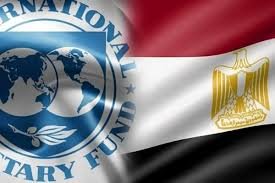
The country is also working under an $8 billion programme with the International Monetary Fund.
The programme is linked to several reforms.
These include exchange-rate liberalisation, fiscal tightening, and reducing the state’s role in the economy.
Up to Four State Firms May Be Listed
Saleh said Egypt expects more than half a dozen companies to be floated on the stock exchange over the next 12 months.
These may include up to four state-owned firms.
The move is part of Egypt’s wider plan to encourage private investment and reduce the dominance of state-owned enterprises.
State companies still play a large role in Egypt’s economy.
The IMF has previously said progress in reducing that role has been slower than expected.
Saleh pointed to recent government action as a sign of progress.
In March, Egypt announced plans to sell up to 20% of Misr Life Insurance.
The sale had been promised for more than 15 years.
It is expected to raise around 14 billion Egyptian pounds, or about $270 million.
Saleh also said Egypt expects around four to five private sector initial public offerings during the same period.
Pound Pressure Tests Economic Policy
Saleh said Egypt would remain committed to a floating exchange rate.
The Egyptian pound has come under pressure due to regional tensions and the Iran war.
It has fallen nearly 8% since the conflict began.
The decline has increased inflation concerns and raised fresh questions about the currency’s direction.
Saleh said investors can handle volatility, but they cannot deal with uncertainty.
He said Egypt’s policy direction was clear.
According to him, the government is focused on controlling inflation.
He also said Egypt would maintain fiscal discipline.
Saleh said the government had responded quickly to regional pressures to protect its fiscal position.
He added that Egypt had met or exceeded several IMF targets, including those linked to the fiscal deficit and primary surplus.
The seventh review of Egypt’s IMF programme is expected to be completed in the coming weeks.
Saleh said a follow-on IMF programme after the current one expires by year-end is not currently planned.

