
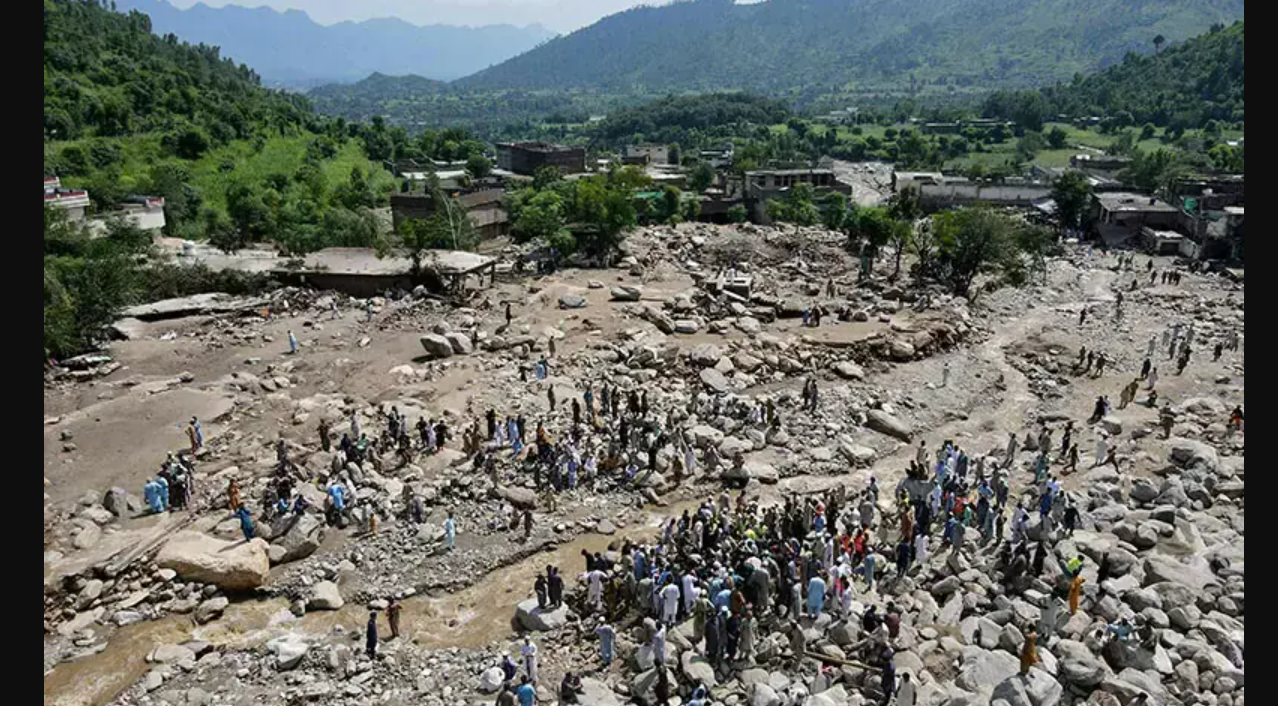

Pakistan’s climate monitoring efforts have entered a more critical phase after the Space and Upper Atmosphere Research Commission identified 130 potentially dangerous glacial lakes across northern regions, raising concerns about possible threats to downstream communities.
The assessment does not indicate an immediate disaster. However, it highlights the importance of preparedness as changing climate conditions continue to accelerate glacial melting and increase environmental risks across vulnerable mountain areas.
At the same time, authorities have warned that broader climate shifts linked to El Nino could bring weaker monsoon rainfall, stronger heat waves, drought conditions, and warmer winters later this year.
Suparco Identifies 130 Potentially Dangerous Glacial Lakes
Suparco has identified 130 potentially dangerous glacial lakes that may create risks for nearby populations if glacial lake outburst floods occur.
To strengthen monitoring efforts, the agency continues to conduct regular surveillance using satellite imagery and shares findings with relevant authorities involved in climate and disaster management.
The latest assessment was prepared using satellite images captured on May 31 and June 1, 2026.
According to the findings, not all identified lakes currently present the same level of exposure.
Of the 130 monitored lakes, only 24 are presently unfrozen and clearly visible for direct observation and measurement.
These lakes have received closer examination to evaluate their size and possible downstream impact.
Meanwhile, the majority of the identified lakes remain frozen.
Satellite Mapping Helps Identify Communities at Risk
Suparco’s monitoring system extends beyond tracking water bodies alone.
Satellite-based mapping also identifies nearby settlements that could face exposure if a glacial lake outburst flood occurs.
To improve accuracy, population exposure estimates were developed through a grid-based method.
This system measures population distribution within each 100-by-100-metre area around monitored glacial zones.
As a result, authorities can better understand which communities may require stronger preparedness and faster response measures if conditions change.
The mapping system also separates frozen and unfrozen lakes through different colour indicators, creating a clearer picture of regional risk patterns.
Updated Data Strengthens Climate Preparedness
The identification process relied on disaster management data provided by provincial authorities, including agencies operating in Khyber Pakhtunkhwa and Gilgit-Baltistan.
Previous monitoring activities had used older inventories supplied by these departments.
However, the latest assessment introduced updated observations and expanded analysis.
A comparison between earlier and revised datasets showed that 56 glacial lakes appeared in both records.
This overlap reflects continuity in monitoring while also showing that environmental conditions continue to evolve over time.
Authorities believe these updates remain important because accurate monitoring directly supports preparedness planning and emergency response systems.
Climate Change Continues to Accelerate Glacial Risks
Suparco stressed that long-term satellite monitoring remains essential because climate change continues to increase glacial melting across northern Pakistan.
Scientific institutions and disaster response agencies have therefore increased coordination to strengthen early warning systems and reduce potential damage.
Officials also highlighted that stronger climate surveillance improves national readiness and supports local communities facing environmental threats.
Mohammad Saleem Shaikh, media spokesperson for the Ministry of Climate Change and Environmental Coordination, emphasized that the findings should not create unnecessary alarm.
“This is not a cause for panic, but a call for preparedness. The fact that we are able to identify and continuously monitor these lakes demonstrates that Pakistan’s climate risk surveillance systems are becoming increasingly robust and science-driven,” said Mohammad Saleem Shaikh.
Authorities further noted that collaboration among Suparco, NDMA, and provincial disaster management bodies has strengthened hazard mapping, adaptation programmes, and early warning mechanisms in high-risk valleys.
International cooperation with Italy, UNDP, and scientific institutions has also supported improvements in environmental monitoring capacity.
El Nino May Bring More Weather Challenges
Alongside the glacial lake assessment, Suparco issued another climate warning connected to global weather conditions.
According to the agency, the El Nino Southern Oscillation has entered its El Nino phase.
This phase develops when sea surface temperatures become warmer than normal across the central and eastern Pacific Ocean.
Although the changes occur far from Pakistan, they can influence regional weather patterns.
Suparco warned that Pakistan could experience weaker-than-normal monsoon rainfall during 2026.
Additionally, the country may see more frequent heat waves during spring and summer.
Officials also highlighted increased drought risks and the possibility of warmer winters later in the year.
Globally, El Nino often shifts rainfall patterns and influences climate conditions across multiple regions.
Monitoring Today to Reduce Risks Tomorrow
The latest assessment reflects a broader effort to move from reactive disaster response toward preventive climate planning.
By combining satellite monitoring, population mapping, and institutional coordination, authorities aim to improve readiness before environmental threats intensify.
While the findings do not indicate immediate danger, they underline the growing importance of scientific monitoring as Pakistan adapts to changing climate realities.

