
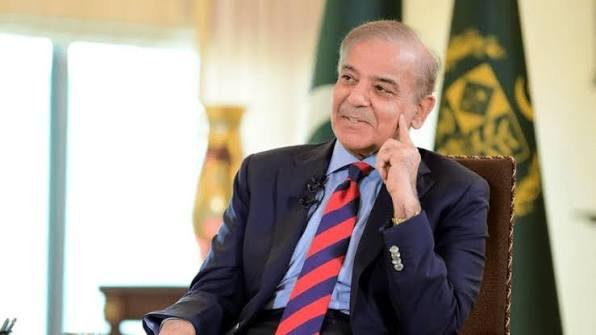

More than two years after Prime Minister Shehbaz Sharif’s coalition government assumed office, repeated predictions about its imminent collapse have yet to materialize.
Since the Pakistan Muslim League-Nawaz (PML-N)-led coalition came to power following the February 2024 general elections, political debate has frequently centered on claims that the government was nearing its end.
Different timelines have been suggested over the past two years. However, each deadline has passed without triggering the anticipated political change.
Meanwhile, fresh predictions have continued to emerge, keeping speculation alive despite the coalition’s continued survival.
Repeated Deadlines Have Come and Gone
Political commentators have repeatedly forecast the government’s downfall since it took office.
Some suggested the coalition would survive only 90 days. Others predicted it would complete six months before collapsing.
Nevertheless, none of those forecasts matched subsequent political developments.
Instead, each expired prediction was followed by another timeline, extending the cycle of speculation.
Political and Economic Events Fueled Speculation
Several developments have repeatedly been described as possible turning points for the government.
These included International Monetary Fund (IMF) reviews, the federal budget, economic pressures, coalition disagreements, opposition campaigns, and speculation surrounding Pakistan’s political establishment.
Although these events generated intense political discussion, they did not produce the government change that many had anticipated.
Consequently, the coalition continued functioning despite persistent challenges.
Debate Over New Provinces Faces Constitutional Challenges
The latest political claim suggests the government has been given six months to create new provinces.
However, constitutional experts believe such a proposal faces significant legal and political obstacles.
Under Pakistan’s Constitution, changing provincial boundaries requires a constitutional amendment.
The amendment must receive a two-thirds majority in both houses of Parliament.
In addition, the relevant provincial assembly must also approve the proposal.
Given the current parliamentary arithmetic and limited political consensus, analysts consider such a move highly unlikely within the suggested timeframe.
Coalition Continues Despite Political Pressure
Many earlier predictions reflected concerns that the coalition would struggle to manage inflation, IMF-linked reforms, and broader economic pressures.
Even so, the government has continued navigating successive political and economic challenges.
As a result, critics have frequently revised their forecasts rather than abandoning them altogether.
At the same time, speculation has intensified whenever political figures or commentators hinted at major institutional or political developments.
Although those claims often attracted widespread public attention, none resulted in the predicted political upheaval.
PPP Criticism Adds Political Heat
In recent weeks, the Pakistan Peoples Party (PPP) has adopted a sharper tone toward the federal government.
The criticism has become more visible during the Azad Jammu and Kashmir election campaign, where tensions between coalition partners have increased.
Nevertheless, political analysts caution against interpreting electoral rhetoric as evidence of an imminent collapse of the federal coalition.
They argue that disagreements between coalition partners remain a common feature of parliamentary politics.
Leadership Rumors Continue to Circulate
Rumors regarding possible alternatives to the current leadership have also surfaced repeatedly over the past year.
Some claims suggested that another political figure was being prepared to replace Prime Minister Shehbaz Sharif.
Others predicted the removal of senior cabinet members.
However, none of those reports have been reflected in subsequent political developments.
Speculation Continues to Outpace Reality
Political analysts believe the repeated cycle of forecasts reflects a broader pattern within Pakistan’s political discourse.
Speculation often dominates public debate, while actual political developments follow a different course.
Although every government faces political and economic challenges, the repeated predictions of the coalition’s immediate collapse have consistently failed to materialize.
Consequently, each missed deadline has been followed by another countdown, while the government has remained in office.

