
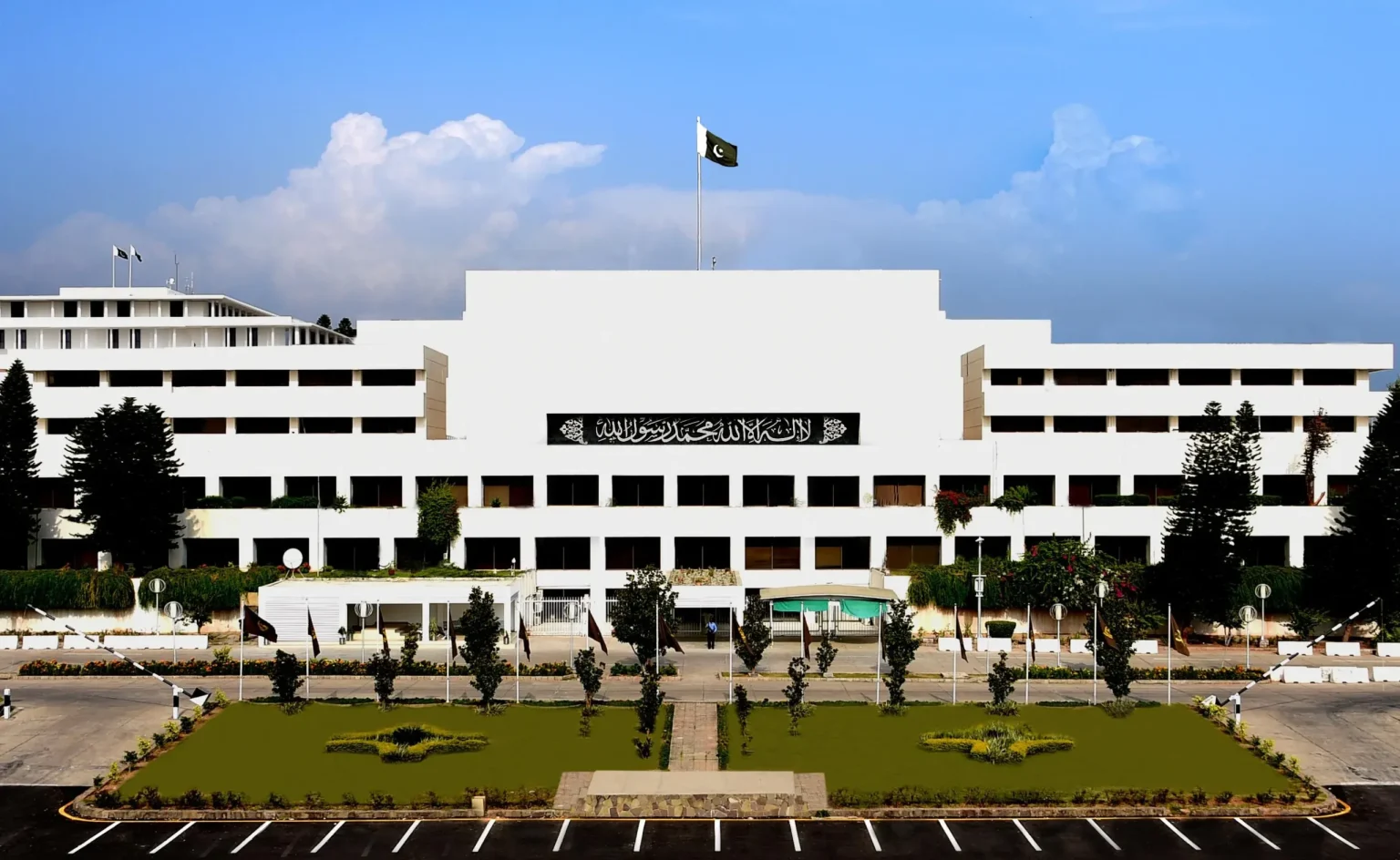

ISLAMABAD: The National Assembly Secretariat spent more than Rs35 million on private lawyers between 2022 and 2026. The payments were made mainly for legal cases involving requests for information under Right to Information laws.
The spending came to light after the Pakistan Information Commission ordered the disclosure of relevant records. The information was released in response to an appeal filed by journalist Saddia Mazhar under the Right of Access to Information Act, 2017.
According to the records, the highest annual expenditure occurred during 2022-23. The Secretariat paid Rs20.4 million to eight lawyers that year.
It subsequently spent Rs2.64 million in 2023-24, Rs11.1 million in 2024-25 and Rs1.61 million in 2025-26.
National Assembly Empanelled 10 Private Lawyers
The National Assembly Secretariat disclosed that it had appointed 10 special counsel since January 2022. These lawyers were engaged to represent the institution in legal proceedings.
The lawyers included Hafiz S.A. Rehman, Irfan Qadir, Ilyas Siddiqui, Arfat Ahmed Chaudhary, Amaad Nasir Kundi and Lamia Niazi.
Sanaullah, Ahsan Bhoon, Anwar Mughal and Farhad Ali Khan Durrani were also included in the panel.
The records show significant differences in payments made to individual lawyers. Advocate Ahsan Bhoon received Rs9.9 million during 2024-25, making him the highest-paid lawyer during the period.
Advocate Irfan Qadir received Rs7.5 million. Barrister Lamia Niazi received Rs6.9 million during 2022-23, while Advocate Ilyas Siddiqui received Rs2.85 million.
Advocate Arfat Ahmed Chaudhary received payments throughout all four years. His payments included Rs1.35 million in 2022-23, Rs960,000 in 2023-24 and Rs1.2 million in 2024-25.
He received another Rs900,000 during 2025-26. His total payments reached Rs4.41 million.
RTI Cases Led to Legal Disputes
The legal spending stemmed from appeals involving Right to Information cases. The Pakistan Information Commission had issued show-cause notices to the National Assembly Secretariat’s secretary.
The Secretariat challenged those notices before the Islamabad High Court. The court later remanded the matters to the Information Commission for final adjudication.
The records show that the Secretariat filed 14 cases during the period under review. Twelve cases were filed in 2023, while one case was filed each in 2024 and 2025.
No cases were filed in 2022 or 2026, according to the available records.
Secretariat Says Lawyers Were Hired During PTI Tenure
Zafar Sultan, director general of the National Assembly’s Media Wing, confirmed that the Secretariat had hired private lawyers.
He also confirmed that the lawyers received around Rs35 million in legal fees. However, Sultan said the lawyers were engaged during the previous PTI government’s tenure.
He further claimed that the current government had not hired any private counsel for the cases.
The disclosure has nevertheless drawn attention because public funds were used to pay external legal representatives. The spending also raises questions about the government’s existing legal resources.
Private Legal Spending Raises Questions Over Public Funds
The expenditure does not by itself establish any wrongdoing. However, the scale of spending has raised questions about fiscal prudence and the use of available government legal services.
The Attorney General for Pakistan serves as the federation’s principal law officer. The AGP’s office and other federal law officers also form part of the government’s legal machinery.
Therefore, the decision to engage private lawyers for cases involving a public institution has attracted scrutiny. Questions may arise over why the available government legal resources were not used in these matters.
The disclosure also highlights the broader importance of transparency when public institutions face legal disputes over access to information. As RTI cases continue to shape accountability standards, spending on such litigation is likely to remain under public scrutiny.

