
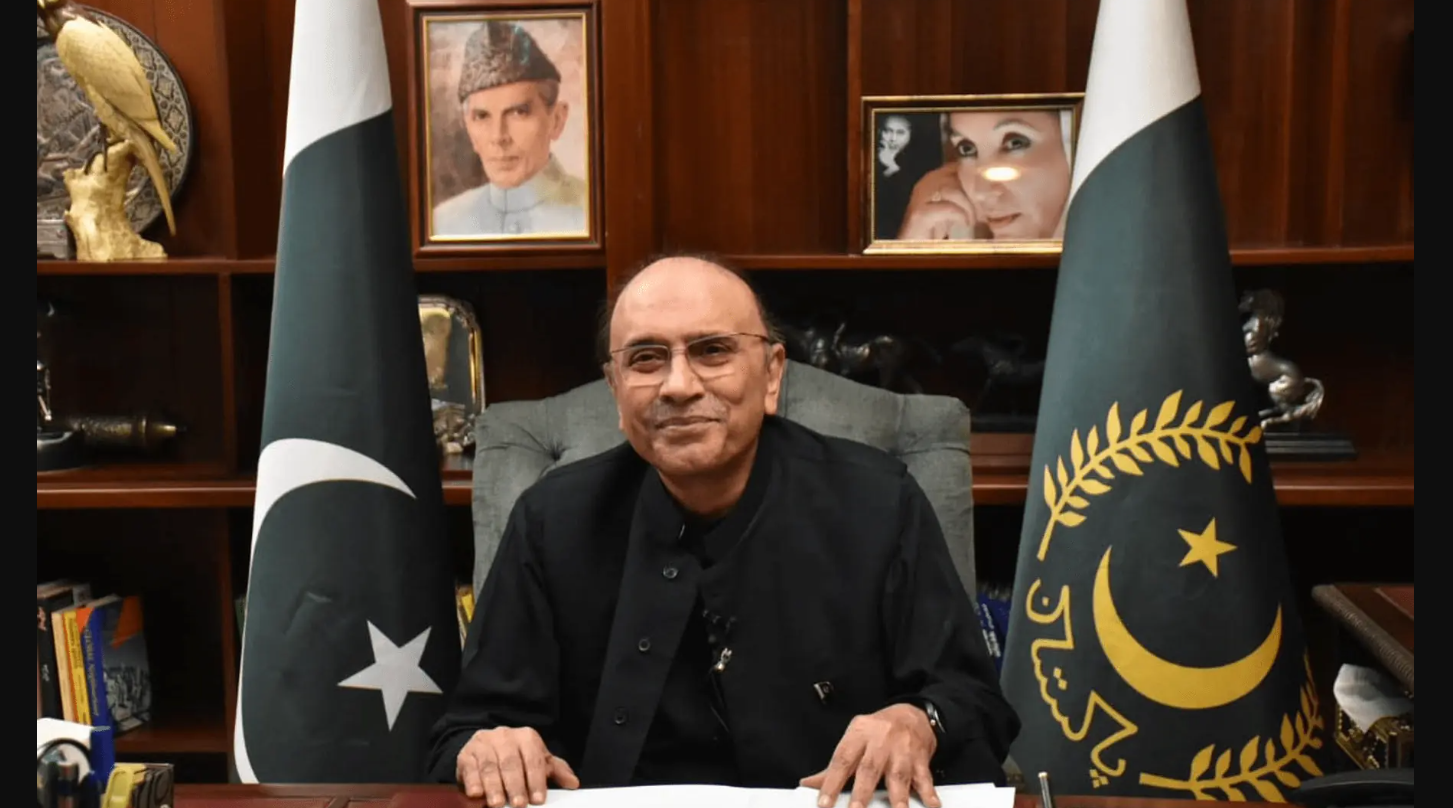

The deadlock over judges’ appointments has intensified as the government and Presidency prepare for fresh discussions. The government’s legal team is scheduled to meet Presidency officials on Sunday.
The meeting could determine how authorities handle the pending recommendations for high court judges. Meanwhile, the Islamabad High Court has yet to decide a petition linked to the issue.
The dispute centres on recommendations forwarded by the Judicial Commission of Pakistan. The recommendations have remained pending with President Asif Ali Zardari.
As a result, questions have emerged over the constitutional procedure for completing the appointments.
Government Explores Options Over Pending Judicial Appointments
The government is examining possible ways to end the impasse over the judicial appointments. Officials are considering whether notifications could be issued through the law ministry.
However, the legal position remains contested because the matter is now before the Islamabad High Court.
The Judicial Commission of Pakistan held meetings on July 20 and 21. During those meetings, it recommended several appointments and extensions across the country’s high courts.
The commission recommended confirmation for four additional judges of the Peshawar High Court. It also recommended a six-month extension for an additional judge of the Sindh High Court.
Furthermore, the JCP proposed 19 additional judges for four high courts. These included the Lahore, Islamabad, Sindh and Balochistan high courts.
Under Clause 8 of Article 175-A of the Constitution, the recommendations went to the prime minister. The prime minister subsequently forwarded the summary to the president. However, the summary has remained pending with the Presidency.
Constitutional Questions Add to the Dispute
The government is examining Article 48(1) as one possible route to resolve the situation. Officials argue that the president was required to act within a fortnight after receiving the summary. That period has already expired.
However, government functionaries acknowledge that the situation has become more complicated. The matter is currently sub judice because a petition has been filed before the Islamabad High Court.
Therefore, officials have also maintained that notifications cannot be issued while the legal question remains pending.
At the same time, the government’s legal team is reportedly seeking an “out-of-court” settlement with the Presidency.
The move could provide a way to resolve the disagreement without further constitutional confrontation.
Presidency Raises Objections to JCP Proceedings
The Presidency’s legal team has raised several objections concerning the Judicial Commission’s proceedings.
According to officials, nearly all nominees proposed by the PPP were rejected. They also raised concerns about some candidates recommended for appointment.
The Presidency has stated that some nominees have criminal records. Moreover, its legal team has challenged the interpretation of the relevant constitutional provisions.
The Presidency’s position is that Article 175-A does not establish a specific deadline for presidential action. It also argues that Article 48(1) cannot override Article 175-A to bypass the Presidency.
The legal team has additionally referred to Article 48(2).
The provision empowers the president “to act in his discretion in respect of any matter in respect of which he is empowered by the Constitution to do so”
The Presidency has also cited the constitutional protection concerning actions taken by the president under the provision.
Presidency Warns Against Unilateral Action
Officials at the Presidency have cautioned against taking unilateral steps in the matter. They described such an approach as a “political and legal disaster”.
According to the officials, consensus through democratic means remains the preferred solution. They also warned that bypassing the prescribed constitutional procedure could create further complications.
In particular, they highlighted possible ambiguity involving Articles 48(1), 48(2) and 175-A(8).
The Presidency believes those questions should be resolved through consultation between the president and prime minister.
Therefore, it has opposed unilateral action while the disagreement remains unresolved.
On the other hand, government sources maintain that judicial appointments must follow constitutional provisions.
They argue that the deadlock should ultimately be resolved within the framework of the Constitution.
Islamabad High Court Awaits Decision
The Islamabad High Court has reserved its verdict on the maintainability of a petition concerning the presidential approval.
Advocate Luqman Chaudhary filed the petition through his counsel Zahid Chaudhry. The petition seeks directions for the president to approve the pending summary.
During Thursday’s hearing, Justice Arbab Muhammad Tahir questioned how the court could issue directions to the president.
The judge subsequently reserved his order. The ruling was initially expected on Thursday.
However, Justice Arbab left his office without announcing the decision. The order was then expected on Friday morning.
Yet the case file had not returned from the judge’s chamber by the close of business. The continued delay has added another layer of uncertainty to the appointments issue.
Judicial Vacancies Create Immediate Complications
The dispute has already produced practical consequences for the affected judges. Four additional judges of the Peshawar High Court ceased to hold office on August 4.
Their tenures expired without formal notifications confirming their appointments. Similarly, an additional judge of the Sindh High Court left office after his tenure expired on July 29.
The JCP had recommended a six-month extension for the Sindh High Court judge. However, the extension has not taken effect because the formal process remains incomplete.
The developments have therefore increased pressure on authorities to resolve the constitutional deadlock.
Government Promises Constitutional Resolution
Minister of State for Law and Justice Barrister Aqeel Malik has said the government will resolve the matter within the constitutional framework. He also said the government would follow principles established by the superior courts.
For now, however, the government and Presidency remain divided over the interpretation of the relevant constitutional provisions. The scheduled meeting between the two legal teams could provide an opportunity to narrow those differences.
Meanwhile, the Islamabad High Court’s pending decision remains another crucial factor. Until the legal and constitutional questions are settled, uncertainty surrounding several judicial appointments is likely to continue.

