
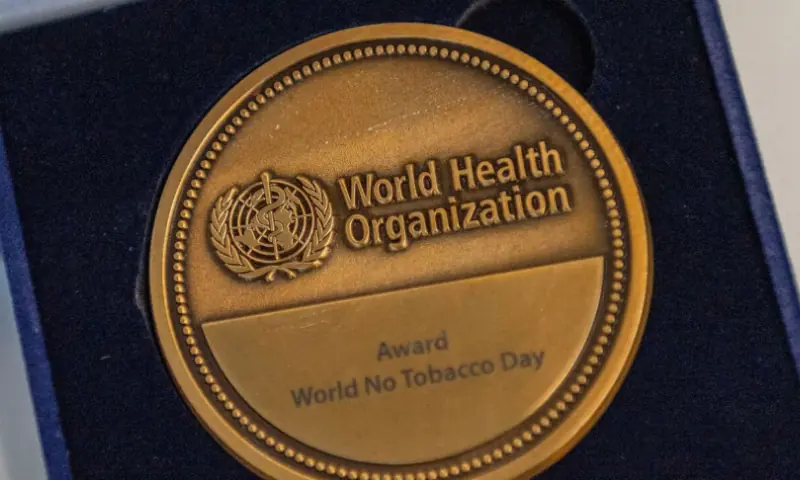

The World Health Organization (WHO) has awarded the World No Tobacco Day (WNTD) 2026 Award to Pakistan’s Tobacco Control Cell under the Ministry of National Health Services, Regulations and Coordination for its significant contributions to tobacco control and public health.
In addition, Dr. Waseem Iftikhar Janjua, a senior researcher at the Sustainable Development Policy Institute (SDPI), received the same honor for his outstanding efforts in advancing tobacco control initiatives and promoting public health in Pakistan.
The WNTD Award is presented annually to individuals and organizations from each of the six WHO regions in recognition of exceptional contributions to reducing tobacco use and strengthening tobacco control measures.
According to WHO estimates, tobacco use causes approximately 164,000 deaths in Pakistan every year. Furthermore, it results in economic losses exceeding PKR 1,800 billion, or nearly $6.6 billion annually, placing a significant burden on the country’s healthcare system and economy.
WHO has also expressed concern about the growing exposure of children and young people to tobacco and nicotine products. The organization warned that the industry often targets younger populations through products designed to create long-term addiction.
Pakistan ratified the WHO Framework Convention on Tobacco Control (FCTC) in 2004. Since then, WHO has provided continuous technical support to the Ministry of National Health Services and the Federal Board of Revenue, particularly in tobacco taxation policies and track-and-trace implementation.
Moreover, Pakistan has introduced several major tobacco control measures under the FCTC framework since 2014. These include a 208 percent increase in tobacco taxes during fiscal year 2022-23, larger pictorial health warnings on packaging, a nationwide ban on loose cigarette sales, and the National Tobacco Control Strategy 2022-2030.
Health experts emphasize that tobacco remains one of the leading causes of preventable deaths worldwide. It contributes to cardiovascular disease, lung disorders, strokes, and various forms of cancer, while claiming up to half of users who do not quit.

