
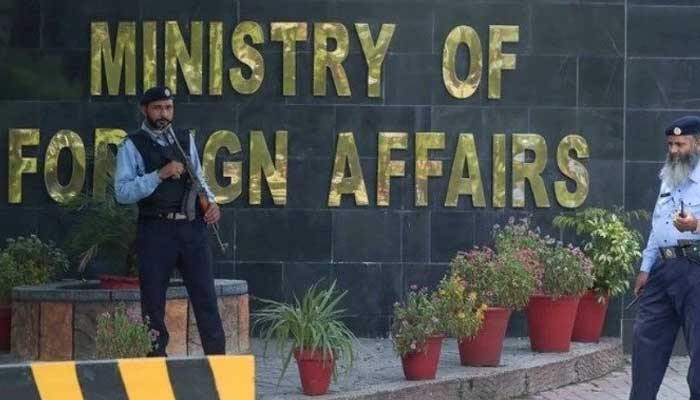

Pakistan has firmly rejected India’s remarks regarding the upcoming elections in Gilgit-Baltistan. It described the statements as baseless and politically motivated.
Moreover, Islamabad stated that India continues to spread misleading narratives. It also accused New Delhi of ignoring ground realities in the region.
Foreign Office Response to India’s Remarks
The Foreign Office strongly responded to India’s concerns over the upcoming electoral process in Gilgit-Baltistan. It said India attempted to “conflate fact with fiction.”
In addition, Pakistan rejected the allegations with strong language. It stated, “We unequivocally reject this latest Indian rhetoric with the contempt it deserves.”
Furthermore, the statement accused India of being a global leader in propaganda. It said such claims follow a repeated pattern of misinformation.
Gilgit-Baltistan Elections Scheduled for June 7
Gilgit-Baltistan is scheduled to hold elections for its fourth Legislative Assembly on June 7. The region’s political framework was established under the 2009 Gilgit-Baltistan (Empowerment and Self-Governance) Order.
That order aimed to provide administrative autonomy to the region. Consequently, local governance structures were strengthened over time.
However, India raised objections over the electoral process. Pakistan rejected those objections and reaffirmed its position on the region’s administrative status.
Pakistan’s Position on Jammu and Kashmir
Pakistan reiterated that Jammu and Kashmir remains a disputed territory. It emphasized that the issue is listed on the United Nations Security Council agenda.
According to the statement, the dispute originated in 1947 following India’s “forcible and unlawful occupation of the State of Jammu and Kashmir.”
Pakistan maintained that a lasting solution must follow UN resolutions. It also stressed that Kashmiris deserve the right to self-determination.
Call for UN-Supervised Plebiscite
The Foreign Office reiterated its demand for a fair resolution. It stated that peace requires a “free and impartial plebiscite under UN auspices.”
Additionally, Pakistan urged full implementation of relevant Security Council resolutions. It argued that only this approach ensures long-term stability in the region.
Allegations of Human Rights Violations
Pakistan also raised concerns over human rights conditions in Indian-administered Jammu and Kashmir. It claimed that serious violations continue under strict legal frameworks.
Moreover, the statement described these laws as restrictive and controversial. It said such measures reflect “state terrorism” against the local population.
Pakistan also stated that international attention is being blocked. It called for access for neutral observers and human rights organizations.
Demand for International Access and Accountability
Islamabad urged India to allow independent monitoring of the situation in Jammu and Kashmir. It also called for media and humanitarian access.
Furthermore, it demanded repeal of restrictive laws imposed in the region. Pakistan argued that such steps are necessary for transparency.
It also called for reversal of unilateral actions taken after August 5, 2019.
Conclusion
Pakistan’s response highlights ongoing diplomatic tensions surrounding Gilgit-Baltistan elections and the Kashmir dispute. It reaffirmed its position on self-determination and international legal frameworks.
Meanwhile, the issue continues to remain central in regional relations. Both sides maintain sharply contrasting narratives over governance and territorial claims.

