
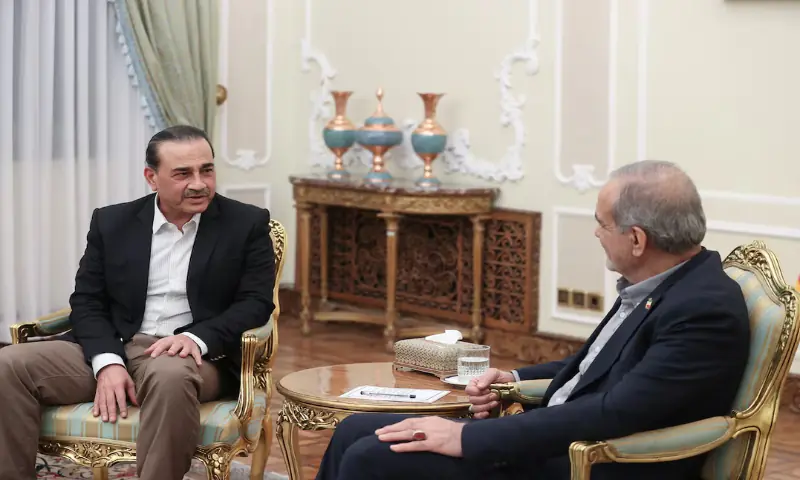

Pakistan has stepped up diplomatic efforts to ease tensions between Iran and the United States. Field Marshal Syed Asim Munir and Interior Minister Mohsin Naqvi visited Tehran on Monday for high-level talks.
Naqvi later said the discussions made “significant progress” toward reducing tensions and creating conditions for lasting regional peace.
In a private post Naqvi said he and Field Marshal Asim Munir held a positive meeting with Iranian President Masoud Pezeshkian. The talks focused on the Iran-US conflict, rising tensions and possible steps toward a settlement.
Pakistan Pushes for De-escalation
Naqvi said President Pezeshkian openly shared Iran’s position and concerns during the meeting. He added that both sides held a constructive exchange on the issues involved.
According to Naqvi, the discussions ended on a highly positive note. He expressed hope that the progress would support further diplomatic efforts.
“We remain hopeful that this momentum will help pave the way for further progress and lasting peace in the region,” Naqvi said.
The visit formed part of Pakistan’s broader efforts to help end the conflict. Islamabad has been seeking dialogue and a negotiated solution to the growing tensions.
Asim Munir Meets Iranian Leadership
Field Marshal Asim Munir held meetings with several senior Iranian officials during his day-long visit.
He met President Masoud Pezeshkian, Supreme National Security Council representative Mohsen Rezaei and Parliament Speaker Mohammad Bagher Ghalibaf.
He also met Iranian Foreign Minister Seyed Abbas Araghchi and Interior Minister Eskandar Momeni.
The discussions covered several urgent issues. These included preventing further escalation, reopening the Strait of Hormuz and bringing the conflict to an end.
Both sides also discussed regional peace and possible diplomatic solutions to the ongoing disputes.
Iranian officials appreciated Pakistan’s efforts to facilitate dialogue. They also recognised Islamabad’s role in supporting de-escalation and peaceful negotiations.
Pezeshkian Calls for Change in US Policy
During his meeting with Field Marshal Munir, President Pezeshkian called for a change in Washington’s approach toward Tehran.
He stressed the importance of respecting international law and following commitments under the Islamabad Agreement. He also called for greater unity among Muslim countries to address regional challenges.
Pezeshkian thanked Pakistan for its mediation efforts. He expressed confidence that cooperation between the two countries could help achieve the agreement’s objectives.
The Iranian president also warned that pressure and coercion could make diplomatic efforts more difficult. Instead, he called for an approach that supports dialogue and international commitments.
Pezeshkian further highlighted Iran’s national unity in the face of external pressure. He said stronger cooperation among neighbouring Islamic countries could support regional stability.
Munir Backs Diplomatic Solution
Field Marshal Asim Munir praised Pezeshkian’s efforts to promote regional stability. He stressed that a thorough diplomatic process remains essential for reaching a comprehensive agreement.
Munir also highlighted the longstanding relationship between Pakistan and Iran. He pointed to their shared historical, religious and cultural connections as an important foundation for cooperation.
Pakistan, he said, remains committed to its mediating role. He also expressed hope that resolving the current crisis could open a new period of regional development and collective security.
Strait of Hormuz Remains Key Issue
The Strait of Hormuz emerged as one of the major issues during the Tehran discussions. The strategic waterway plays a crucial role in international energy trade.
Its reopening could therefore help reduce wider economic and geopolitical pressure. Pakistan has included the issue among its priorities as it seeks to encourage de-escalation.
The Tehran visit followed a recent conversation between US President Donald Trump and Field Marshal Asim Munir. The discussion came as Pakistan continued its diplomatic efforts between Washington and Tehran.
Pakistan had previously helped broker an Islamabad memorandum in June. However, broader peace negotiations have since faced difficulties.
US Pressure on Iran Continues
The diplomatic push comes as Washington continues to increase economic pressure on Tehran.
US Treasury Secretary Scott Bessent has announced plans for an intensified campaign against Iran’s economy. The administration has also expanded its warnings over secondary sanctions.
Washington has warned countries and businesses that they could face consequences if they continue supporting Iran.
These developments have increased the urgency of Pakistan’s diplomatic efforts. Islamabad is now attempting to keep communication channels open while encouraging both sides to pursue negotiations.
For Pakistan, preventing further escalation remains important for regional stability. A peaceful settlement could also reduce pressure on neighbouring countries and improve security across the wider region.
The Tehran meetings therefore represent another major step in Islamabad’s mediation efforts. However, lasting progress will depend on whether Iran and the United States can translate diplomatic discussions into concrete measures toward de-escalation and a negotiated settlement.

