

Field Marshal’s Visit Comes as Washington Prepares Tougher Sanctions on Iran
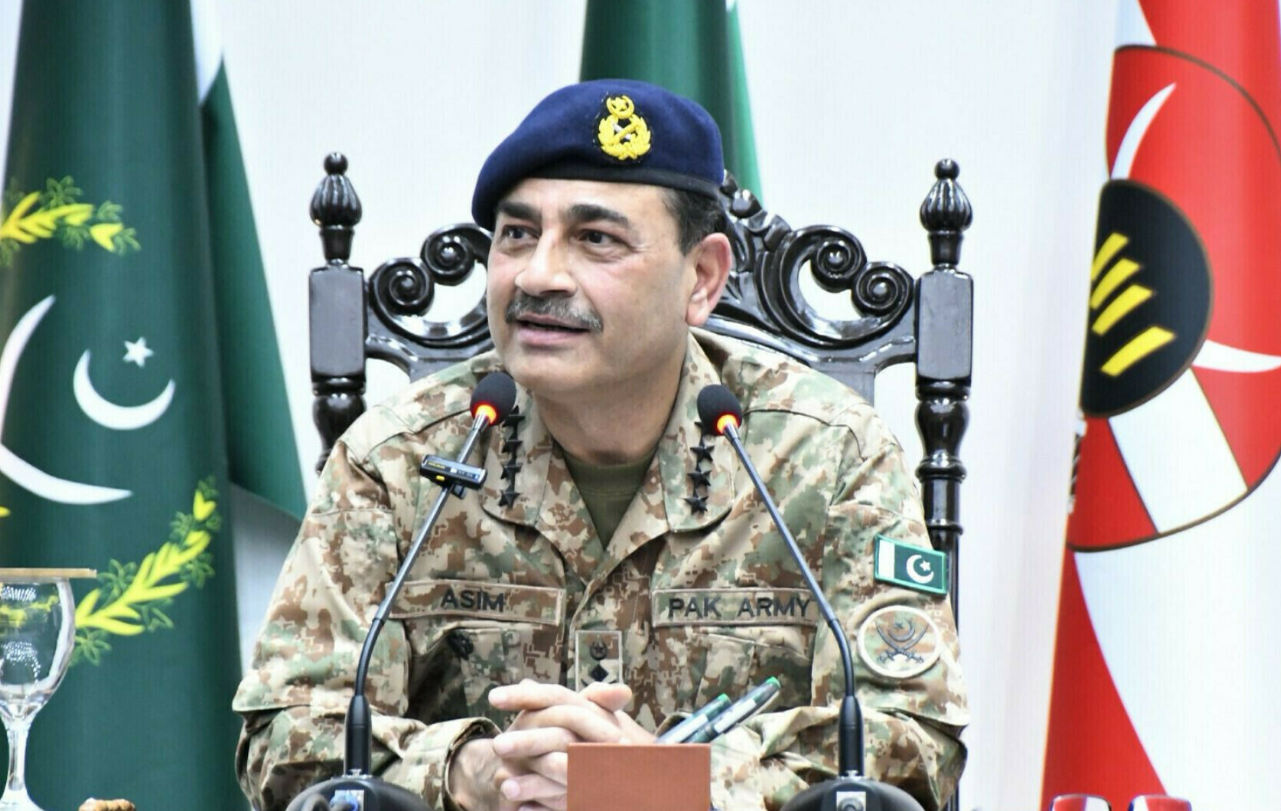
Pakistan’s Chief of Army Staff and Chief of Defence Forces Field Marshal Syed Asim Munir will visit Tehran on Monday, August 24, as Islamabad intensifies efforts to revive stalled peace negotiations between Iran and the United States.
Iranian Foreign Ministry spokesperson Esmaeil Baghaei confirmed the visit on Sunday, saying Munir would travel to Tehran as part of Pakistan’s efforts to promote peace and security in the region.
Two Pakistani government sources also confirmed the visit to Reuters.
One source said Islamabad and Tehran remained in direct contact, while another said Munir’s discussions would cover the peace process, recent US pressure on Iran and wider regional security developments.
Pakistan has emerged as an important mediator between Washington and Tehran since the conflict began following US and Israeli strikes on Iran in February.
Islamabad has repeatedly said there is no sustainable military solution to the confrontation and has called for diplomacy to prevent further regional escalation.
The latest visit is expected to place Field Marshal Munir directly at the centre of those mediation efforts at a particularly sensitive moment.
Islamabad MoU Expected to Be Central to Tehran Talks
One of the main subjects expected to feature in Munir’s meetings is the Islamabad Memorandum of Understanding, the Pakistan-facilitated framework designed to provide a path towards ending the US-Iran conflict.
The Islamabad MoU was signed on June 17, 2026, after Pakistan hosted and facilitated diplomatic engagement between the parties.
Pakistan later participated in high-level implementation talks in Bürgenstock, Switzerland, alongside delegations from Iran, the United States and Qatar.
The Foreign Office said at the time that Pakistan would continue supporting implementation of the understandings reached between Washington and Tehran.
However, efforts to turn the temporary understanding into a durable peace settlement have since stalled.
Reuters reported earlier this month that Tehran and Washington remained divided over efforts to revive the interim arrangement and establish a permanent end to the conflict.
Pakistan has continued diplomatic engagement despite those difficulties.
The Foreign Office said on August 12 that Islamabad was making “all-out efforts” to bring the two sides back to the negotiating table through direct and indirect diplomatic channels.
Officials described the Islamabad MoU as an important framework for regional peace and said Pakistan would continue trying to keep constructive dialogue alive.
Munir’s Tehran visit is therefore expected to explore whether that framework can still be revived before tensions escalate further.
Trump’s Sanctions Warning Adds Urgency to Visit
The timing of the visit is particularly significant because Washington is preparing another major round of economic pressure against Iran.
US Treasury Secretary Scott Bessent has said Washington plans to impose what he described as the toughest sanctions yet against Tehran.
Details of the measures are expected to be announced on Monday, the same day Munir is scheduled to be in Tehran.
US President Donald Trump has also warned countries against providing Iran with what he called an economic lifeline.
The administration is seeking to increase pressure on Tehran following months of conflict and limited progress in negotiations.
Iran, however, has rejected the sanctions threat.
Iranian Foreign Minister Abbas Araqchi said on Sunday that additional US economic pressure would fail and called instead for negotiations based on mutual respect.
Iran has also warned that further pressure could trigger a military response.
This combination of stalled diplomacy, tougher sanctions and Iranian warnings has increased the urgency of Pakistan’s mediation effort.
According to one Pakistani source cited by Reuters, Munir is expected to discuss Trump’s latest warning and its possible impact on the existing peace framework during meetings with Iranian leaders.
Pakistan-Saudi-Türkiye Defence Pact Also on Agenda
Another sensitive issue expected to feature in the discussions is the recently signed Makkah Joint Defence Agreement between Pakistan, Saudi Arabia and Türkiye.
The three countries signed the agreement on August 7.
It states that an armed attack on one of the three countries will be considered an attack against all of them and provides for broader defence cooperation.
Pakistan has repeatedly stressed that the agreement is defensive and is not directed against Iran or any other country.
Deputy Prime Minister and Foreign Minister Ishaq Dar said the pact was intended to strengthen collective deterrence and regional security rather than create a new confrontation.
The agreement is nevertheless highly relevant to Tehran because it involves two major regional powers, Saudi Arabia and Türkiye, alongside Pakistan.
Pakistan’s Foreign Office has already discussed the Makkah agreement with Iranian Foreign Minister Abbas Araqchi and said Islamabad remains committed to promoting dialogue across the region.
Reuters reported that Munir’s discussions in Tehran would include developments following the Pakistan-Saudi-Türkiye agreement as well as issues connected to the Houthis.
Strait of Hormuz Crisis Raises Global Stakes
The diplomatic push is also taking place amid severe disruption in the Strait of Hormuz, one of the world’s most important energy shipping routes.
Oil shipments through the waterway have been heavily disrupted by the US-Iran confrontation.
Iran has threatened action against vessels it considers unauthorised, while the continued instability has increased concerns over global energy supplies and shipping security.
The strait carries a major share of global oil and gas supplies.
Any prolonged disruption therefore has consequences far beyond Iran and the United States.
Higher shipping risks can affect crude oil prices, insurance costs and energy supplies for major economies in Asia and elsewhere.
The status of Hormuz has already been one of the major issues in previous US-Iran negotiations.
Earlier Pakistan-mediated talks explored arrangements under which shipping through the strait could resume as part of a wider political settlement.
The continuing disruption gives Pakistan another reason to push both sides back towards diplomacy.
Pakistan Tries to Keep Diplomatic Channel Alive
Munir has already played a visible role in Pakistan’s US-Iran mediation.
In April, he travelled to Tehran during an earlier round of diplomatic efforts and met Iranian officials as negotiations continued over a possible temporary agreement.
Pakistan’s civilian and military leadership have since maintained contacts with Iranian, American, Saudi, Turkish and other regional officials.
Islamabad has tried to position itself as a facilitator rather than a party to the conflict.
That balancing role has become more complicated following the Makkah defence agreement and renewed American pressure on Tehran.
Monday’s talks could therefore test whether Pakistan can maintain constructive relations with Iran while preserving its close partnerships with Washington, Riyadh and Ankara.
There is no guarantee that Munir’s visit will immediately restart formal US-Iran negotiations.
As recently as August 18, Trump said no new talks with Iran were planned, while Tehran continued to insist that diplomatic engagement would require changes in Washington’s approach.
Still, the visit signals that Pakistan is continuing its attempt to prevent the diplomatic process from collapsing entirely.
With tougher US sanctions approaching, Hormuz shipping disrupted and the wider region facing continuing instability, the meetings in Tehran could become an important test of whether Islamabad’s mediation can reopen a path towards negotiations.

