
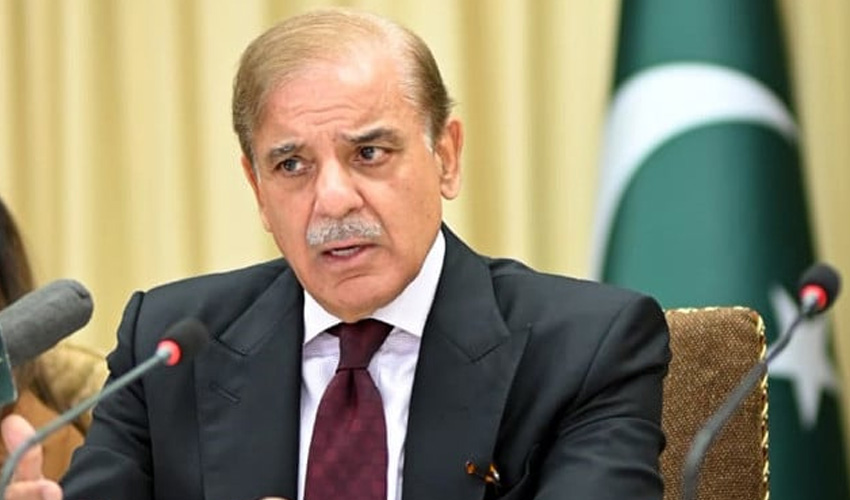

Prime Minister Shehbaz Sharif has stated that the US-Iran temporary ceasefire remains in place, however the ongoing conflict has continued to place serious pressure on Pakistan’s economy and wider regional stability. He made these remarks while addressing a federal cabinet meeting in Islamabad, where the government reviewed the country’s economic and security situation.
Ceasefire Stability and Regional Economic Pressure
The prime minister noted that while the temporary truce is currently holding, the broader conflict has disrupted trade routes and energy supplies, creating ripple effects across regional economies, including Pakistan.
He highlighted that instability around key maritime routes has contributed to uncertainty in global energy markets, which has directly and indirectly affected domestic economic conditions.
Strait of Hormuz Disruption and Energy Concerns
Officials briefed that Iran has largely restricted shipping through the Strait of Hormuz, allowing limited passage primarily for its own vessels following the escalation of hostilities.
This disruption has significantly impacted global energy flows, as the Strait historically carried a major share of international oil and gas shipments.
Consequently, supply constraints have contributed to rising economic pressure in importing countries, including Pakistan, which remains sensitive to global energy price fluctuations.
Economic Stability and Government Strategy
During the cabinet meeting, PM Shehbaz Sharif emphasized that the government’s economic team has worked collectively over the past two years to stabilize key indicators.
He noted that these efforts have helped prevent severe economic disruptions and avoided the need for rationing, while gradually restoring financial stability.
However, he stressed that continued progress depends on sustained national effort and policy discipline.
Call for Economic Transformation
The prime minister urged unified national efforts to transform Pakistan into a strong economic power.
He emphasized that the same level of commitment and resilience shown in securing national defense must now be applied to economic development.
“This is a long and difficult journey. However, nations that commit to facing and overcoming their challenges are the ones that ultimately meet with success,” he remarked.
Reflection on National Security and Unity
PM Shehbaz also reflected on the recent anniversary of Marka-e-Haq, stating that national unity and military professionalism played a key role in strengthening Pakistan’s position.
He praised the armed forces for their performance, stating that their efforts demonstrated national resolve during a challenging period.
Nuclear Programme and National Pride
Looking ahead to Youm-e-Takbeer on May 28, the prime minister highlighted Pakistan’s nuclear history and its role in establishing national defense credibility.
He reiterated that Pakistan’s nuclear capability is strictly for deterrence and not aggression, reinforcing the country’s position as a responsible nuclear state.
He also paid tribute to the individuals who contributed to the nuclear programme, acknowledging the roles of Zulfikar Ali Bhutto in initiating the project and Nawaz Sharif in its successful execution.
Tribute to National Sacrifices
The prime minister also acknowledged sacrifices made in the fight against terrorism, including the martyrdom of Liaquat from Attock, who confronted a suicide bomber.
He announced that Liaquat had been posthumously awarded the Sitara-e-Shujaat in recognition of his bravery.
He further stated that Pakistan’s sacrifices in the fight against terrorism remain unmatched and deeply significant for national security.
Cabinet Offers Prayers for Martyrs
At the conclusion of the meeting, members of the federal cabinet offered Fateha for all martyrs who lost their lives in various terror incidents across the country.
The session ended with a renewed commitment to strengthen both economic resilience and national security amid ongoing regional challenges.

