
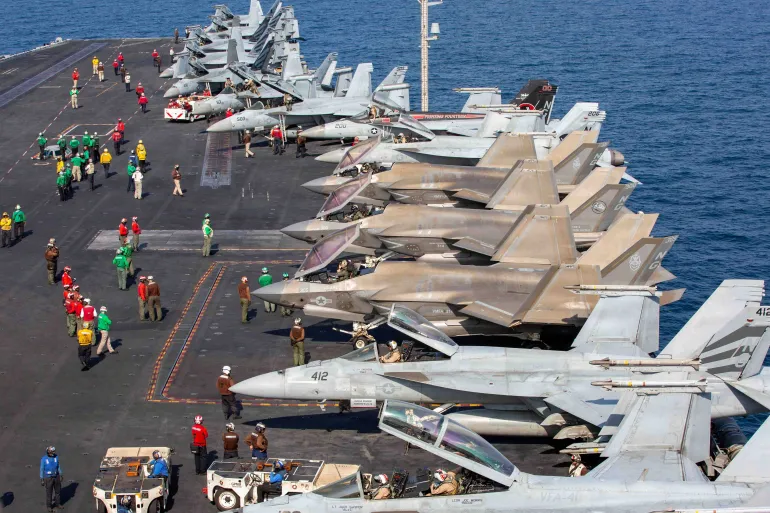

CENTCOM Targets Military Infrastructure and Naval Assets
The United States Central Command (CENTCOM) announced on Tuesday that it had completed a new round of military strikes against Iran, targeting more than 80 sites in an operation aimed at weakening Tehran’s military capabilities and protecting international shipping.
According to a CENTCOM statement, US forces struck Iranian air defence systems, command-and-control networks, coastal radar installations, anti-ship missile sites and more than 60 small boats belonging to the Islamic Revolutionary Guard Corps (IRGC) operating in and around the Strait of Hormuz.
The US military said the strikes were intended to reduce Iran’s ability to threaten commercial shipping along one of the world’s busiest maritime trade routes.
“CENTCOM forces remain postured and prepared to hold Iran accountable when the agreement is not adhered to,” the military said.
The latest operation came shortly after Washington revoked a temporary licence that had allowed Iran to sell oil, following attacks on three commercial vessels in the Strait of Hormuz.
Iran Warns of Retaliation as Ceasefire Remains Fragile
Iran’s Khatam al-Anbiya Central Headquarters condemned the US attacks as a “blatant act of aggression” and warned that the country’s armed forces would deliver a “crushing response.” Iranian officials also reiterated that Tehran would not permit US interference in the management of the Strait of Hormuz.
The latest exchange has further strained the fragile ceasefire between the United States and Iran. The conflict began on February 28 when the United States and Israel launched strikes on Iranian targets, prompting retaliatory attacks by Iran against Israel and Gulf countries hosting US military bases.
The conflict has also extended beyond Iran, with Israeli military operations in Lebanon contributing to widespread destruction and displacement. Thousands of people have been killed during the fighting, while millions have been forced to flee their homes.
The prolonged conflict has disrupted global energy markets, driven up oil prices and heightened uncertainty across international financial markets, with concerns growing over the security of shipping routes through the Strait of Hormuz.

