

New Electronic Warfare System Tested at Sea
The United States Army has tested a new electronic warfare system designed to disrupt the navigation signals used by enemy missiles and precision-guided weapons.
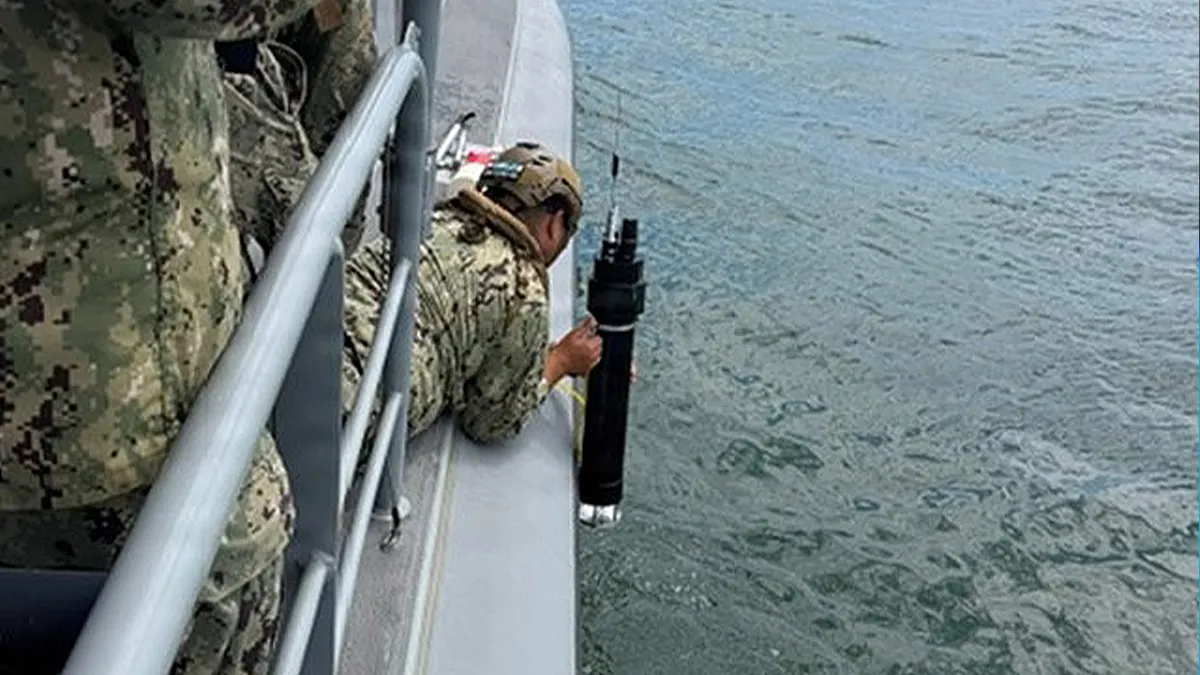
The system, known as “Hammer of the Gods,” completed its first overseas-style maritime trial off the US West Coast in mid-July.
The test was conducted during Project Convergence Capstone 6, also known as PC-6. The military experiment brings different US armed services together to test advanced battlefield technologies under realistic conditions.
The latest trial marked the first major demonstration of the system’s maritime version. Earlier tests had focused mainly on land-based operations over the previous two years.
US military officials described the trial as an important step in developing electronic warfare tools for future conflicts.
Rather than physically destroying an incoming missile, the system attempts to interfere with the signals that help the weapon identify its position and reach its target.
How Does ‘Hammer of the Gods’ Disrupt Enemy Weapons?
Modern precision weapons depend heavily on positioning, navigation and timing information.
These systems often use GPS and related signals to calculate their location, direction, speed and distance from a target.
“Hammer of the Gods” is designed to jam or distort this information.
When a guided missile, cruise missile or long-range artillery weapon loses reliable navigation data, its accuracy may decline significantly.
The weapon could move away from its planned route, miss its target or experience delays during the mission.
This is why the system has been described as capable of “blinding” enemy missiles.
However, it does not literally damage their sensors or prevent every weapon from functioning. Its main purpose is to deny or corrupt the digital information needed for accurate guidance.
The system is reportedly portable, allowing military units to deploy it in different locations and recover it after an operation.
Its maritime version is intended for use in coastal areas and at sea, where military forces may face threats from guided missiles, drones and long-range weapons.
System Also Supports Friendly Military Communications
The technology is not limited to disrupting enemy navigation.
It is also designed to support communications between friendly forces operating in heavily contested electronic environments.
In a modern conflict, opposing forces may attempt to jam radio signals, satellite links and military communication networks.
Such interference can make it difficult for ships, aircraft, ground forces and command centres to exchange information.
“Hammer of the Gods” reportedly includes a secure communication capability that connects friendly military systems.
This network could allow forces to share information and coordinate operations even while strong electronic interference is taking place.
Maintaining communication during signal disruption is considered critical because modern operations depend on rapid data sharing.
Military commanders need reliable information about targets, threats, troop movements and available weapons.
A communications failure could delay decisions and weaken coordination between different units.
Army, Navy and Space Force Join Maritime Trial
The latest test involved several branches and commands of the US military.
The US Army, Navy and Space Force participated in the exercise.
The US Space Forces Pacific, Naval Base San Diego and the US Army Space and Missile Defense Command were also involved.
Officials assessed whether the counter-navigation system could be transported, deployed, operated and recovered in a realistic maritime environment.
The trial also examined how the technology could work alongside military assets from different services.
Joint testing has become increasingly important as the US military prepares for conflicts involving land, sea, air, space and cyber operations at the same time.
A weapon or defence system may have limited value if it cannot exchange information with equipment operated by another military branch.
Project Convergence is designed to address this challenge by connecting sensors, communications systems and weapons across the armed forces.
Why Is It Called ‘Hammer of the Gods’?
The name is inspired by Mjolnir, the legendary hammer associated with Thor in Norse mythology.
Mjolnir is commonly portrayed as a weapon of immense power that strikes its target with overwhelming force.
The military system uses the same symbolism.
Instead of delivering a physical strike, it attacks the electronic guidance systems supporting enemy precision weapons.
Its developers appear to view the technology as a powerful electronic blow capable of weakening advanced missile threats before they reach their intended targets.
The name also reflects the dramatic branding often used for modern defence programmes.
Such titles are intended to communicate strength, speed and technological superiority.
Why Electronic Warfare Is Becoming More Important
Modern militaries increasingly depend on satellites, sensors, data networks and digital navigation systems.
This dependence has made electronic warfare a central part of military planning.
An armed force may possess advanced missiles, aircraft and drones, but those weapons can become less effective when their communication or navigation signals are disrupted.
Electronic warfare systems can attempt to detect, jam, deceive or block hostile signals.
They can also protect friendly communications from similar attacks.
Recent conflicts have shown that GPS interference can affect drones, missiles and military navigation equipment.
As a result, major military powers are investing in technologies that can operate when satellite signals are unavailable or unreliable.
The United States is also preparing its forces for potential operations in regions where opponents possess advanced missile and electronic warfare capabilities.
A portable system that can interfere with hostile precision weapons could provide protection for ports, ships, coastal bases and deployed forces.
Can It Stop Every Guided Missile?
Despite its ambitious name, the system should not be viewed as a guaranteed shield against every incoming weapon.
Some advanced missiles can use multiple guidance methods.
These may include inertial navigation, terrain mapping, image recognition, radar guidance or signals from systems other than GPS.
A weapon that loses satellite navigation may continue flying through an internal guidance system, although its accuracy could be reduced.
Electronic jamming may also have limited effectiveness against weapons designed to operate in signal-denied environments.
The success of any electronic warfare system depends on several factors.
These include distance, signal strength, terrain, weather, enemy countermeasures and the design of the targeted weapon.
Military officials have reported a successful trial, but detailed technical results have not been publicly released.
The full effectiveness of the system would therefore remain difficult to assess outside controlled testing or real battlefield conditions.
A New Layer of Missile Defence
Traditional missile defence systems attempt to detect and physically intercept an incoming threat.
This may involve launching another missile to destroy it in the air.
Electronic warfare offers a different approach.
Instead of striking the weapon directly, it targets the information the weapon needs to operate accurately.
If successful, this method could provide an additional defensive layer alongside radar systems, interceptors and other military technologies.
It may also be less expensive than using a physical interceptor against every incoming missile.
However, electronic disruption is unlikely to completely replace conventional missile defence.
Military planners would probably use both methods together.
One system could attempt to confuse the missile’s guidance, while another would remain ready to intercept the weapon if it continued toward the target.
What Happens After the Successful Test?
The maritime trial represents an important development, but further testing is expected before the system can be widely deployed.
The Army will likely examine its performance in more complex electronic environments.
Future exercises may test the system against different simulated weapons, stronger jamming and moving maritime platforms.
Officials may also assess how quickly troops can deploy and relocate the equipment.
Mobility is important because fixed electronic warfare systems can become targets for enemy surveillance and missiles.
The US military will also need to determine how the system can be integrated with existing air and missile defence networks.
The latest demonstration suggests that electronic warfare will play an increasingly prominent role in future military operations.
“Hammer of the Gods” does not fire a missile or launch an explosive strike.
Instead, it seeks to turn an enemy’s advanced weapon against itself by denying the signals required for precision.
Its first maritime test has raised interest because it offers a glimpse into a battlefield where control of electronic signals could become as important as control of land, air or sea.

