
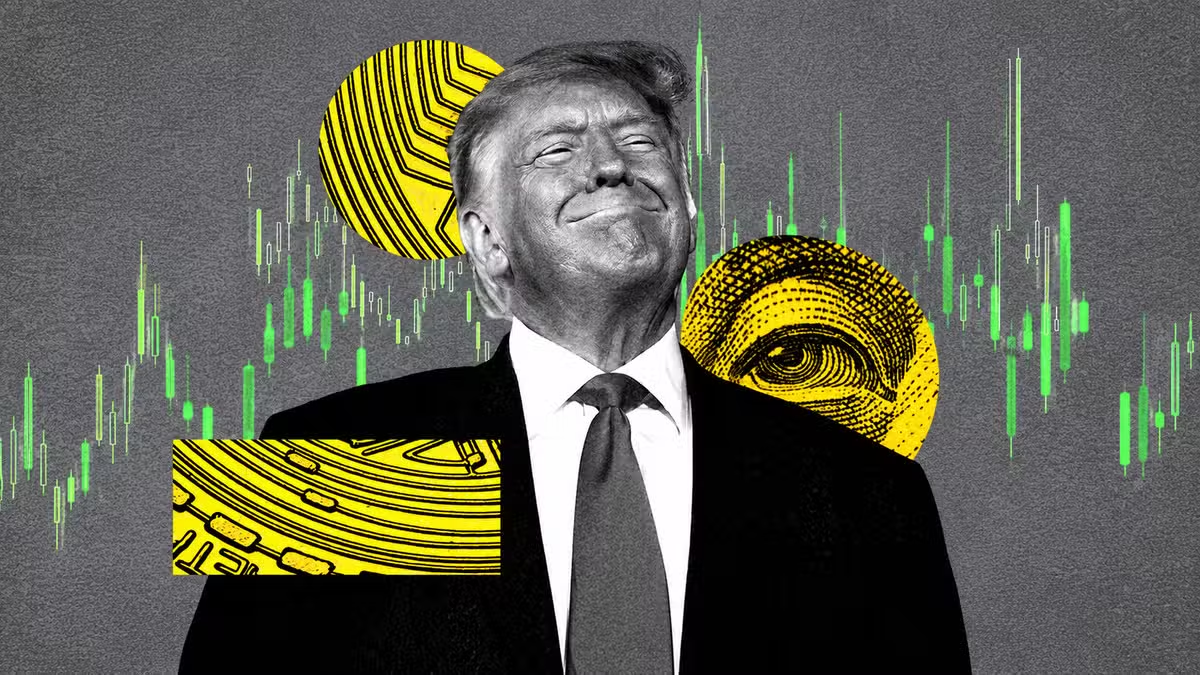

A massive wealth transfer has rattled the cryptocurrency market after an explosive blockchain analysis exposed catastrophic losses among retail investors. Cryptocurrency analytics firm Nansen revealed that nearly one million everyday buyers collectively lost over $3.8 billion trading the official $TRUMP memecoin. The public ledger data indicates that approximately two out of every three wallets that purchased the token ended up deep underwater by the end of June 2026.
The Epic 98% Crash of a Political Hype Machine
The speculative frenzy surrounding the asset has completely evaporated over the last year. The $TRUMP token currently trades at just $1.69, marking a devastating 98% plunge from its historic peak of $75.35. Former President Donald Trump heavily promoted the digital asset to his followers on social media just three days prior to his inauguration in January 2025. This steep decline mirrors the poor performance of World Liberty Financial, a separate cryptocurrency company co-founded by Trump and his sons, whose $WLFI token has also collapsed.
Trump Extracts Over $630 Million as Latecomers Funded Early Exits
While everyday retail traders absorbed the financial wreckage, the Trump family secured massive financial windfalls. Official financial disclosures confirm that Trump personally made $636 million in royalties and licensing fees from the token’s trading activity. Because the token’s unique fee structure allowed insiders to profit from every transaction, Trump generated income regardless of whether the coin’s price rose or fell. This sum accounted for nearly half of the $1.4 billion he generated from digital asset ventures throughout 2025.
Washington Strips Away Protections Under New SEC Rules
The financial carnage unfolds alongside an aggressive deregulation push by the Trump administration. The US Securities and Exchange Commission drastically scaled back its oversight of the digital currency sector this year. Federal regulators explicitly stated that transactions involving standard memecoins do not represent the sale of securities. Consequently, affected retail buyers possess absolutely no legal protections or avenues for financial recovery under federal laws.

