
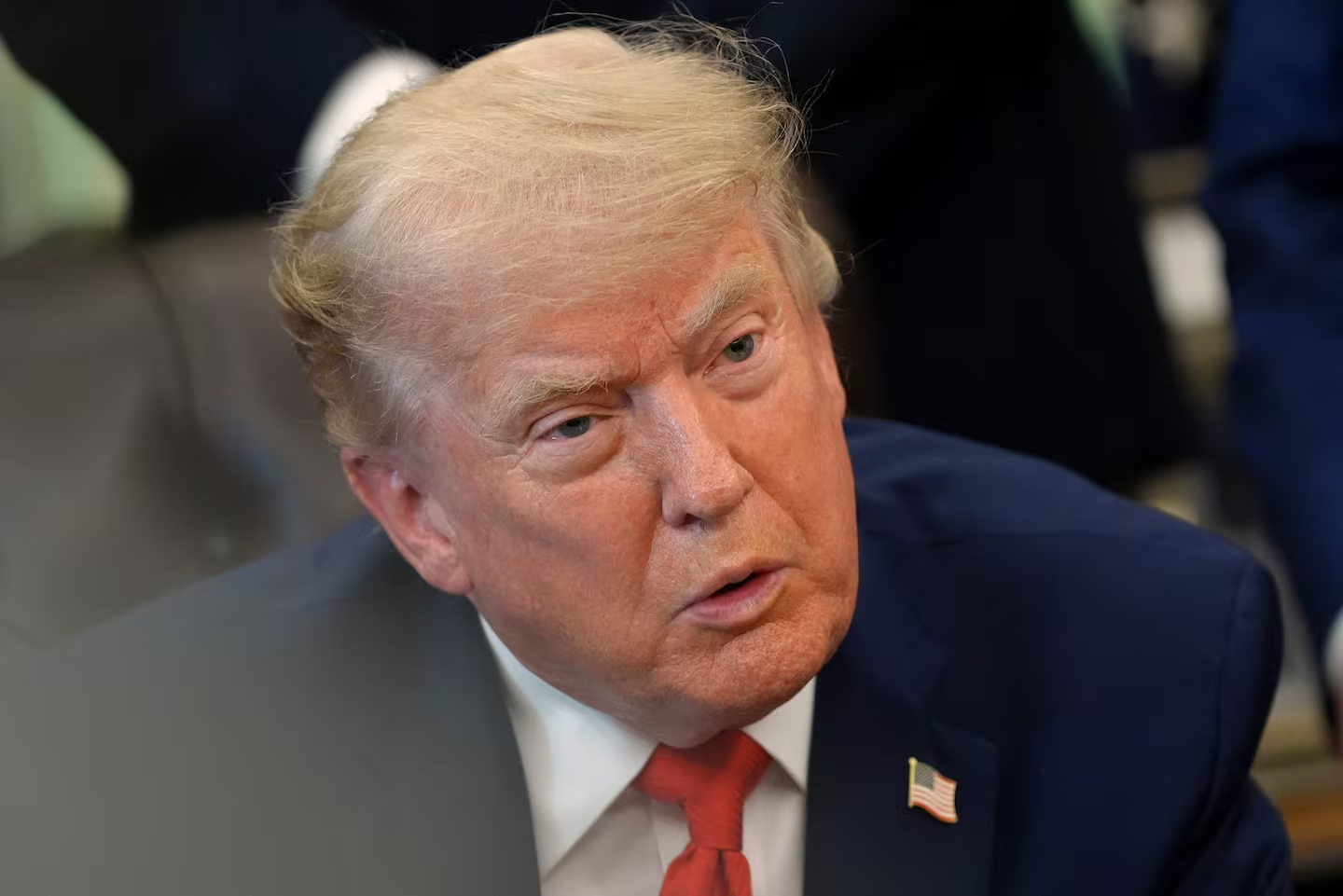

US President Donald Trump warned that any country imposing a digital services tax on American companies could face a 100% tariff on exports to the United States.
The statement has intensified concerns over global trade tensions, especially as discussions around digital taxation continue across Europe.
Trump’s warning came shortly after European Union countries moved to meet a July 4 deadline related to tariff commitments under existing trade arrangements.
Trump Signals Tough Response to Digital Services Taxes
In a social media statement, Trump criticised efforts by European countries to move forward with digital taxation policies targeting major American firms.
He said:
“Numerous European Countries have been discussing the imminent implementation of a Digital Services Tax on American Companies.”
He added:
“Some of these Countries are close to actually doing this.”
Trump then issued a direct warning and stated:
“Please let this statement serve to represent that any Country that imposes such a Tax will immediately be met with a 100% TARIFF on any and all Goods sent to the United States of America.”
His remarks signalled that future trade measures could go beyond current agreements.
Proposed Tariffs Could Override Existing Trade Deals
Trump also suggested that these proposed tariffs would take priority over previous arrangements with trading partners.
According to his statement, the policy would apply regardless of whether agreements had already been negotiated.
He said the measure would override trade deals with the United States, “whether implemented, signed or not.”
That position could affect the trade understanding reached between the United States and the European Union last year.
Under that agreement, US tariffs on European goods were capped at 15%.
In return, EU countries agreed to reduce tariffs on American industrial goods to zero.
However, implementation required legislative action across Europe, creating delays and renewed trade pressure.
France Continues to Defend Its Digital Tax Policy
France has remained among the strongest supporters of digital services taxation.
Before meeting Trump at the G7 summit, French President Emmanuel Macron indicated that France would maintain its position.
France currently applies a 3% levy on revenue generated in the country through digital services.
The measure applies to companies earning more than €25 million within France and €750 million globally.
Last year, French lawmakers also proposed increasing the rate to 6%.
The targeted digital services include online marketplaces and digital advertising activities.
Before travelling to France, Trump warned that the United States would “have no choice” but to impose 100% tariffs on French wine unless the tax policy changed.
Why Digital Taxes Remain a Major Trade Dispute
Digital services taxes have become a growing point of disagreement between the United States and several European countries.
Supporters argue these taxes ensure large multinational technology companies contribute fairly in countries where they generate revenue.
However, critics argue such policies disproportionately affect American firms because of their dominance in global digital markets.
The United States has repeatedly challenged these measures and warned of possible retaliation.
Several countries, including France, Britain, Austria, and Spain, have previously faced pressure over similar proposals.
Growing Uncertainty Around Global Trade Relations
Trump’s latest warning has again placed digital taxation at the centre of international trade discussions.
Although negotiations continue, uncertainty remains over whether countries will move forward with these tax policies.
At the same time, businesses and investors are closely watching developments because broader tariff action could affect trade flows across multiple industries.
For now, digital taxation remains both an economic and political issue with wider implications for global markets.

