
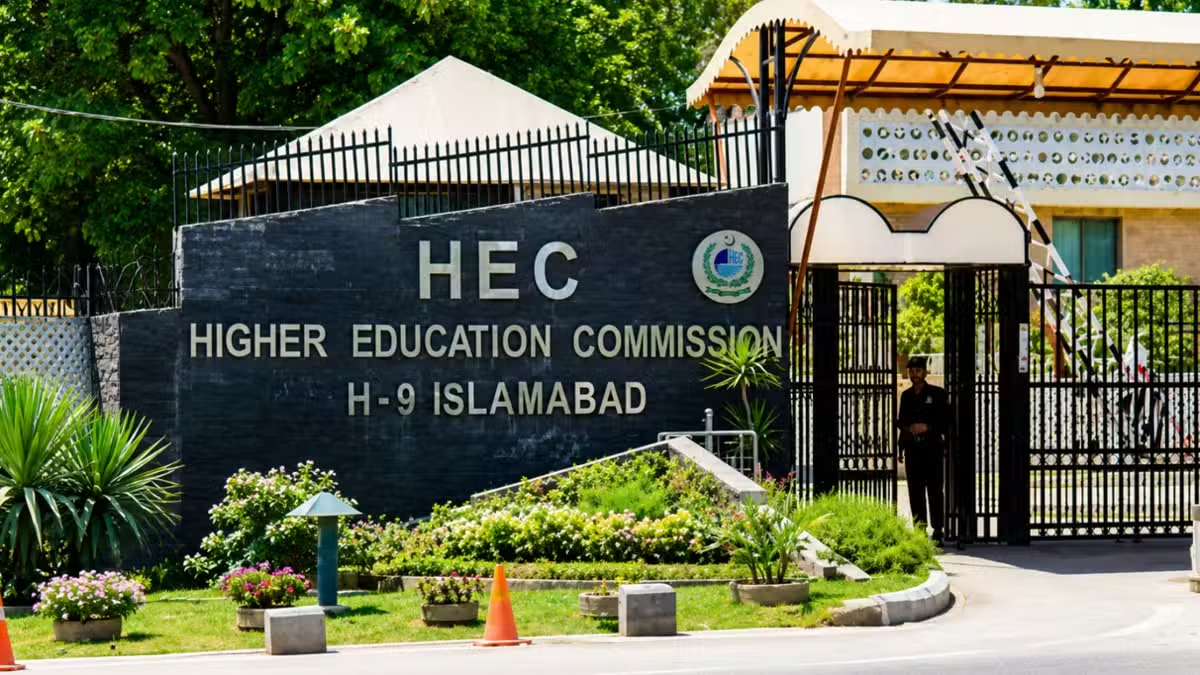

The Higher Education Commission (HEC) has dismissed a notification circulating on social media that claims the duration of the LLB programme has been reduced from five years to four years for current students.
In an official clarification, the commission confirmed that the widely shared document is fake and was never issued by HEC. It also urged students and educational institutions not to rely on misleading information circulating online.
The clarification comes after the forged notification created confusion among law students regarding the duration of the LLB programme and eligibility for the Law Graduate Assessment Test (Law-GAT).
What Did the Viral Letter Claim?
The forged document carried the title “Policy Guideline: LLB 4-Year Program Duration and GAT Eligibility for Current Students.”
It falsely claimed that all students currently enrolled in the five-year LLB programme would automatically be shifted to a four-year degree.
Furthermore, the fake notification stated that students would become eligible to appear in the Law Graduate Assessment Test (Law-GAT) after completing their fourth academic year.
However, HEC categorically rejected these claims and confirmed that the document does not represent any official policy of the commission.
HEC Declares the Document Fake
The commission stressed that the viral notification contains false information and should not be treated as an authentic policy announcement.
Moreover, HEC advised students, universities and the general public to avoid sharing or relying on the forged document, as doing so could spread unnecessary confusion.
The commission emphasised that any genuine policy decision regarding higher education programmes will always be communicated through its authorised channels.
Students Asked to Verify Information Through Official Sources
To prevent misinformation, HEC urged everyone to verify educational policies only through its official website and verified social media accounts.
The commission noted that official platforms remain the only reliable source for policy updates, notifications and important academic announcements.
Therefore, students should confirm the authenticity of any circular or notification before acting on it or sharing it with others.
Misinformation Can Create Unnecessary Confusion
False notifications often spread rapidly across social media, especially when they relate to academic programmes and examination requirements.
In this case, the forged document created uncertainty among LLB students by suggesting major changes to the existing degree structure and Law-GAT eligibility criteria.
HEC’s clarification aims to remove that confusion and reassure students that no such notification has been issued.
The commission has once again reminded universities, students and the public to rely only on verified information issued through its official communication channels for all academic and policy-related updates.

