
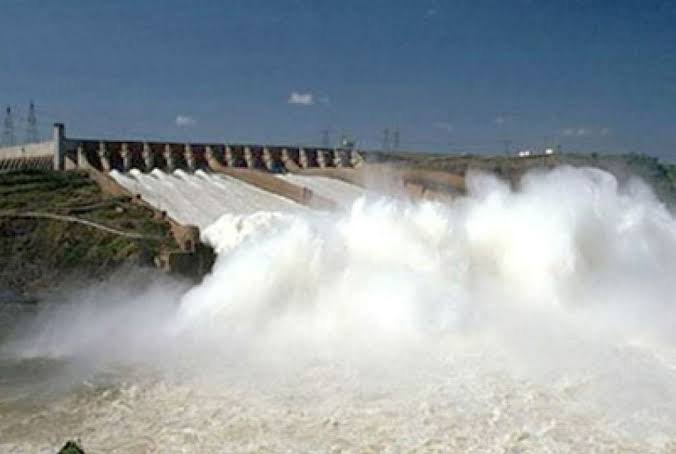

ECNEC Approves Major Cost Revision Despite Management and Oversight Concerns
The cost of Pakistan’s Tarbela 5th Extension Hydropower Project has surged to around Rs316 billion, marking an increase of approximately Rs234 billion from its original estimate of Rs82 billion.
The Executive Committee of the National Economic Council approved the revised project at its latest meeting chaired by Deputy Prime Minister and Foreign Minister Ishaq Dar.
The project was among 16 development schemes worth around Rs1.15 trillion cleared by ECNEC. Around Rs320 billion of the overall amount represents additional costs arising largely from project delays and price escalation.
The Tarbela scheme alone has become one of the most significant examples of cost escalation among the projects reviewed.
Its revised PC-I places the estimated cost at approximately Rs316.4 billion, compared with the original estimate of around Rs82 billion.
The project aims to expand electricity generation at Tarbela Dam by installing additional generating units at Tunnel 5.
The original scheme envisaged 1,410 megawatts of additional generation. The project has subsequently been reported with an expanded capacity of around 1,530MW.
It is being supported by international lenders, including the World Bank and Asian Infrastructure Investment Bank, making the financial implications of the delays particularly important for the government.
Earlier financing arrangements involved around $700 million in World Bank and AIIB loans.
Cofferdam Collapse Blamed on Design Changes and Weak Supervision
The sharp increase in cost comes after serious problems emerged during construction.
A government-appointed inquiry investigated the August 2025 collapse of the downstream cofferdam at the Tarbela 5 site.
The inquiry concluded that the failure was not caused by extraordinary flooding.
Instead, investigators linked the collapse to a series of contractual and technical failures, including an unauthorised design change, inadequate supervision and delayed administrative action.
According to the inquiry findings, the cofferdam design was changed from a roller-compacted concrete structure to a rock-fill design.
The contractor proposed the change, while the consultant accepted the design conditionally and Wapda ultimately approved it.
The investigation found that contractual procedures and technical safeguards were not properly followed.
It also rejected claims that unusually high water flows were responsible for the structural failure, noting that the flows remained within historical levels and below the cofferdam’s intended design capacity.
The collapse caused flooding at the project site and disrupted construction.
It also contributed to major financial losses and delays.
The project, once expected to be completed in 2026, is now targeted for completion by June 2028, according to earlier government inquiry reporting.
The inquiry held the contractor, consultant and Wapda responsible for failures surrounding the cofferdam.
It also identified weaknesses in monitoring, contract management and the handling of temporary works.
Ahsan Iqbal Raised Questions Over Management and Transparency
The project had already faced strong criticism before reaching ECNEC.
During an earlier Central Development Working Party meeting, Planning Minister Ahsan Iqbal expressed serious concerns over project management, transparency and oversight.
The Planning Ministry said concerns were also raised about the professional capacity of officials responsible for supervising the scheme.
Iqbal questioned how consultants were selected and why weaknesses identified during the project had not been dealt with earlier.
He directed that concerns over poor due diligence, contractor performance and project management be formally presented before ECNEC.
The Planning Commission also called for stronger institutional mechanisms to prevent similar problems in future mega projects.
Officials were told that Wapda needed to improve accountability, project governance and professional oversight.
At the time, expenditure on the Tarbela project had already crossed Rs140 billion, even though the original approved estimate was around Rs82 billion.
The Finance Ministry also sought justification for the huge cost increase.
It reportedly asked Wapda to explain how loans associated with the internationally financed project would be repaid.
Despite those concerns, ECNEC has now approved the revised cost.
Lahore-Bahawalnagar Motorway Among Other Major Projects Approved
ECNEC also cleared several other large infrastructure and development projects.
Among the biggest was the proposed Lahore-Sahiwal-Bahawalnagar Motorway, estimated at approximately Rs407 billion.
The government retained the motorway’s original alignment of around 295 kilometres.
Its first 18.5km section, stretching from Lahore Ring Road to the Raja Jang Interchange, was approved at an estimated cost of around Rs49 billion.
The committee also approved the 48km Khwazakhela-Besham Expressway at a revised cost of Rs116.6 billion.
Its cost is about 47% higher than its original estimate.
Another road project intended to improve connectivity between Gilgit-Baltistan and Azad Jammu and Kashmir was approved at around Rs29 billion, approximately Rs10 billion above its previous estimate.
The long-delayed Rathoa Haryam Bridge project was approved at Rs10.8 billion.
Its original cost had been only around Rs1.4 billion, highlighting another major increase in development expenditure.
Wastewater, Poverty Reduction and Fulbright Projects Also Cleared
ECNEC also approved a Rs56.6 billion wastewater treatment project in Lahore, representing an increase of approximately Rs4.2 billion over the previous estimate.
A Southern Punjab Poverty Alleviation Project covering 10 districts received approval at approximately Rs29.7 billion.
Those districts include Bahawalnagar, Bahawalpur, Bhakkar, Dera Ghazi Khan, Khushab, Layyah, Mianwali, Muzaffargarh, Rahim Yar Khan and Rajanpur.
The poverty reduction programme itself carries around Rs6.8 billion in additional costs compared with earlier estimates.
ECNEC also approved approximately Rs10.6 billion for the Fulbright Scholarship Support Programme, which is expected to finance 816 scholarships.
The government says the approved schemes are intended to strengthen infrastructure, energy generation, connectivity, education and poverty reduction.
However, the Tarbela revision is likely to receive particular scrutiny because of its scale.
The rise from around Rs82 billion to more than Rs316 billion, combined with construction failures and delays, has renewed concerns about the management of large publicly financed infrastructure projects.
With international loans involved and completion pushed back, attention will now turn to whether the revised budget can prevent further escalation and whether accountability measures recommended by earlier inquiries are implemented.

