

Reports highlight production losses, damaged LNG facilities and concerns over future global supply growth
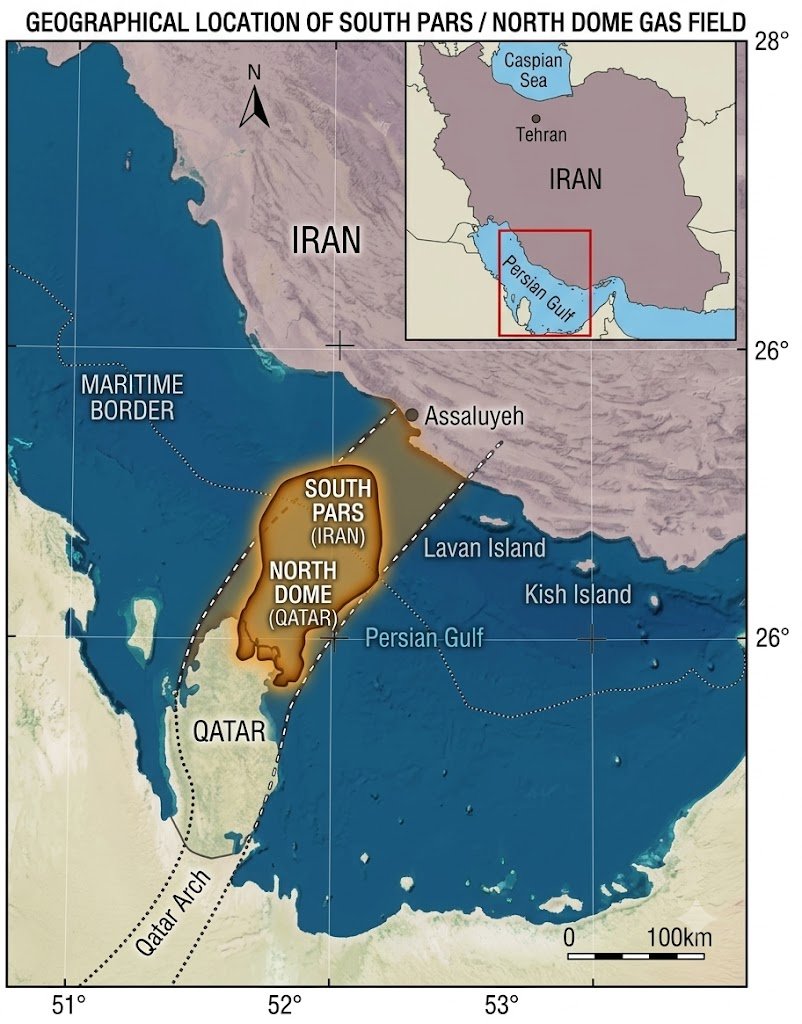
LONDON: A series of military strikes and retaliatory attacks earlier this year has renewed attention on the South Pars/North Field gas reservoir beneath the Persian Gulf, one of the world’s largest known natural gas reserves, with reports indicating significant damage to energy infrastructure on both the Iranian and Qatari sides.
According to the claims outlined in the report, Iran said it temporarily lost about 230 million cubic metres of daily natural gas production, or roughly 35% of its national output, after Israeli strikes targeted processing facilities linked to the South Pars field in March. The reported reduction was attributed to damage to above-ground infrastructure rather than depletion of underground reserves.
The report also said the South Pars field, shared by Iran and Qatar’s North Field, contains an estimated 1,800 trillion cubic feet of natural gas, making it one of the world’s most significant energy reservoirs.
Processing facilities become strategic targets
The report stated that, following the Israeli strikes, Iran launched missiles toward Qatar’s Ras Laffan industrial complex, which processes gas from the Qatari section of the shared reservoir.
It further claimed that two liquefied natural gas (LNG) trains at the facility were damaged, reducing production capacity and potentially requiring several years of repairs. Qatar previously condemned attacks affecting its energy infrastructure, while the United States warned against further strikes targeting Qatari facilities.
These claims have not been independently verified.
Infrastructure seen as key vulnerability
The report argued that recent events demonstrated that above-ground processing plants and LNG infrastructure, rather than underground gas reserves, represent the most vulnerable components of the global energy supply chain.
It cited International Energy Agency assessments indicating that increased production by non-Gulf suppliers helped offset much of the regional supply disruption, limiting the impact on global LNG output.
However, the report suggested that damage to specialised liquefaction facilities could delay planned global LNG expansion projects, underscoring how geopolitical tensions can disrupt energy markets even when substantial natural gas reserves remain available beneath the surface.
One reservoir under the Persian Gulf holds enough natural gas to cover world demand for about 13 years. It is still completely full. The country sitting on a third of it has just admitted losing 35% of its national gas production.
Tehran puts the loss at 230 million cubic metres… pic.twitter.com/EMbWXOn2VD
— Shanaka Anslem Perera ⚡ (@shanaka86) July 28, 2026

