
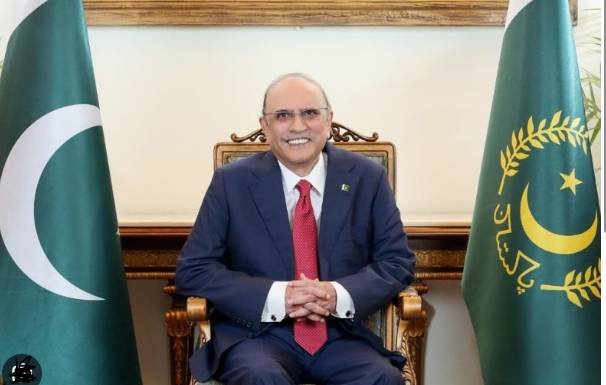

President Asif Ali Zardari has approved the Finance Bill 2026–27, completing the constitutional process required for the federal budget to become law.
With presidential approval now granted, the federal budget will officially take effect from July 1, 2026. The move also clears the way for the implementation of tax measures, development plans, and revised salary and pension structures.
The approval marks the final legal stage before the beginning of Pakistan’s new fiscal year.
Finance Bill 2026–27 Formally Becomes Law
Following presidential assent, the signed bill has been returned to the Ministry of Parliamentary Affairs.
The ministry will now forward the approved legislation for publication in the official gazette.
This step completes the remaining legal formalities required for implementation.
As a result, the Finance Act 2026–27 will become operational at the start of the upcoming financial year.
Federal Budget Outlay Set at Rs18.771 Trillion
The approved federal budget carries a total outlay of Rs18.771 trillion.
The government plans to implement fiscal and development measures under the new framework.
Several taxation and duty-related adjustments will also come into effect from July 1.
The budget forms the basis of economic planning and revenue targets for the coming fiscal cycle.
Government Employees to Receive Salary and Pension Increase
One of the major measures included in the Finance Act 2026–27 is an increase in government compensation.
Under the approved structure, salaries and pensions of government employees will increase by seven per cent.
The revised payments will become applicable from the first day of the new financial year.
The adjustment forms part of broader fiscal planning under the approved budget framework.
Parliament Completed Approval Process Earlier
The National Assembly Secretariat forwarded the Finance Bill to the Presidency after Parliament completed the approval process.
Lawmakers reviewed the bill clause by clause before final passage.
Finance Minister Muhammad Aurangzeb presented the legislation during parliamentary proceedings.
Several amendments were discussed during debate.
However, government-backed proposals received approval, while opposition-supported amendments were rejected.
Proposed Changes Rejected During Voting
Among the rejected proposals was an amendment seeking to reduce tax on vehicles with engine capacities up to 1,000cc.
The proposal aimed to lower the amount from Rs20,000 to Rs10,000.
Additional amendments moved by Alia Kamran, including proposed changes to Clauses 4 and 6, were also rejected.
The final legislation passed without those revisions.
The voting process concluded in the absence of Pakistan Tehreek-e-Insaf members, who were not present in the House during the final stage of approval.
Implementation Begins From July
With presidential approval completed, the government will move toward executing its fiscal agenda.
Development programmes and revenue measures outlined in the Finance Act 2026–27 will now proceed according to schedule.
The start of the new fiscal year will mark the official beginning of implementation across federal departments.

