
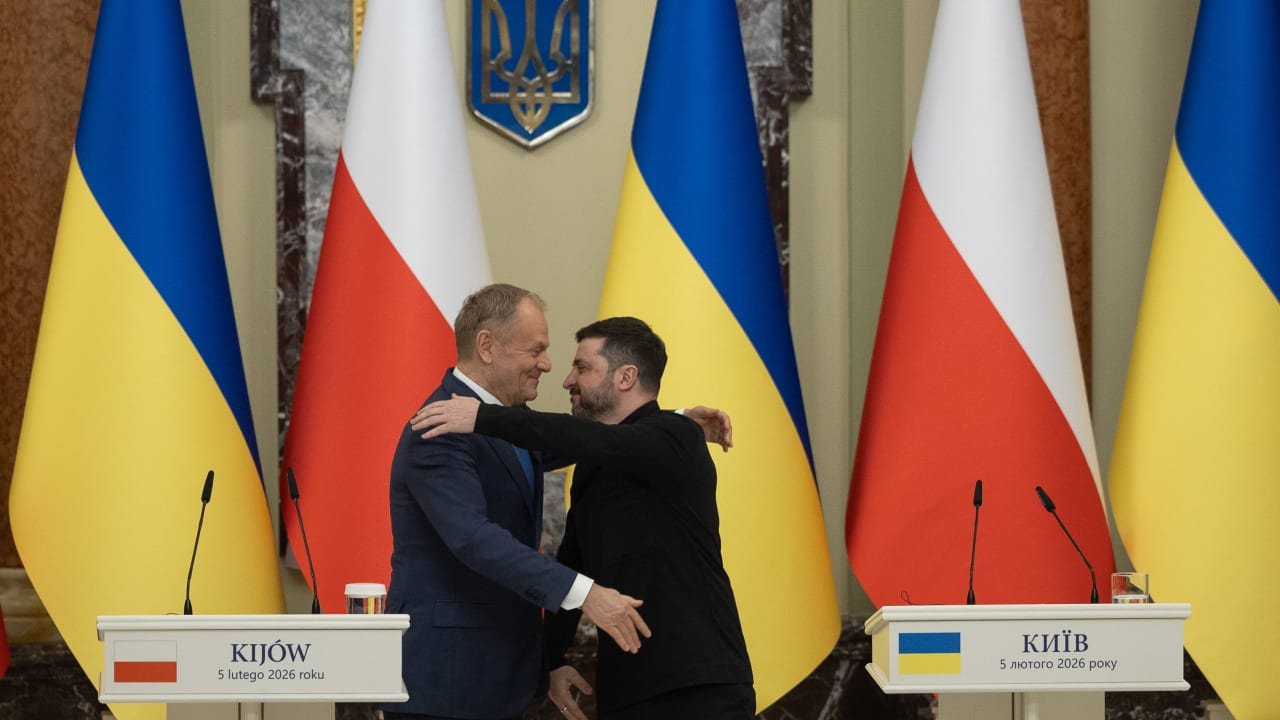

Prime Minister Tusk says ceasefire appears unlikely in the near term
PARIS: Polish Prime Minister Donald Tusk said on Tuesday that a ceasefire or peace agreement in Ukraine appears unlikely in the near future, warning that Russia is expected to continue military operations at least until the winter.
Speaking to reporters in Paris, Tusk said he had discussed the latest developments with NATO Secretary-General Mark Rutte and Ukrainian President Volodymyr Zelensky. He stated that current assessments indicate Moscow remains unwilling to soften its position, making a diplomatic breakthrough increasingly difficult.
According to Tusk, Russia is widely expected to intensify its military campaign rather than move toward negotiations. He said the prevailing view among allied leaders is that the Kremlin will seek to extend the conflict for several more months.
His remarks come as European governments continue evaluating military and diplomatic options while supporting Ukraine amid ongoing hostilities.
Poland plans joint military exercises with France and Britain
Tusk also announced that Poland will host joint military exercises with French and British forces during the autumn. The drills aim to strengthen coordination among allied militaries and prepare them for potential future security responsibilities following any eventual ceasefire or peace agreement.
He said the exercises would enhance the readiness of the coalition of willing nations that has been meeting in Paris to discuss long-term security arrangements for Ukraine and the wider region.
According to Tusk, the training will focus on developing practical capabilities required to provide credible security guarantees if a political settlement is eventually achieved.
European allies continue long-term planning
Although diplomatic efforts remain active, European leaders continue preparing for multiple scenarios as the conflict persists. Officials believe strengthening military cooperation now will improve regional stability and ensure allied forces are better equipped to respond when conditions allow for a lasting peace settlement.
The latest comments reflect growing concern among European governments that the war could continue for an extended period despite ongoing international efforts to end the conflict through negotiations.

