
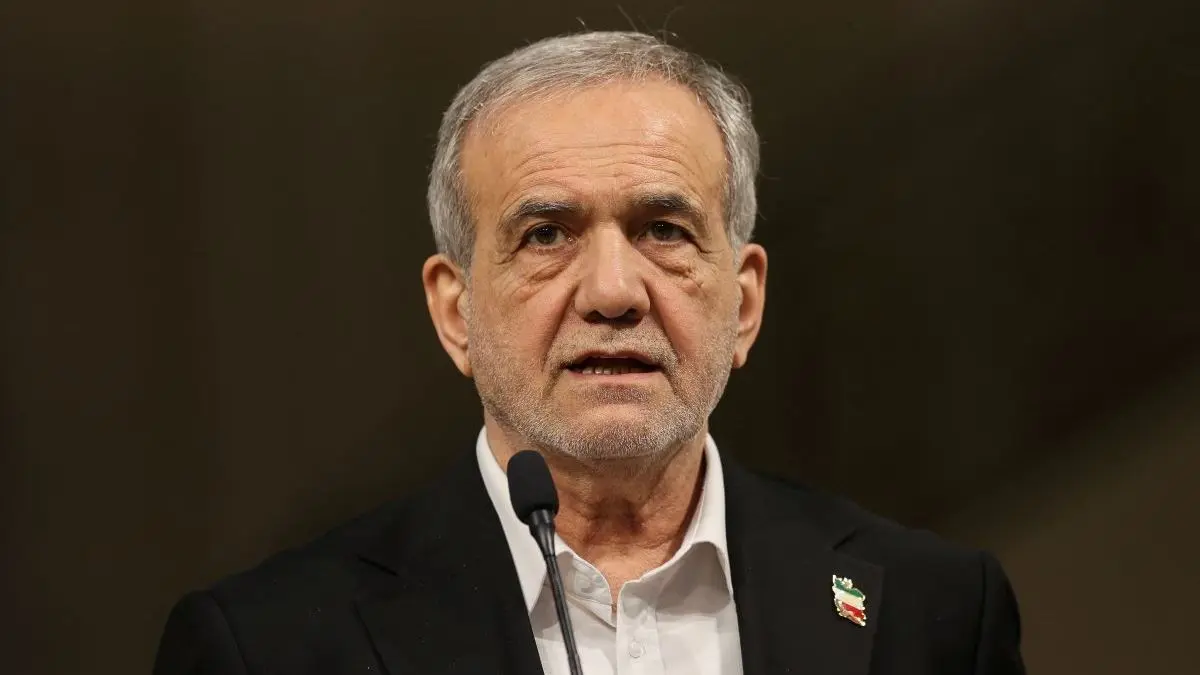

Iranian President Masoud Pezeshkian has reiterated Tehran’s willingness to engage in dialogue and reach agreements; however, he emphasized that distrust, blockades, and threats remain key barriers to meaningful negotiations.
In a statement shared on social media, Pezeshkian stated that Iran continues to support dialogue but warned that breaches of commitments and external pressure undermine genuine progress. Moreover, he criticized what he described as “hypocritical and hollow rhetoric,” adding that the global community is witnessing a clear contradiction between words and actions.
Meanwhile, Mohammad Bagher Ghalibaf addressed the situation surrounding the Strait of Hormuz, stressing that its reopening depends on specific conditions. He asserted that the vital shipping route cannot be restored unless blockades are lifted and ceasefire violations come to an end. Additionally, he noted that any ceasefire would only hold value if all parties respect it and remove restrictive measures.
Ghalibaf further warned that continued pressure on Iran and disruptions to global trade could hinder regional stability. He argued that prolonging tensions and “holding the global economy hostage” would only exacerbate the crisis. At the same time, he called for an end to what he termed attacks by “Zionist elements,” cautioning that failure to do so could escalate the situation further.
Furthermore, the speaker maintained that military action and pressure tactics have proven ineffective, urging recognition of Iran’s rights as the only viable path forward.
In parallel, Pakistan continues its mediation efforts to revive dialogue between Iran and the United States. Although preparations for proposed talks in Islamabad were completed, discussions stalled due to the absence of both delegations.
Nevertheless, efforts remain ongoing, while unresolved issues — including ceasefire terms, naval blockades, Iran’s nuclear program and control of the Strait of Hormuz — continue to drive regional tensions and disrupt global energy flows.

