
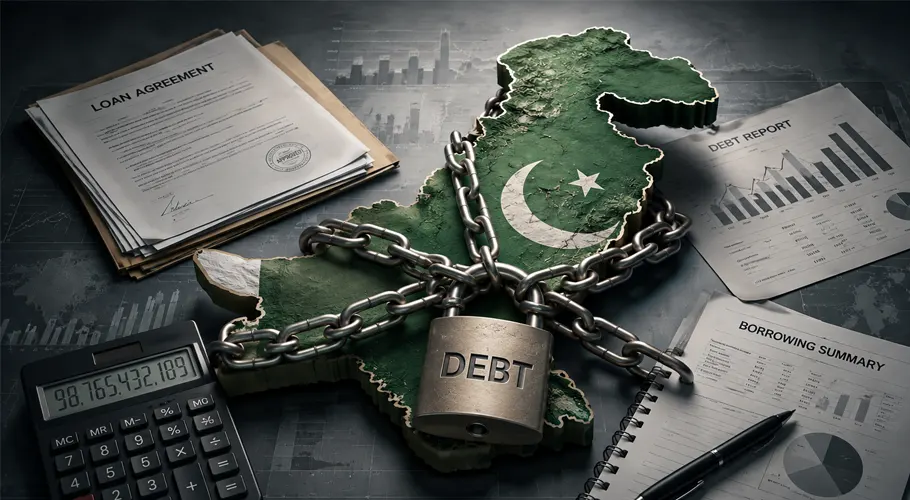

ISLAMABAD: Pakistan’s total debt has increased to Rs 99.6 trillion, according to data released by the State Bank of Pakistan.
The country’s debt increased by Rs 5.2 trillion during fiscal year 2024-25. Total debt reached Rs 94.387 trillion by June 30, 2025.
Meanwhile, government domestic debt rose to Rs 59.441 trillion. External debt reached Rs 36.19 trillion by June 2026, according to central bank data.
Debt Servicing Adds Pressure on Economy
Pakistan made total debt repayments of Rs11.966 trillion during fiscal year 2026.
The country paid Rs4.466 trillion toward external debt principal during the period. It also paid Rs 7.26 trillion in interest on its debt.
Interest payments increased from Rs9.466 trillion recorded during fiscal year 2025. The rising debt-servicing burden continues to pressure Pakistan’s finances.
Meanwhile, the power sector’s circular debt has emerged as another major challenge for the government.
Sources said the issue could complicate Pakistan’s discussions with the International Monetary Fund over the next loan instalment.
The IMF and Pakistani authorities are scheduled to hold review talks in Pakistan next month.
According to sources, circular debt stands around 130% above the limit previously agreed with the IMF.
The lender had initially targeted keeping the circular debt at Rs1.6 trillion.
Energy Prices Fuel Circular Debt
Furthermore, sources attributed the recent increase in circular debt partly to higher global energy prices.
The escalation followed the US-Iran conflict, which pushed international energy costs higher.
Consequently, rising energy prices have increased financial pressures across Pakistan’s power sector.
The government now faces the challenge of managing debt repayments, controlling circular debt and meeting IMF commitments.
These pressures could influence economic policy and fiscal measures during the coming months.

