
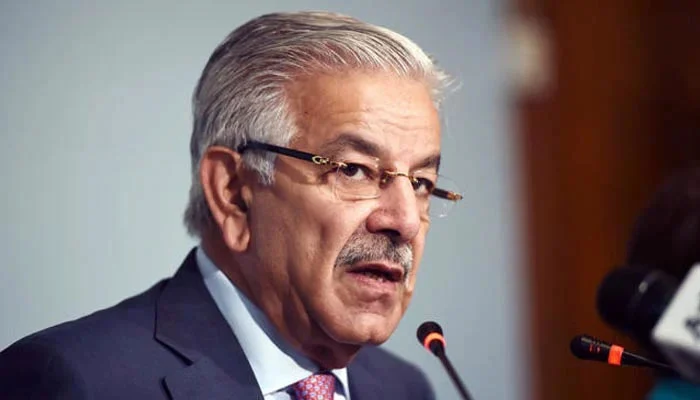

Pakistan’s economic direction came into focus during the National Assembly session as Defence Minister Khawaja Asif argued that the country had moved beyond immediate financial instability and entered a more stable phase of recovery.
While speaking during the ongoing budget debate, the minister described the country’s economic position as stronger than in previous years and suggested that Pakistan had started moving away from crisis management toward long-term stability.
At the same time, the parliamentary discussion extended beyond economic indicators and touched on taxation, regional security, population challenges, and future development priorities.
Khawaja Asif Says Pakistan Has Moved Beyond Immediate Economic Crisis
During his address, Khawaja Asif reflected on the government’s economic situation during its early period and contrasted it with current conditions.
“When we [presented] the first budget, we were insolvent. There was always the danger that we would default today or tomorrow. The International Monetary Fund (IMF) bailed us out with strict conditions, which we are now bearing but we have become solvent. Our economy is breathing; it has left the ICU,” he said.
His remarks framed the current economic position as a gradual recovery rather than complete transformation.
At the same time, he clarified that the country had not yet reached its desired destination and stressed that progress would require continued reforms and policy consistency.
“I will not say that we are reaching the stars but our trajectory bears witness that in one or two years … we will reach a place where Pakistan achieves a growth rate of 6-7 per cent,” he said.
The statement reflected optimism about medium-term economic performance while acknowledging that further improvement remains necessary.
Tax Policy and Economic Confidence Remain Part of the Growth Discussion
Khawaja Asif also linked economic recovery to broader reforms in taxation and public confidence.
According to the minister, the existing tax environment creates pressure that can discourage compliance and encourage avoidance.
He argued that economic sustainability depends on creating a system where taxpayers participate willingly rather than reluctantly.
“There were multiple inbuilt taxes” in the country, he noted, while emphasising the need for reform.
“Why should we force people to search for ways to evade taxes? We should bring taxes to a level where a conducive environment is created, where people pay taxes and do so with pride,” he said.
His remarks highlighted the idea that improving revenue collection is connected not only to rates but also to public trust and ease of compliance.
Balochistan Security and Development Challenges Enter Budget Discussion
Beyond economic issues, Khawaja Asif addressed concerns related to security and instability in Balochistan.
He argued that the challenges facing the province were not recent and should be viewed as the result of long-term policy and governance decisions.
“I will not take names … but it is everyone’s responsibility,” he said.
He further stressed that public representatives across political lines shared responsibility for addressing these issues.
“If Balochistan’s roads were not safe, the collective responsibility also lay with the House,” he stated.
He added that assigning blame alone would not produce meaningful outcomes and suggested that collaborative solutions were necessary.
“I can accuse my brothers on that side of the aisle about what happened in their time, and they can accuse me, but it goes back to the 50s,” he noted.
“If we want to search for a solution, we have to search for it collectively.”
His comments positioned security and development as interconnected national priorities.
Pakistan’s Role in Regional Diplomacy Highlighted During Debate
During his remarks, Khawaja Asif also discussed Pakistan’s involvement in helping facilitate the agreement between the United States and Iran.
He described recent diplomatic developments as a reflection of Pakistan’s international engagement and credited national leadership for contributing to those efforts.
Talking about the outcome, he said Pakistan’s global standing had strengthened in recent months.
“I think the whole nation should be thankful to them, because they steered us [through] an issue that seemed impossible,” he said.
“They made the impossible possible.”
He also commented that Pakistan could benefit economically if regional cooperation expanded further, particularly through improved conditions surrounding Iran’s energy exports.
According to him, Balochistan could gain significantly if economic opportunities increased.
“Let’s see how we can proceed in this direction so that we can maximise our dividends,” he said.
Mustafa Kamal Questions Population-Based NFC Distribution Formula
Earlier in the session, Health Minister Mustafa Kamal raised concerns regarding the National Finance Commission award formula and questioned whether population should continue carrying dominant weight in resource distribution.
He argued that the current structure may unintentionally discourage population management efforts.
“What province will reduce its income by controlling the population?” the minister asked.
He noted that provinces with smaller populations receive comparatively lower shares and suggested broader criteria should influence allocations.
“Balochistan is the smallest province [population-wise] and gets the lowest share [in the NFC]. If it wants to get [a larger] share like Punjab, it will have to increase its population,” he pointed out.
According to him, the existing framework represented the “biggest flaw” in the system.
He also referenced examples from neighbouring countries and suggested that factors such as revenue generation, backwardness, and economic performance should receive greater consideration.
Population Growth and Public Services Remain Long-Term Concerns
Mustafa Kamal further connected population growth with pressure on public infrastructure and social services.
He argued that rapid population expansion increases demands on education, healthcare, and employment systems.
He warned that if current trends continue, the country would require substantial investment in public services.
According to his estimates, Pakistan would need thousands of additional schools, millions of employment opportunities, and expanded healthcare capacity.
He proposed incentives for provinces attempting to manage population growth and welcomed the budget proposal to remove taxes on contraceptives.
The minister suggested that such measures could contribute to long-term planning and improved resource management.
He also questioned whether existing governance structures were sufficient to deliver services effectively.
“Under the current system of governance … we can’t provide resources and solutions to people’s issues at their doorsteps,” he said.
Economic Recovery and Structural Reform Remain Central Themes
The National Assembly discussion reflected broader questions extending beyond annual budget numbers.
Economic recovery, tax reform, population management, regional stability, and governance all emerged as interconnected themes shaping future policy discussions.
While government representatives expressed confidence that economic conditions had improved, they also acknowledged that long-term progress would depend on structural reforms and sustained implementation.
The debate ultimately highlighted that stabilisation may represent an important milestone, but future growth will depend on how effectively those reforms translate into lasting outcomes.

