

Government Restores Petroleum Levy to Budgeted Level
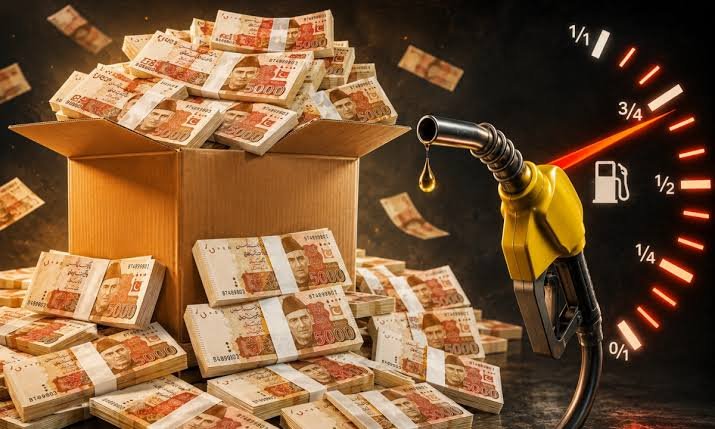
The federal government aims to collect Rs1.676 trillion through the petroleum levy during fiscal year 2026-27, highlighting the growing importance of fuel-related revenue to Pakistan’s finances.
Minister for Petroleum Ali Pervaiz Malik disclosed the target in a written response submitted to the National Assembly.
The government has based its FY27 revenue target on an average petroleum levy of Rs80 per litre on petrol and high-speed diesel.
The levy had earlier been reduced when international oil markets experienced exceptional volatility.
According to the minister, the government temporarily lowered the levy to provide relief to consumers.
However, the rate has since been restored in phases to bring collections in line with the revenue target approved in the federal budget.
The government collected a record Rs1.567 trillion in petroleum levy during FY26, up 29% from Rs1.22 trillion a year earlier.
The collection also exceeded the revised FY26 target of Rs1.498 trillion.
For FY27, the government is targeting around Rs109 billion more than the amount actually collected during the previous fiscal year.
In addition to the Rs1.676 trillion petroleum levy target, the FY27 budget also expects Rs50 billion from the climate support levy on petroleum products.
Petrol and Diesel Levy Climbs to Rs80 Per Litre
The petroleum levy on petrol and diesel has undergone several revisions since the beginning of FY27.
On July 1, the levy stood at Rs66.64 per litre on petrol and Rs79.54 per litre on high-speed diesel.
A day later, the government reduced the rates to Rs64.14 on petrol and Rs77.04 on diesel.
On July 4, the rates were revised again to Rs70.36 per litre for petrol and Rs70.82 for diesel.
The levy on petrol then reached the budgeted Rs80 per litre level on July 11.
The increase in diesel was more gradual.
The HSD levy stood at Rs72.26 per litre on August 6. It increased to Rs73.47 on August 7 and Rs74.28 on August 8.
The government raised it further to Rs76.28 on August 12, Rs77.28 on August 13 and Rs78.28 on August 14.
By August 20, 2026, the petroleum levy had reached Rs80 per litre on both petrol and high-speed diesel.
Overall, the levy on petrol increased by Rs13.36 per litre between July 1 and August 20.
The phased increases show how the government has gradually restored the tax component while managing frequent changes in international petroleum prices.
The petroleum levy is particularly important for the federal government because its proceeds are not part of the federal divisible pool distributed among provinces under the National Finance Commission arrangement.
Any Future Cut Depends on Fiscal Space and Global Oil Prices
Ali Pervaiz Malik told the National Assembly that the Petroleum Division had not carried out a separate assessment of how the levy affects individual categories of consumers.
He said the levy is primarily a fiscal revenue measure included in the approved federal budget.
Its collection target is also linked to Pakistan’s broader fiscal commitments with international financial institutions.
Responding to questions about whether the government could reduce the levy to provide relief to consumers, Malik said any reduction would depend on several factors.
These include available fiscal space, government revenue requirements, commitments with international financial institutions and conditions in global petroleum markets.
The minister said the government attempts to pass reductions in international oil prices on to consumers whenever circumstances allow.
However, lower global crude prices do not automatically guarantee an equivalent reduction in domestic petrol and diesel prices because taxes, levies, exchange rates and other components also affect final retail prices.
The government’s reliance on petroleum levy revenue has increased considerably in recent years.
FY26 collections of Rs1.567 trillion surpassed both the original budget estimate of Rs1.468 trillion and the subsequently revised target of Rs1.498 trillion.
With the FY27 target now set at Rs1.676 trillion and the levy restored to Rs80 per litre, petroleum products are expected to remain a major source of federal non-tax revenue.
Any substantial reduction in the levy would therefore require the government to either find alternative revenue or create enough fiscal space to absorb the loss.
For consumers, future relief at fuel stations will depend heavily on international oil prices and how much room the government has to reduce taxes and levies while still meeting its budgetary commitments.

