

Pakistan has rejected India’s latest assertions about Jammu and Kashmir. Islamabad said India’s unilateral actions cannot change the region’s disputed status.
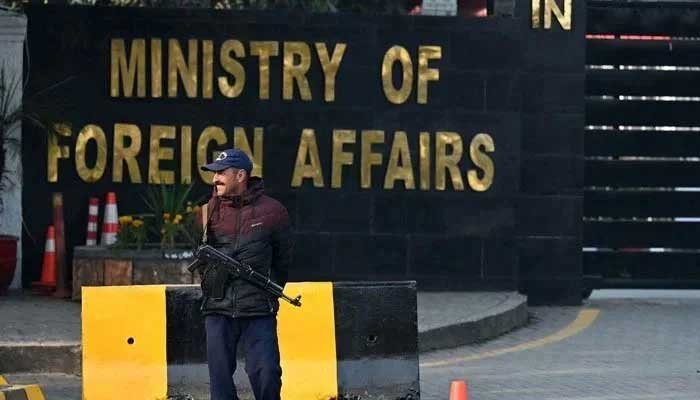
The Ministry of Foreign Affairs issued the response on Monday. It followed a statement from India’s Ministry of External Affairs concerning maps of Jammu and Kashmir and Ladakh.
Ministry of Foreign Affairs spokesperson Ambassador Sajjad Haider Khan described India’s assertions as baseless. He said they contradict internationally recognized facts surrounding the longstanding dispute.
In response to media queries, Ambassador Sajjad Haider Khan said:
“Pakistan categorically rejects India’s baseless assertions regarding the status of Jammu and Kashmir which are contrary to internationally-recognized facts. India’s unilateral actions and continued illegal occupation cannot alter the internationally-recognized disputed status of Jammu and Kashmir.
“Jammu and Kashmir dispute remains one of the oldest unresolved, internationally recognized disputes on the agenda of the United Nations Security Council. The relevant UN resolutions stipulate that its final disposition must be made in accordance with the relevant Security Council resolutions and the will of the Kashmiri people, expressed through a free and impartial plebiscite under UN auspices.
“The official United Nations maps, which depict Jammu and Kashmir as a disputed territory, remain the only cartographic representation of its current legal status. India’s so-called official maps and unilateral claims of sovereignty have no bearing on the status of the disputed territory.
“Pakistan urges the international community to ensure that India immediately stops human rights violations in the Indian Illegally occupied Jammu and Kashmir, and fulfils its commitment towards the realisation of the right to self-determination of the Kashmiri people, in line with the relevant UNSC resolutions.”
Pakistan reiterates Kashmir dispute position
Pakistan maintained that Jammu and Kashmir remains an internationally recognized disputed territory. It also emphasized the relevance of United Nations Security Council resolutions.
According to Islamabad, the dispute remains among the oldest unresolved issues on the UN Security Council agenda. Pakistan said its final settlement must follow the relevant UN resolutions.
The Foreign Ministry also referred to the principle of self-determination for the Kashmiri people. It said their will should be determined through a free and impartial plebiscite under UN auspices.
Pakistan further rejected India’s unilateral claims regarding the territory. Islamabad argued that such actions cannot change the region’s internationally recognized status.
Islamabad rejects India’s map claims
The Pakistani response also focused on the use of maps depicting Jammu and Kashmir.
According to Ambassador Sajjad Haider Khan, official United Nations maps identify Jammu and Kashmir as disputed territory. Pakistan said these maps represent the region’s current legal status.
Islamabad rejected the significance of India’s official maps and sovereignty claims. It maintained that unilateral cartographic representations cannot determine the status of the disputed territory.
The issue has remained a longstanding source of tension between Pakistan and India. Therefore, competing claims over Jammu and Kashmir continue to feature prominently in their diplomatic exchanges.
Pakistan calls for international action
Pakistan also urged the international community to address the situation in Indian-administered Jammu and Kashmir.
The Foreign Ministry called for an immediate end to what it described as human rights violations in the region. It also urged India to fulfil what Pakistan described as its commitment to the Kashmiri people’s right to self-determination.
Islamabad linked that position to the relevant United Nations Security Council resolutions. It said the dispute should ultimately be addressed through the framework outlined in those resolutions.
India issues statement on Jammu and Kashmir and Ladakh
Pakistan’s response came one day after India’s Ministry of External Affairs issued a statement concerning Jammu and Kashmir and Ladakh.
The Indian statement followed its support for an African Union resolution seeking to “rebalance” the world map.
India’s position came two days after it voted in favour of a UN General Assembly resolution. That resolution sought to “correct” the world map and promote a more accurate representation of continental landmasses.
The developments have brought the issue of map representation into focus once again. However, Pakistan has maintained that changes to maps cannot alter the disputed status of Jammu and Kashmir.
The latest exchange highlights the continuing disagreement between Islamabad and New Delhi over the territory. Pakistan continues to point to the UN framework governing the dispute.
Meanwhile, India maintains its own position regarding Jammu and Kashmir and Ladakh. The competing positions remain a significant point of disagreement between the two countries.
For Pakistan, the central issue remains the internationally recognized disputed status of Jammu and Kashmir. Islamabad has again called for the dispute to be addressed in accordance with relevant UN Security Council resolutions.

