

Sudden Middle East Tensions Shake Global Oil Markets
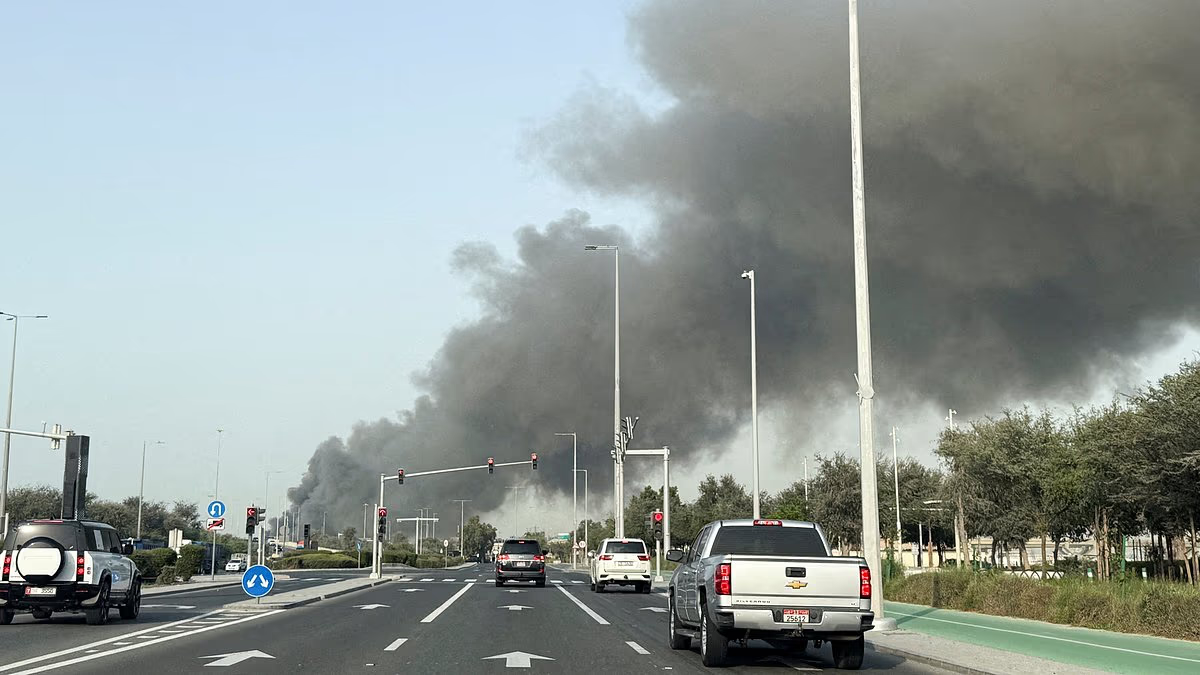
Global oil markets reacted sharply after reports of a drone strike targeting an energy facility in the United Arab Emirates. The incident is believed to involve Iranian-linked operations, although official confirmation remains limited.
Brent crude prices spiked rapidly during early trading. Prices briefly crossed $119 per barrel before easing slightly. The sudden movement highlighted how sensitive global energy markets remain to geopolitical shocks.
Traders reported immediate volatility across major exchanges. Risk sentiment weakened as investors responded to fears of possible escalation in the Gulf region.
The UAE is a key player in global oil exports. Any disruption to its infrastructure creates immediate concerns about supply stability. This incident quickly triggered a strong risk premium in crude oil pricing.
Brent Crude Volatility and Market Reaction
After the initial spike, Brent crude retreated to the $113 to $115 range. However, market sentiment remains unstable. Analysts suggest that prices could once again approach $120 if tensions escalate further.
Physical oil markets showed the strongest reaction. Spot prices surged faster than futures contracts. This created a noticeable gap between real-time oil pricing and long-term trading instruments.
Some traders on financial platforms observed diverging trends. Spot Brent showed aggressive upward movement. Futures markets displayed weaker momentum and lower highs.
This divergence suggests uncertainty among institutional investors. Many appear cautious despite rising geopolitical risks. Traders are waiting for clearer developments before committing to long positions.
Oil markets have a long history of reacting sharply to Middle East tensions. Even unverified reports can trigger major price swings. The latest incident reinforces this pattern of extreme sensitivity.
Geopolitical Risk Premium Returns to Energy Trading
The latest drone attack has revived concerns about supply security in the Gulf region. The Middle East remains one of the most critical zones for global energy production and transport routes.
Market analysts say geopolitical risk is once again a major driver of crude oil pricing. Even small disruptions can significantly impact global benchmarks.
Social media discussions also reflected heightened volatility. Traders highlighted how oil markets often respond strongly to breaking geopolitical news. Some compared the reaction to rapid sentiment shifts seen during high-impact political statements.
The uncertainty has increased short-term trading activity. Investors are closely monitoring developments for any signs of escalation or de-escalation.
Energy markets are now entering a highly sensitive phase. Any further incidents in the region could push prices higher and sustain volatility across global commodities.
The situation remains fluid. Market participants are expected to stay cautious until clearer security updates emerge from official sources.

