
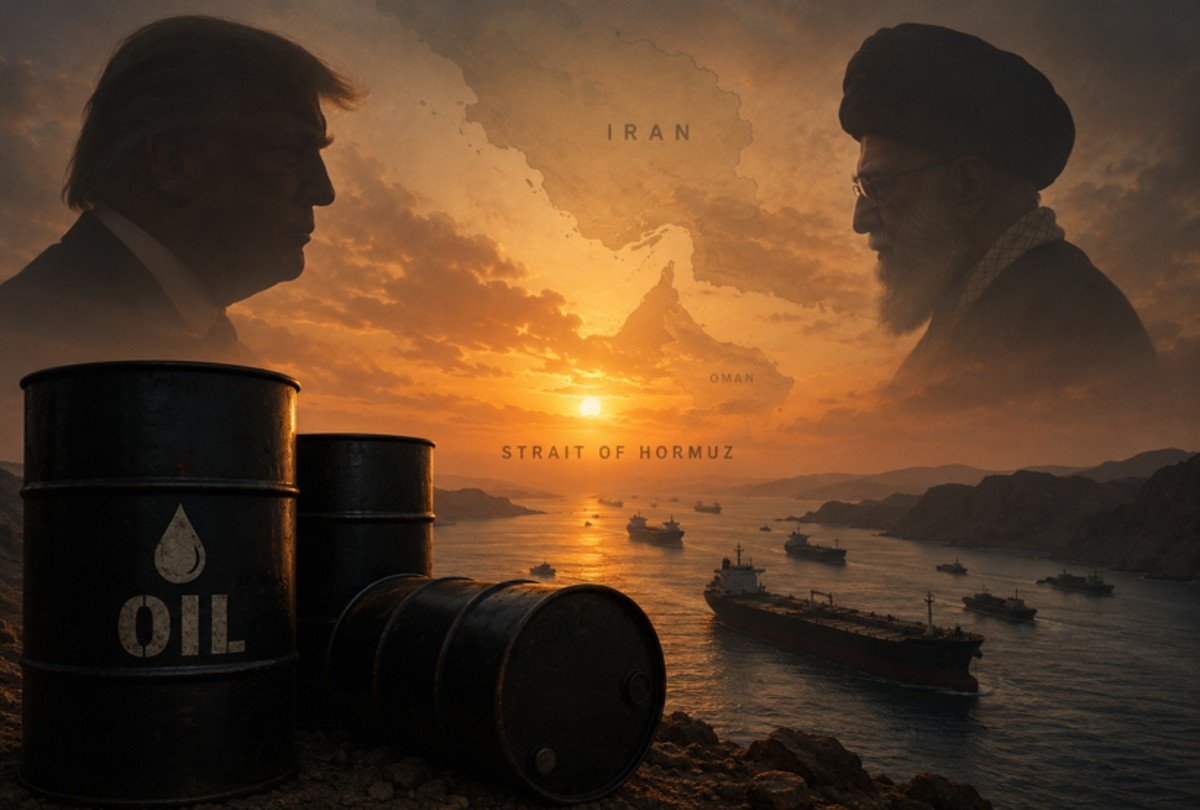

Oil prices fell sharply in early Asian trading on Thursday after the United States and Iran signed an agreement to reopen the Strait of Hormuz. The deal eased fears of supply disruptions and shifted market sentiment toward expectations of higher global oil supplies.
Brent crude traded at $77.64 per barrel, down 2.40%. Meanwhile, West Texas Intermediate (WTI) slipped 2.88% to $74.58 per barrel during early trading.
Agreement Eases Supply Concerns
The agreement, signed by the U.S. and Iranian presidents, extends the existing ceasefire by 60 days while both sides pursue a permanent settlement. It also includes reopening the Strait of Hormuz, lifting U.S. sanctions on Iran, unfreezing Iranian assets, and Tehran’s commitment not to pursue a nuclear bomb.
However, U.S. President Donald Trump warned that Washington would respond forcefully if Iran violated the agreement. Speaking at the G7 summit, he said the U.S. was prepared to resume military action if necessary.
Oil markets have changed direction rapidly in recent weeks. Earlier, analysts warned that escalating tensions could push crude prices as high as $200 per barrel. Instead, prices have fallen by more than 35% over the past month.
Analysts Remain Divided
Analysts remain split over the latest market trend. Some believe global energy markets have become more resilient to geopolitical shocks. Others argue investors may be underestimating the risks surrounding the agreement and the long-term reopening of the Strait of Hormuz.
According to Kpler, more than 90 million barrels of non-Iranian crude and another 70 million barrels of Iranian oil are waiting to leave the Gulf region. Meanwhile, the International Energy Agency warned that oil markets could face an oversupply in 2027. In contrast, OPEC expects stronger demand growth. Despite easing tensions, geopolitical risks continue to influence global energy markets.
Meta description: Oil prices declined after the US-Iran agreement reopened the Strait of Hormuz, easing supply concerns despite ongoing geopolitical market risks globally.

