
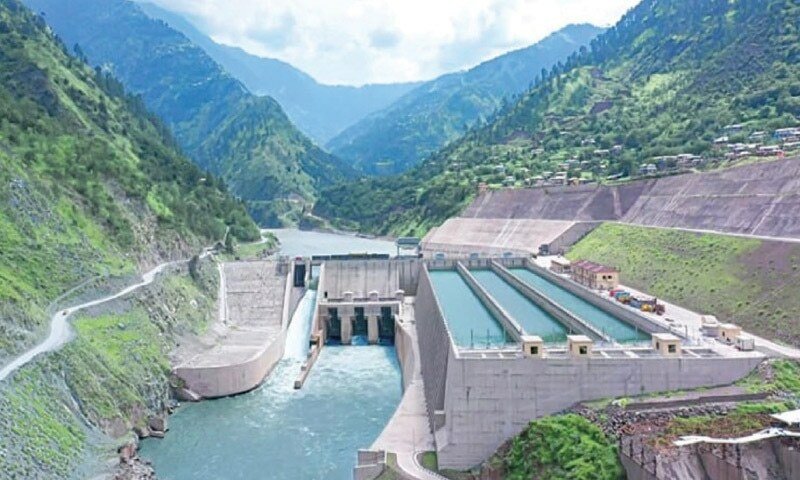

969MW Power Project to Stay Offline for Nearly Four Years
Pakistan’s nearly $5 billion Neelum-Jhelum Hydropower Project is expected to remain offline until at least March 2028, extending its shutdown to almost four years.
The 969-megawatt project has been out of service since May 2024 after a rock burst caused serious damage to its headrace tunnel. The shutdown has deprived the national grid of one of Pakistan’s cheapest sources of electricity at a time when power costs remain a major burden for consumers.
The matter was discussed during a meeting of the Senate Standing Committee on Water Resources. Wapda Chairman Lt-Gen (retd) Muhammad Saeed informed the committee that repair work is underway and said the project is expected to resume operations by March 2028.
He said geological studies conducted before the project’s construction had identified the area as a seismic zone. He added that inquiries into the tunnel failure are still in progress.
Lawmakers Seek Probe Into Possible Negligence
Senators expressed serious concern over the long shutdown of one of Pakistan’s most expensive public infrastructure projects. They questioned whether the damage was caused only by geological conditions or whether design, construction or operational failures also played a role.
The lawmakers demanded a transparent investigation into possible negligence. They said responsibility must be fixed if any lapse is found.
The Neelum-Jhelum project was awarded in July 2007 and commissioned in August 2018 after nearly a decade of construction. It cost around Rs500 billion, equal to about $4.7 billion at the exchange rate at that time.
Consumers have paid for the project for years through the Neelum-Jhelum surcharge in electricity bills. However, the continued closure means they are still bearing the financial cost while losing access to cheaper hydropower.
The prolonged outage has also increased reliance on expensive thermal power generation. This has added pressure on electricity prices and contributed to Pakistan’s growing circular debt crisis.
Panel Warns Over Water Security and Dam Safety
The Senate committee also discussed Pakistan’s worsening water security situation. Wapda officials told lawmakers that the country urgently needs more water storage infrastructure.
Members of the committee noted that Pakistan has not built a major dam since Tarbela and Mangla, while India has constructed thousands of dams. They warned that the lack of storage capacity could create serious long-term challenges for agriculture, energy and flood management.
The committee also reviewed a briefing by Suparco on satellite monitoring of river encroachments. Lawmakers criticised the presentation and said it lacked clarity.
Officials informed the panel that a draft Dam Safety Council Bill has been finalised with support from the Asian Development Bank. The proposed law aims to create a proper legal framework for dam safety in Pakistan.
Wapda also briefed the committee on the stalled Nai Gaj Dam project. Officials said litigation is continuing after the original contractor allegedly submitted a fake bank guarantee, causing losses of around Rs23 billion.
Once completed, the Nai Gaj Dam is expected to protect Dadu and Sehwan from flooding and irrigate nearly 28,000 acres of land.
Wapda officials further told the committee that the authority supplies electricity to the national grid at an average cost of Rs3.83 per unit and generates around 32 billion units of electricity every year.

