
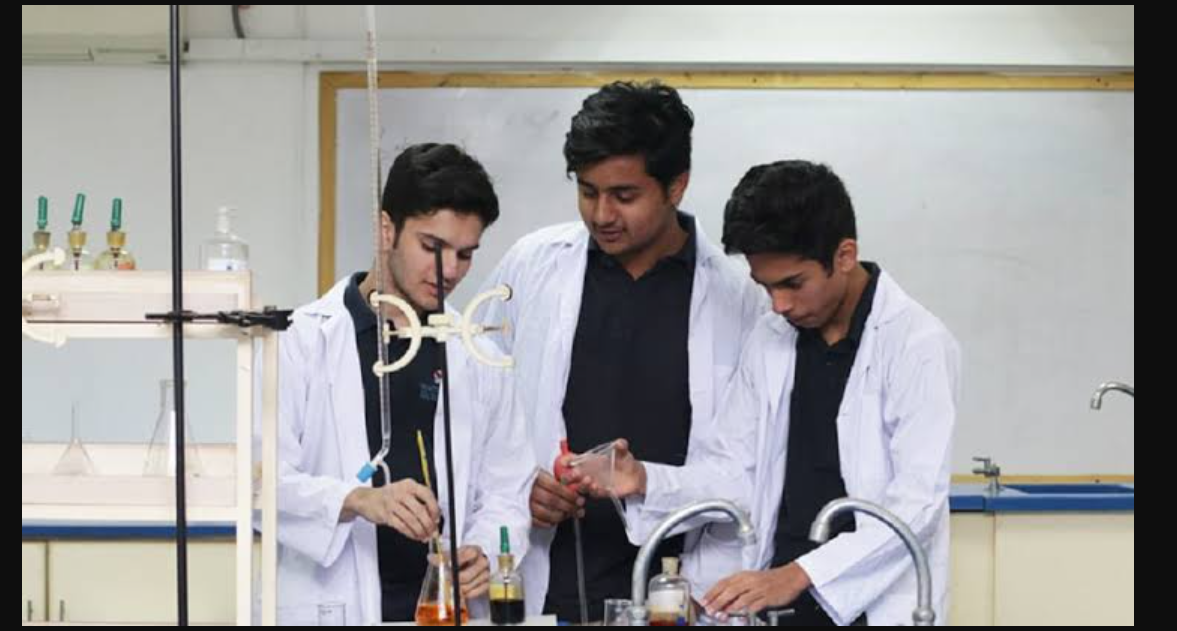

Punjab’s educational boards have approved a major change to the practical examination system for intermediate students.
Under the new policy, the written portion of practical examinations will no longer be checked at examination centres. Instead, boards will evaluate those answer sheets through a centralized marking system.
Officials say the reform aims to improve transparency, strengthen monitoring and ensure uniform assessment across Punjab.
The decision follows concerns about unusually high practical marks awarded in some cases despite weak performance in theory examinations. As a result, education authorities have moved to introduce a more structured evaluation process.
Punjab Boards Introduce New Practical Exam System
All Boards of Intermediate and Secondary Education across Punjab have agreed to implement the revised practical examination framework.
Under the new system, students appearing in physics, chemistry, biology and computer science practical examinations will complete an additional written test.
The practical examination will therefore consist of three components. These include the laboratory experiment, viva voce and a written assessment.
Officials believe this approach will provide a more comprehensive evaluation of students’ understanding and practical abilities.
Moreover, the system is expected to create greater consistency among different examination centres.
Written Portion to Be Marked at Board Level
One of the most significant changes involves the marking process.
A senior Lahore Board of Intermediate and Secondary Education official explained that boards will collect written answer sheets after the examinations.
The answer sheets will then be assigned to trained examiners for centralized assessment.
Meanwhile, examiners present at practical centres will focus only on laboratory work, practical skills and oral performance.
This separation of responsibilities aims to strengthen oversight. Consequently, boards expect a more transparent and standardized marking process.
Officials also believe centralized marking will reduce variations in assessment standards between examination centres.
Why Did Punjab Introduce the New Policy?
Education authorities introduced the reform after concerns emerged regarding inconsistencies in practical examination marks.
According to officials, the previous system offered limited oversight in some cases. Therefore, complaints occasionally arose from students and teachers regarding marking practices.
Some cases reportedly showed unusually high practical scores despite weak performance in theory examinations.
As a result, boards began reviewing ways to improve fairness and accountability.
Officials believe the revised system will help ensure that practical marks better reflect a student’s actual performance and understanding.
Furthermore, centralized assessment may make it easier to identify irregularities if concerns arise in the future.
Greater Transparency and Uniform Assessment
Education board officials say the primary objective of the reform is fairness.
An education board official said the reform is meant to ensure that every candidate receives marks based on actual performance under a transparent and uniform system.
The introduction of centralized marking is expected to support that goal. In addition, the written component will provide another measure of a student’s knowledge and preparation.
Officials hope the policy will create greater confidence in examination results. They also expect it to improve consistency across all boards in Punjab.
Because the same assessment procedures will apply widely, students may benefit from a more standardized evaluation process.
Experts See Benefits for Science Subjects
Education experts have largely welcomed the change.
They believe the new system could strengthen confidence in practical examinations, particularly in science subjects.
Practical marks often play a significant role in determining final grades. Therefore, consistent assessment standards are considered important for maintaining credibility.
Experts argue that a written component can help measure conceptual understanding alongside practical skills.
As a result, students may be evaluated through a broader and more balanced process.
The reform could also help educational boards review examination outcomes more effectively.
Students Seek Clear Guidelines
While many observers view the changes positively, students have raised questions about implementation.
They have called for detailed guidelines before the next examination cycle. In particular, many students want sample formats and clear instructions regarding the written portion.
Students believe early guidance would help them understand the revised pattern and prepare accordingly.
Clear communication may also reduce uncertainty as the new system is introduced.
Furthermore, sample papers could help students become familiar with expectations before appearing in examinations.
What the New Policy Means for Students
The revised practical examination policy represents a significant change for intermediate students across Punjab.
From now on, practical examinations in key science subjects will include a written assessment alongside laboratory work and viva voce.
Boards will centrally evaluate the written portion, while practical examiners will continue assessing laboratory performance and oral responses.
Officials expect the new approach to strengthen transparency, improve monitoring and promote uniformity in marking standards.
At the same time, students are looking for clear guidance to help them adapt to the revised system.
As Punjab moves toward implementation, the success of the policy will largely depend on consistent execution and effective communication. Nevertheless, education authorities believe the reform can make practical examinations fairer, more transparent and more reliable for all candidates.

