
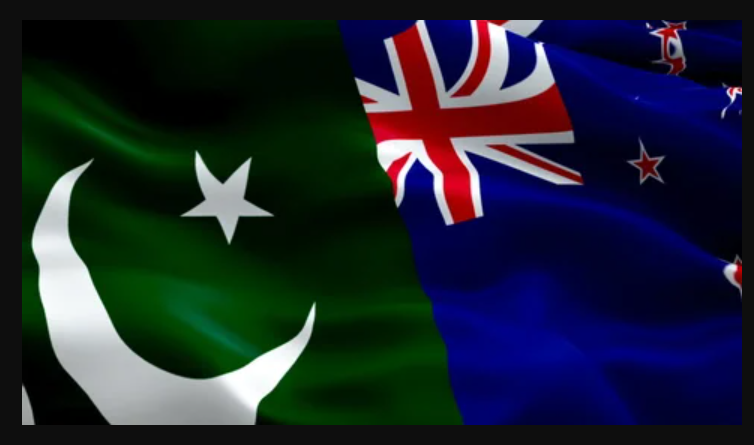

Pakistan and New Zealand have moved to strengthen political, trade and economic ties during high-level talks in Wellington.
The two countries held the 5th round of Political Consultations and the 3rd round of their Joint Trade Committee meetings.
The discussions covered bilateral relations, trade, investment, education and regional developments. Both sides also explored new areas for cooperation and stronger institutional engagement.
Pakistan-New Zealand Talks Focus on Bilateral Relations
The Political Consultations brought senior officials from both countries together to review bilateral relations. Pakistan’s delegation was led by Ambassador Dr Syed Ali Asad Gillani.
Gillani serves as Additional Foreign Secretary for Asia Pacific. Grahame Morton, Deputy Secretary of the Americas and Asia Group at New Zealand’s Ministry of Foreign Affairs and Trade, co-chaired the consultations.
During the meeting, both sides reviewed cooperation across several areas. These included high-level exchanges, economic development, science and technology, and education.
They also discussed counterterrorism, transnational crime and people-to-people contacts. Moreover, the delegations exchanged views on regional and international developments.
Both sides agreed to strengthen coordination through multilateral forums. This decision added a wider diplomatic dimension to their bilateral discussions.
Pakistan Briefs New Zealand on Regional Issues
Pakistan also briefed New Zealand on several regional developments. Ambassador Gillani highlighted Pakistan’s efforts to de-escalate tensions in the Middle East.
He also discussed the regional situation in South Asia. The talks included the situation in Indian Illegally Occupied Jammu and Kashmir (IIOJK).
Pakistan also raised India’s continued violations of the Indus Waters Treaty. The discussions therefore covered issues extending beyond bilateral relations.
Grahame Morton acknowledged Pakistan’s constructive role in the Middle East peace process. His remarks reflected New Zealand’s recognition of Pakistan’s diplomatic efforts.
Trade and Investment Take Centre Stage
Alongside the political consultations, Pakistan and New Zealand held the 3rd round of their Joint Trade Committee meeting.
Secretary of the Ministry of Commerce Jawad Paul Khawaja led the Pakistani delegation. Grahame Morton again headed the New Zealand delegation.
The committee focused on strengthening bilateral trade and investment. Agriculture, livestock, information technology, education and services received particular attention.
Both sides also discussed ways to improve market access. Furthermore, they explored opportunities for stronger cooperation in sustainable agriculture.
The discussions included possible technical collaboration in wool production and plant protection. The two sides also considered institutional mechanisms for expanding economic cooperation.
Pakistan and New Zealand Strengthen Education Cooperation
Education emerged as another important area during the Wellington meetings.
“A key outcome of the meetings was the signing of the Education Cooperation Arrangement between Pakistan and New Zealand, which is expected to significantly deepen collaboration in the education sector,” it was further added.
The arrangement is expected to provide a stronger framework for education cooperation between the two countries.
The agreement also adds an important new dimension to broader bilateral engagement. Both countries have already identified education among the areas requiring greater cooperation.
Wider Areas of Cooperation Discussed
The meetings covered a broad range of issues beyond trade and education. Both sides discussed science and technology, economic development and high-level exchanges.
They also examined cooperation against counterterrorism and transnational crime. People-to-people ties formed another part of the discussions.
These areas provide multiple avenues for further engagement between Pakistan and New Zealand. At the same time, stronger institutional mechanisms could support future cooperation.
The discussions also allowed both sides to review progress in existing bilateral relations. Consequently, the meetings provided an opportunity to identify areas where cooperation can expand.
A Broader Partnership Takes Shape
The Wellington meetings brought political and economic discussions together under a broader bilateral framework.
Pakistan and New Zealand addressed trade, investment and market access while also discussing education and technical cooperation.
At the diplomatic level, both sides exchanged views on regional and international developments. They also agreed to enhance coordination within multilateral forums.
The discussions consequently reflected a shared interest in expanding the relationship across multiple sectors.
The signing of the Education Cooperation Arrangement further strengthened the outcome of the meetings. Meanwhile, discussions on agriculture, livestock, information technology and services opened additional areas for economic engagement.
What Comes Next for Pakistan-New Zealand Relations?
The latest meetings provided both countries with an opportunity to assess progress in their bilateral relationship.
They also helped identify new areas for partnership across political, economic and social sectors. Trade and investment remained central to the Joint Trade Committee discussions.
At the same time, education cooperation gained a formal boost through the new arrangement.
The two countries also reaffirmed their commitment to a forward-looking and mutually beneficial relationship.
As a result, the Wellington talks have created a broader platform for Pakistan-New Zealand cooperation. The focus will now remain on strengthening existing ties and developing the new areas identified during the meetings.

