
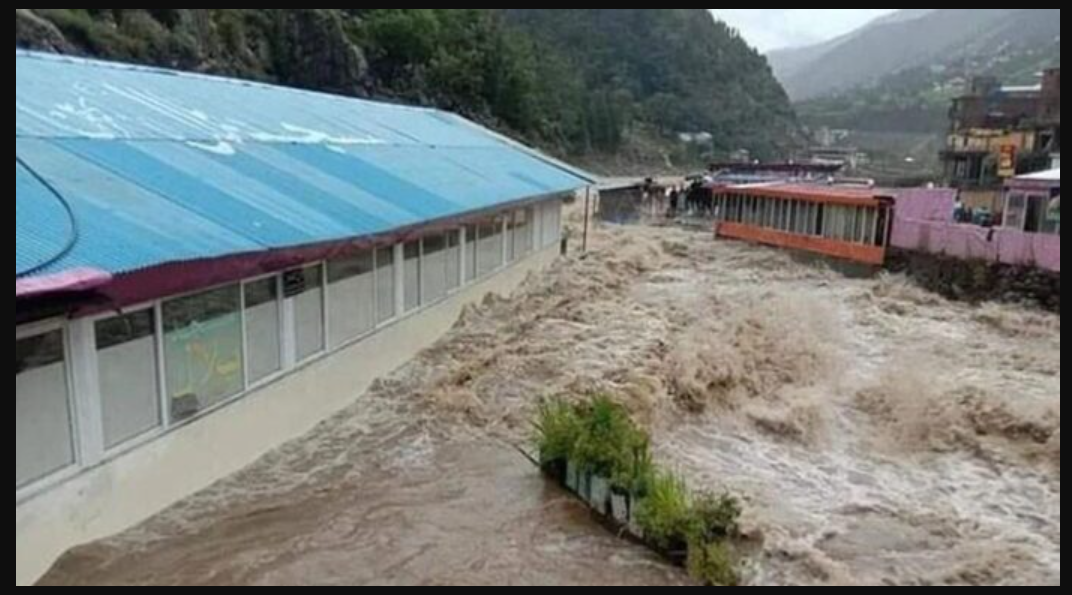

The second spell of Pakistan’s ongoing monsoon season has turned deadly, claiming at least 12 lives across Khyber Pakhtunkhwa (KP), Punjab, and Azad Kashmir. Moreover, 15 people have sustained injuries in separate rain-related incidents as authorities warn that casualties and property damage could increase in the coming days.
Heavy rainfall has triggered flash floods, landslides, and roof collapses in several regions. At the same time, rising water levels in rivers and streams have prompted emergency alerts in vulnerable districts. Rescue operations continue in affected areas, while officials remain concerned because several remote locations are still inaccessible.
Khyber Pakhtunkhwa Suffers the Worst Damage
Khyber Pakhtunkhwa has emerged as the hardest-hit province during the latest monsoon spell. Torrential rains caused flash floods in Khyber district, where fast-moving water swept away several vehicles.
Additionally, floodwaters submerged multiple sections of the Pak-Afghan Highway. As a result, traffic movement and cross-border trade faced major disruptions.
Meanwhile, severe weather created further problems in the scenic Kaghan Valley. A massive landslide at Sahuch blocked the Naran-Jalkhad Road, leaving numerous tourists stranded at different locations.
Continuous rainfall also washed away three link bridges in the valley. Furthermore, several houses and hotels suffered damage because of the heavy downpour.
Authorities are closely monitoring the Kunhar River, where water levels continue to rise. Residents living near the riverbanks have been advised to remain alert and take precautionary measures if conditions worsen.
Roof Collapse Claims Lives in Mardan
Heavy rainfall also caused a tragic incident in Mardan. The roof of a house collapsed during the storm, killing two children.
Besides the fatalities, a woman and a young girl sustained injuries. Rescue 1122 teams quickly responded and shifted the injured victims to a nearby hospital for medical treatment.
Flooding Sparks Concern in Azad Kashmir
In Azad Kashmir, intense rainfall triggered severe flooding in Katha Piran Nullah in Neelum Valley. Fast-flowing water carried large boulders into nearby areas, creating panic among residents.
Fortunately, authorities reported no casualties until the latest update. However, officials stated that damage assessments remain underway as rescue teams continue monitoring the affected area.
Punjab Issues River Flood Alerts
The latest monsoon spell has also significantly increased water flow in Punjab’s major rivers.
In Wazirabad, the district administration issued evacuation warnings for communities living near the Chenab River. Residents have been instructed to move to safer locations because water levels continue to rise.
Similarly, authorities declared a low-level flood warning at Chiniot as river conditions remain under close observation.
Meanwhile, Lahore, Rawalpindi, Islamabad, and several other plain areas received moderate rainfall, bringing cooler temperatures and pleasant weather. Despite the relief from the heat, local administrations and the Water and Sanitation Agency (WASA) urged people living in low-lying areas to remain cautious.
Officials also advised citizens to avoid unnecessary movement near drains, streams, and nullahs during periods of heavy rainfall.
Authorities Fear Higher Casualties
Officials believe the current figures represent only preliminary estimates. Rescue teams have yet to reach several remote and cut-off areas due to damaged roads and difficult weather conditions.
Therefore, authorities fear that both the death toll and property losses may rise as more information becomes available.
The ongoing monsoon season has only recently intensified, increasing concerns about further destruction across vulnerable regions.
More Heavy Rain Forecast Until July 24
The Pakistan Meteorological Department has forecast additional heavy rainfall across Khyber Pakhtunkhwa, Punjab, Azad Kashmir, and Gilgit-Baltistan until July 24.
According to the forecast, more flash floods, urban flooding, and landslides remain possible during the coming days.
Consequently, all relevant agencies, including the National Disaster Management Authority (NDMA), Provincial Disaster Management Authorities (PDMAs), and district administrations, have been directed to remain on high alert.
The department has also advised citizens to avoid unnecessary travel to mountainous areas throughout the forecast period.
Furthermore, the NDMA has urged tourists to check official weather advisories before planning trips to northern regions, where weather conditions may change rapidly and pose serious safety risks.

