
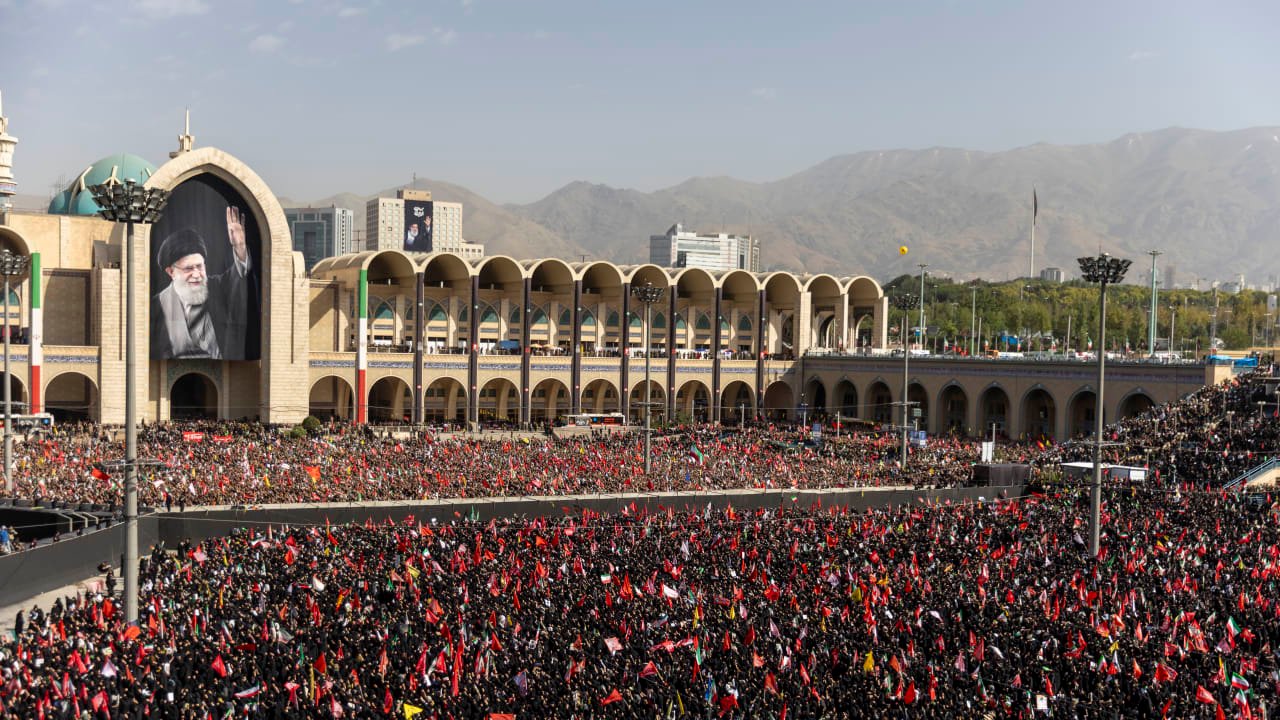

International delegations attend as Tehran projects continuity, resilience and diplomatic outreach
TEHRAN: Hundreds of thousands of mourners gathered in Tehran as Iran began week-long funeral ceremonies for former Supreme Leader Ayatollah Ali Khamenei, who was killed in a joint US-Israeli attack in late February. The event has drawn international delegations and senior Iranian officials, with authorities presenting the funeral as a demonstration of national unity and regional influence.
Delegations from more than 30 countries attended the ceremonies, including representatives from Pakistan, India, China, Russia, Iraq, Afghanistan, Tajikistan and Turkmenistan. Russia was represented by former president Dmitry Medvedev, while China sent a senior parliamentary official. Officials from several Middle Eastern countries and regional organisations also participated.
Iranian authorities said the funeral reflects the country’s international partnerships despite months of conflict and heightened regional tensions. Observers noted, however, that most delegations were led by ministers, parliamentary speakers or senior officials rather than serving heads of state.
Leadership remains in focus
Senior Iranian political and military figures attended the ceremonies, including President Masoud Pezeshkian, Foreign Minister Abbas Araghchi and commanders of the Islamic Revolutionary Guard Corps. Representatives of allied regional groups also participated in meetings held alongside the funeral events.
However, the absence of Iran’s new Supreme Leader, Mojtaba Khamenei, attracted significant attention. Iranian officials have not publicly explained why he did not appear during the opening ceremonies, prompting continued speculation about his status and future public engagements.
Regional and diplomatic significance
Beyond its religious importance, the funeral has become a major political event for Tehran. The government has used the ceremonies to project stability, demonstrate continued public support and reaffirm ties with regional partners following months of military confrontation.
Analysts say the large public turnout and presence of foreign delegations may strengthen Iran’s diplomatic messaging as indirect negotiations with the United States continue. Meanwhile, attention is shifting toward Tehran’s next policy decisions, including the future of regional engagement, ongoing diplomacy and efforts to restore influence after the recent conflict.

