
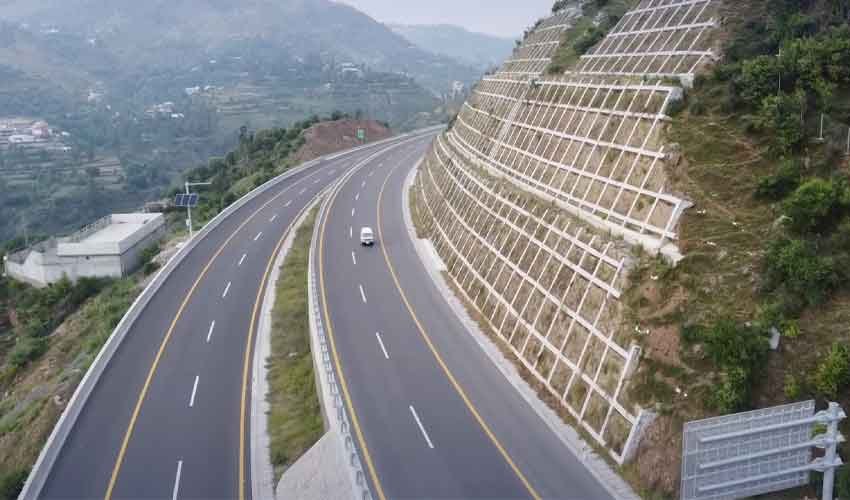

ISLAMABAD: The National Highway Authority has decided to speed up work on the long-awaited Mansehra-Chilas Motorway project, a major infrastructure initiative aimed at strengthening Pakistan’s transport network and enhancing connectivity with China.
The decision was taken during a high-level meeting chaired by Federal Minister for Communications Abdul Aleem Khan, where officials reviewed the project’s progress and future development plans.
According to a briefing presented during the meeting, the proposed 172-kilometre motorway will pass through Mansehra, Kaghan, Naran, Jhalakand, and Chilas, creating a modern transport corridor through northern Pakistan’s mountainous regions. Aleem Khan directed relevant authorities to accelerate work, describing the project as a strategic national priority.
Officials said the motorway will be completed in two phases. The first phase will connect Mansehra with Kaghan, Naran, and Babusar Top, while the second phase will extend the route from Babusar Top to Chilas, completing the entire corridor.
A key feature of the project will be the 13.5-kilometre Babusar Tunnel, which is expected to become Pakistan’s longest tunnel. Authorities believe the tunnel will significantly improve year-round accessibility and provide safer and faster travel through the mountainous terrain.
Meanwhile, the communications minister highlighted the project’s strategic importance, noting that the motorway will establish a direct road connection with China. He said the new route will reduce travel distance on the Karakoram Highway by approximately 120 kilometres and improve access between western China and the ports of Karachi and Gwadar.
Officials further stated that the four-lane motorway will be designed for future expansion to six lanes if required. In addition, modern rest areas will be established every 25 to 30 kilometres, while dedicated trucking terminals will be constructed on both sides of the route to facilitate commercial transportation.
The project is expected to enhance trade, strengthen regional connectivity, support logistics operations, and attract more domestic and international tourists to Pakistan’s northern areas, further reinforcing the country’s position as a regional transit hub.

