
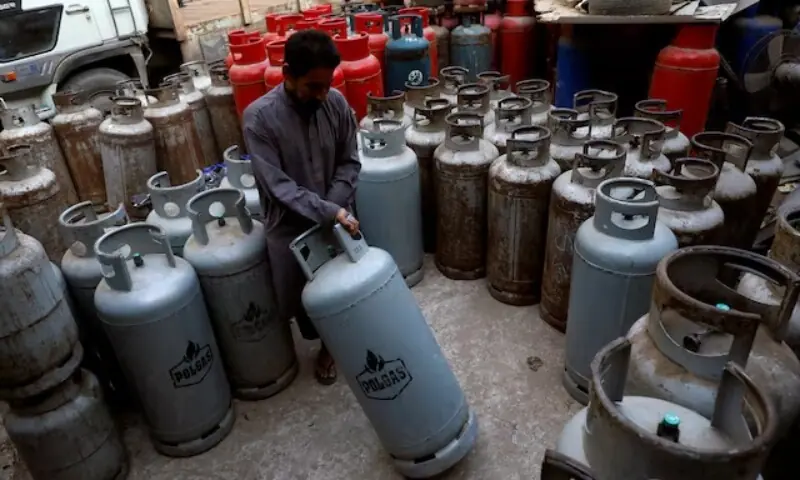

Pakistan’s Petroleum Division has delayed the results of an LPG auction amid legal challenges and concerns over higher consumer prices. The bidding could raise retail LPG prices by around 15% if producers pass the additional costs to consumers. The issue comes as winter approaches and demand for LPG typically increases.
LPG Auction Faces Legal and Policy Challenges
The country’s three major public-sector LPG producers conducted auctions on August 10. The highest bidder reportedly offered Rs205 million for a five-tonne-per-day lot over three years.
One tonne of LPG can fill around 85 domestic cylinders. Therefore, one five-tonne lot can supply roughly 425 cylinders each day.
The Petroleum Division had directed four public-sector entities to offer standardised LPG lots. These included Oil and Gas Development Company Limited, Pakistan Petroleum Limited, Pak-Arab Refinery Company and Government Holdings.
The initiative aims to replace the existing quota-based allocation system with competitive bidding.
However, some LPG stakeholders have challenged the process in court. They argue that existing policies and rules do not allow such an arrangement.
The Petroleum Division has reportedly held discussions with the Attorney General’s office regarding the legal challenges.
Auction Could Add Around Rs440 Per Cylinder
The highest bid could translate into an additional cost of approximately Rs440 per 11.8kg cylinder. This amount would come before LPG marketing companies add their own margins.
The Oil and Gas Regulatory Authority currently lists the benchmark price of an 11.8kg cylinder at Rs3,000.93. However, consumers often pay more than Rs3,600 in the market.
Ogra also increased the LPG price for August to Rs254.32 per kilogram. The previous rate stood at Rs241.43 per kilogram.
The proposed signature bonus could therefore add nearly 15% to the consumer price. The impact would likely be greater in areas that depend heavily on LPG for household cooking.
Government Considers Relief for Vulnerable Consumers
Officials have discussed preventing the signature bonus from directly increasing costs for vulnerable households.
Meeting records indicate that policymakers considered using the Benazir Income Support Programme to provide targeted relief.
However, officials also warned against maintaining separate LPG prices for different consumer groups. They said such a system could create market distortions and prove difficult to enforce.
Instead, policymakers favoured a single competitive market price. They proposed providing support to vulnerable consumers through fiscal measures.
The government has yet to finalise a mechanism for using the auction proceeds. It has also not completed a framework for determining LPG marketing margins.
Existing Rules Create Further Uncertainty
The bidding process has also raised questions about existing LPG producer licences. These licences reportedly prevent producers from charging premiums above Ogra’s notified price.
Ogra’s chairman previously told the petroleum minister that a High Court suspension of its 2018 order had removed an immediate restriction on competitive bidding.
However, records indicate that some producers had concerns about the legal risks. Pakistan Petroleum Limited had previously faced contempt proceedings over a tender involving signature bonuses.
Parco also warned about possible retrospective recovery if the earlier Ogra decision against signature bonuses ultimately survives legal challenges.
The government now faces a difficult policy choice. It must balance additional revenue for state-owned producers against affordability for LPG consumers.
Until the legal and regulatory issues are resolved, the auction results remain uncertain. Any final decision could have a direct impact on household fuel costs before the winter season begins.

