
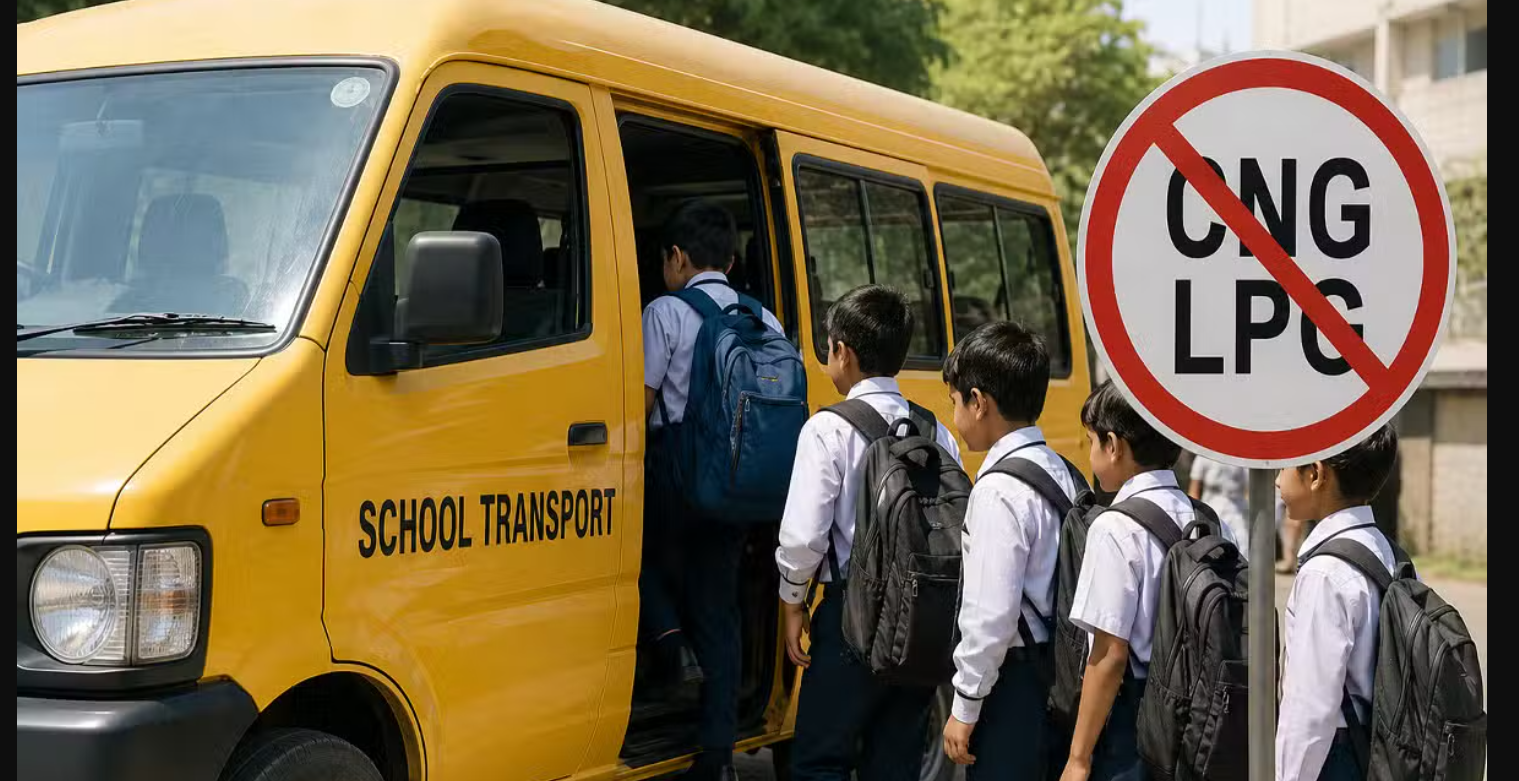

The Board of Secondary Education Karachi (BSEK) has imposed a complete ban on CNG and LPG in student transport vehicles.
The board directed all affiliated educational institutions to strictly enforce the new requirement. The directive applies to vehicles used for transporting students through pick and drop services.
Accordingly, schools must ensure that transport operators follow the ban without exception. BSEK issued the notification on August 6, 2026. Secretary Dr. Naveed Ahmed addressed the directive to heads of affiliated institutions.
The notification requires schools to take immediate steps against the use of CNG and LPG in student transportation.
Schools Must Enforce the Transport Ban
Under the directive, institutions must ensure that vehicles carrying students do not use CNG or LPG.
The requirement also applies during vacation periods. Therefore, schools cannot allow the banned fuel use to continue when regular classes remain suspended.
BSEK has also warned that authorities will take action against vehicles that violate the directive.
Such vehicles will not be allowed to operate as school transportation. In addition, violators may face fines and vehicle impoundment.
As a result, schools and transport operators must ensure compliance with the new requirement.
The board has placed responsibility on educational institutions to monitor vehicles used for student pick and drop services.
Regular Inspections Required at Schools
BSEK has instructed educational institutions to conduct regular inspections of student transport vehicles.
Schools must also monitor these vehicles to ensure compliance with statutory provisions and judicial directives.
Therefore, institutions need to keep closer oversight of the vehicles used to transport students.
The inspection requirement forms an important part of the board’s instructions.
Schools must ensure that transport operators follow the applicable requirements rather than treating the ban as a temporary measure.
The directive also makes clear that compliance should continue beyond normal school operations.
Awareness Campaigns for Parents and Students
Alongside inspections, BSEK has asked educational institutions to launch awareness campaigns.
These campaigns should inform parents, students and transporters about the dangers associated with CNG and LPG use.
Schools have also been directed to raise awareness about the Gujrat case precedent.
The board’s instructions therefore extend beyond transport operators. They also involve parents, students and educational institutions.
Through these campaigns, schools are expected to communicate the risks linked to the prohibited fuel use.
Meanwhile, transporters must ensure that their vehicles comply with the requirements before operating student pick and drop services.
What the New BSEK Directive Means
The new BSEK directive places schools at the centre of monitoring student transport vehicles.
Institutions must ensure that transport operators comply with the CNG and LPG ban.
They must also conduct regular inspections and monitor vehicles for compliance.
Furthermore, schools must educate parents, students and transporters about the risks highlighted by the board.
Vehicles that continue using CNG or LPG despite the directive could face enforcement action.
They may be prevented from operating as school transport vehicles. They may also face fines and impoundment.
The board has specifically instructed institutions to stop the illegal use of CNG and LPG immediately.
This requirement remains applicable even during vacation periods.
Student Transport Operators Face Tighter Oversight
The directive also places greater scrutiny on operators providing student pick and drop services.
Operators must ensure their vehicles meet the requirements before continuing transportation services.
At the same time, schools must monitor compliance instead of relying solely on transport providers.
Regular inspections will allow institutions to identify vehicles that do not follow the directive.
Moreover, awareness efforts can help ensure that parents and students understand the requirements.
The board’s instructions therefore establish responsibilities for both educational institutions and transport operators.
BSEK Orders Immediate Compliance
BSEK has made clear that the ban must be enforced immediately.
Schools affiliated with the board must stop the use of CNG and LPG in student transportation vehicles.
They must also continue monitoring these vehicles throughout the year, including during vacation periods.
Furthermore, institutions must comply with statutory provisions and judicial directives related to student transportation.
The board has warned that violations could result in restrictions on vehicle operations, fines and impoundment.
For schools, the directive means closer monitoring of transport services and stronger compliance measures.
For transport operators, it means ensuring that vehicles used for student pick and drop services do not use CNG or LPG.
BSEK has also stressed the importance of informing parents, students and transporters about the risks associated with the banned fuels.
As a result, the new directive combines enforcement, inspections and public awareness to strengthen oversight of student transport vehicles in Karachi.

