
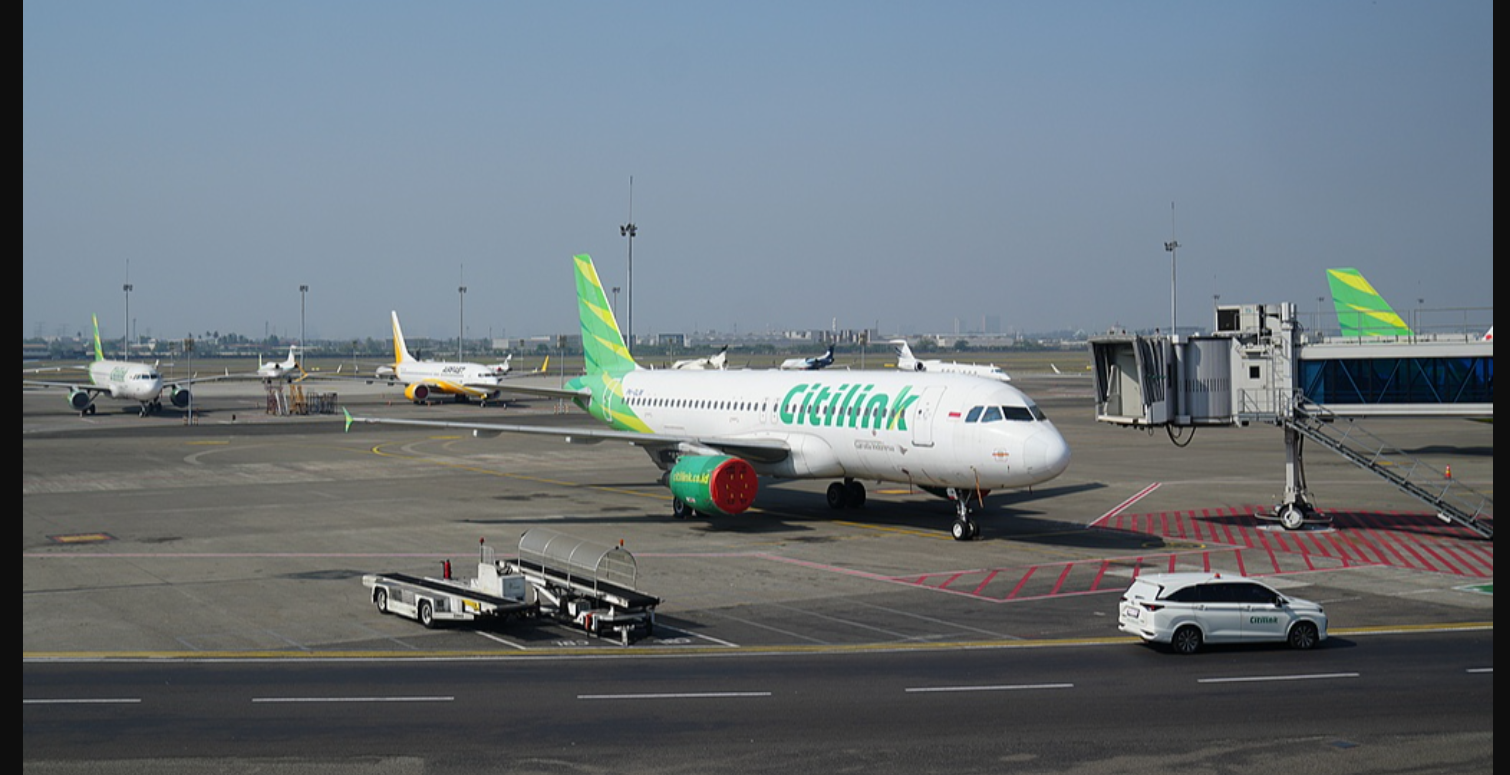

Jakarta’s main airport and three other airports extended their closures on Monday. The move followed a volcanic eruption that disrupted air travel across Indonesia.
The closures have left hundreds of thousands of passengers stranded. Meanwhile, airlines continue to deal with cancelled, delayed and diverted flights.
Mount Anak Krakatau erupted on Saturday. The volcano sits about 150 kilometres from Indonesia’s capital.
The eruption sent a fountain of lava into the air. It also released a large plume of volcanic ash.
As a result, ash entered Indonesian airspace and disrupted flight operations. Eight airports had suspended operations during the weekend.
Indonesia’s transport ministry reported the disruption on Monday. It said more than 270,000 passengers had been affected.
The figures cover the cumulative impact since September 5, 2026. They include flights that airlines cancelled, delayed or diverted.
Jakarta Airport Closure Extended Until Evening
At least four airports extended their closures on Monday. These included Jakarta’s Soekarno-Hatta International Airport.
Airport operator Angkasa Pura said the affected airports would remain closed until 6:00 pm. The closure had initially affected Monday morning operations.
Halim Perdanakusuma Airport also remained closed. The facility handles both civil and military flights.
However, not all airports remained closed. A small airport in southern Sumatra resumed operations at 9:00 am Monday.
The continued closures have created fresh difficulties for travellers. Many passengers now face uncertainty over their departure plans.
More than 240 domestic and international flights faced cancellation or delays on Monday morning alone. Nearly 30,000 passengers were affected at Soekarno-Hatta International Airport.
The disruption has therefore continued to affect both local and international travellers.
Travellers Stranded as Flights Are Cancelled
Passengers have faced uncertainty while waiting for updated travel arrangements. Some have struggled to find alternative flights and accommodation.
Italian tourist Michel Miegge was travelling with his girlfriend. He had planned to return home before work on Tuesday.
However, their flight was cancelled following the disruption.
“We don’t have any news from the airline. We don’t know if we stay another day in Jakarta or find another flight,” the 32-year-old software engineer told AFP.
“I don’t think it’s possible now. We found a nearby hotel, but we saw that many hotels were fully booked. Fortunately, we booked a hotel last night, but it’s a difficult situation.”
The situation has also affected tourists travelling within Indonesia.
French painter Carol Odile was travelling with a group of friends. They had planned to visit Flores to see Komodo dragons.
However, their flight was cancelled after volcanic ash disrupted air operations.
“We discovered our flight was delayed yesterday morning when we arrived at the airport because we didn’t know about the volcanic eruption. We are disappointed, but our group is optimistic, so we hope we can go to Flores Island very soon,” the 60-year-old told AFP.
Her experience reflects the uncertainty faced by many travellers. Some passengers only learned about disruptions after reaching the airport.
Volcanic Threat Remains High
Indonesia’s geology agency warned that the possibility of another eruption remained high until Monday morning.
The agency also highlighted several potential dangers linked to renewed volcanic activity.
“The threat from an eruption comes from the ejection of incandescent rocks accompanied by heavy ashfall. Another potential hazard arises from lava flows if the eruption resumes and continues,” agency head Lana Saria said.
The warning has added to concerns surrounding airport operations.
Volcanic ash can create serious challenges for aircraft operations. Therefore, airports have continued monitoring conditions before reopening.
For travellers, the situation has meant repeated changes to flight schedules. Airlines have also had to cancel, delay or divert flights.
Airport officials have said they understand the difficulties facing passengers.
“We understand that this situation affects passengers’ travel plans. Therefore, from the start of the temporary closure, we have focused on ensuring that passengers’ needs continue to be met,” airport spokesman Yudhistiawan said in a statement.
Anak Krakatau’s Location and History
Anak Krakatau means “Child of Krakatau.” The volcano sits in the strait between Java and Sumatra.
The volcano emerged from the sea at the beginning of the last century. It formed inside the caldera created by the massive 1883 eruption of Mount Krakatau.
Since then, Anak Krakatau has remained sporadically active.
Its activity has previously caused major disruption and loss of life. In 2018, a tsunami followed the collapse of parts of Anak Krakatau.
That tsunami killed 429 people. It also displaced thousands of others.
The volcano’s latest eruption has again affected travel across the region. However, the immediate impact has focused heavily on aviation.
Airports Continue Monitoring the Situation
The extended airport closures reflect continuing concerns over volcanic ash. Authorities have therefore delayed reopening several facilities.
Soekarno-Hatta International Airport remained among the major affected airports. Its closure alone disrupted hundreds of flights and affected tens of thousands of passengers.
Meanwhile, Halim Perdanakusuma remained closed as well. The airport serves civil and military aviation.
Elsewhere, a small airport in southern Sumatra resumed operations Monday morning. The reopening took place at 9:00 am.
However, other airports continued to face restrictions.
The differing operational status has made travel planning difficult. Passengers must therefore deal with changing flight schedules and uncertain departure times.
For those already stranded, accommodation has also become a concern. Some hotels near affected airports have reached full capacity.
Thousands Continue to Face Travel Disruptions
The latest figures show the scale of the aviation disruption.
More than 270,000 passengers experienced the cumulative operational impact since September 5. The figure includes passengers affected by cancelled, delayed and diverted flights.
In addition, more than 240 domestic and international flights faced disruption Monday morning. Nearly 30,000 passengers were affected at Jakarta’s main airport alone.
The figures underline the continuing impact of the eruption on air travel.
Passengers have faced delays while authorities assess conditions around affected airports. At the same time, airlines have had to adjust their operations.
The situation remains closely connected to volcanic activity. Any renewed eruption could create further hazards, including heavy ashfall and lava flows.
For now, several airports have extended their closures while authorities continue assessing the threat.
The eruption of Mount Anak Krakatau has therefore created widespread travel disruption. It has also left thousands of passengers waiting for clearer information about their journeys.
As airport operations remain affected, travellers continue to face uncertainty over when normal services will resume.

