
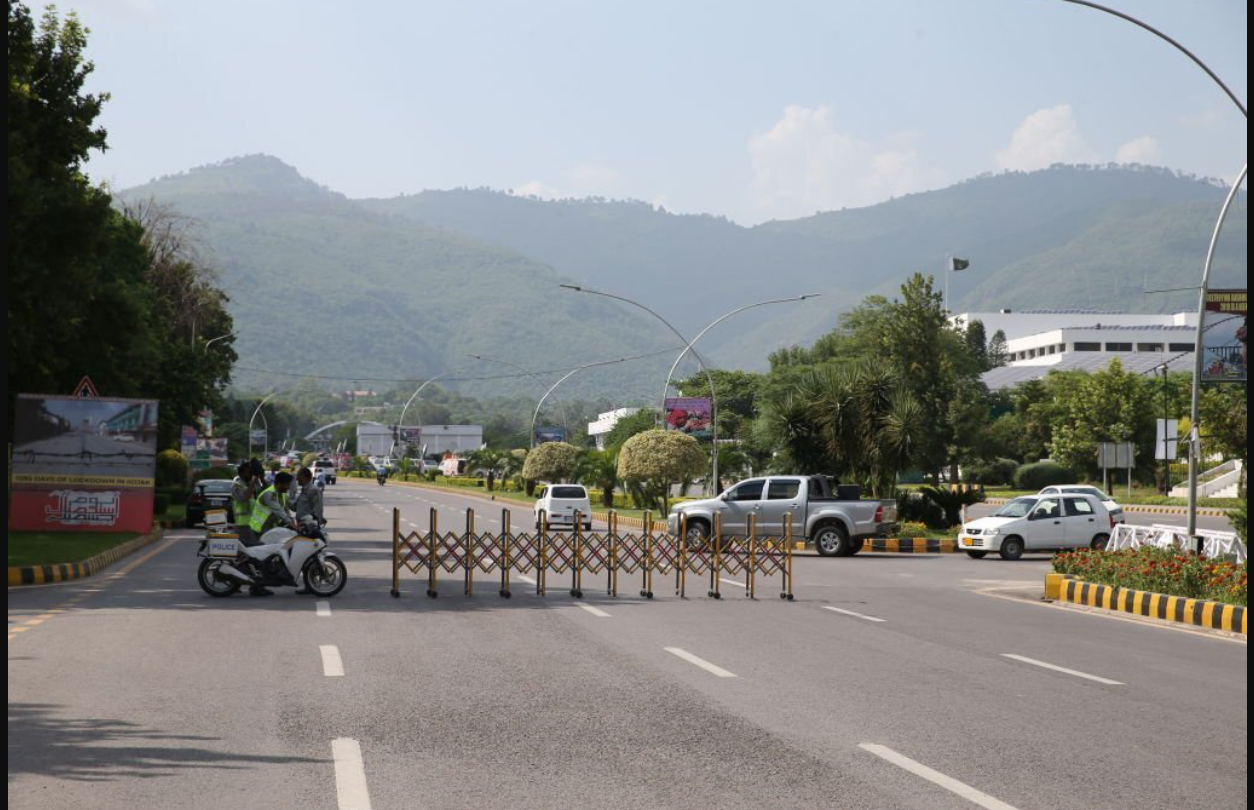

Security restrictions in Islamabad continue to impact daily life. Authorities have kept the high-security Red Zone closed to the public. However, several other roads in the twin cities have now reopened after days of strict lockdown.
The restrictions were initially imposed due to expected visits by foreign delegations. These included high-level officials such as JD Vance. However, travel plans changed at the last moment. Reports also indicated delays in participation from Iran’s negotiating side.
Red Zone Remains Under Tight Security
The Red Zone houses key government buildings and offices. Security remains extremely high in this area. Law enforcement agencies and military personnel are deployed in large numbers.
Authorities have restricted entry since Sunday. Only essential staff and senior officials can access the area. Many government employees continue to work remotely.
In addition, patrols and checkpoints remain active. This ensures strict monitoring of all movement within the zone.
Roads Reopen Across Twin Cities
While the Red Zone remains sealed, other parts of Islamabad and Rawalpindi have seen gradual reopening. Traffic has resumed on several major routes.
Public transport services are also returning to normal. For example, one major bus terminal in Islamabad has reopened. In Rawalpindi, services on Peshawar Road have resumed.
However, some terminals remain closed. These include Pirwadhai and Faizabad bus stands. Goods transport is also yet to fully recover.
Daily Life Slowly Returns to Normal
Markets in most areas are reopening. Residents are gradually resuming their routines. Schools and offices are shifting back to normal operations.
During the lockdown, many people worked from home. Students attended online classes. Businesses faced reduced activity due to limited movement.
Despite reopening, the economic impact is still visible. Traders and small business owners report losses during the closure period.
Public Reaction Remains Mixed
Residents have expressed mixed feelings about the situation. Some people support the security measures. They believe such steps improve the country’s global image.
Others, however, are frustrated by daily disruptions. Many faced delays, higher transport costs, and reduced income.
Small business owners were particularly affected. Limited customer movement reduced sales significantly. Daily wage workers also struggled during the restrictions.
Economic Impact on Businesses
The lockdown affected both small and large businesses. Retail shops saw fewer customers. Supply chains were disrupted due to transport restrictions.
Even major industries faced challenges. Some companies had to pause operations temporarily. This highlights the wider economic impact of security measures.
Ongoing Diplomatic Context
The restrictions were linked to potential talks involving the United States and Iran. Earlier negotiations did not produce a final agreement.
Donald Trump had extended a ceasefire amid ongoing diplomatic efforts. These developments continue to influence security arrangements in Islamabad.
Residents Adjust to Repeated Restrictions
People in Islamabad are familiar with such situations. The city has faced similar restrictions during past events. These include political protests, security threats, and international visits.
However, the recent lockdown has been more intense. Frequent changes in plans have added to public frustration.
Looking Ahead
Authorities may adjust restrictions based on future developments. If diplomatic talks proceed, security measures could tighten again.
For now, partial reopening has provided relief. However, the Red Zone remains closed, and uncertainty continues.
Residents hope for stability in the coming days. They also expect a balance between security needs and daily convenience.

