
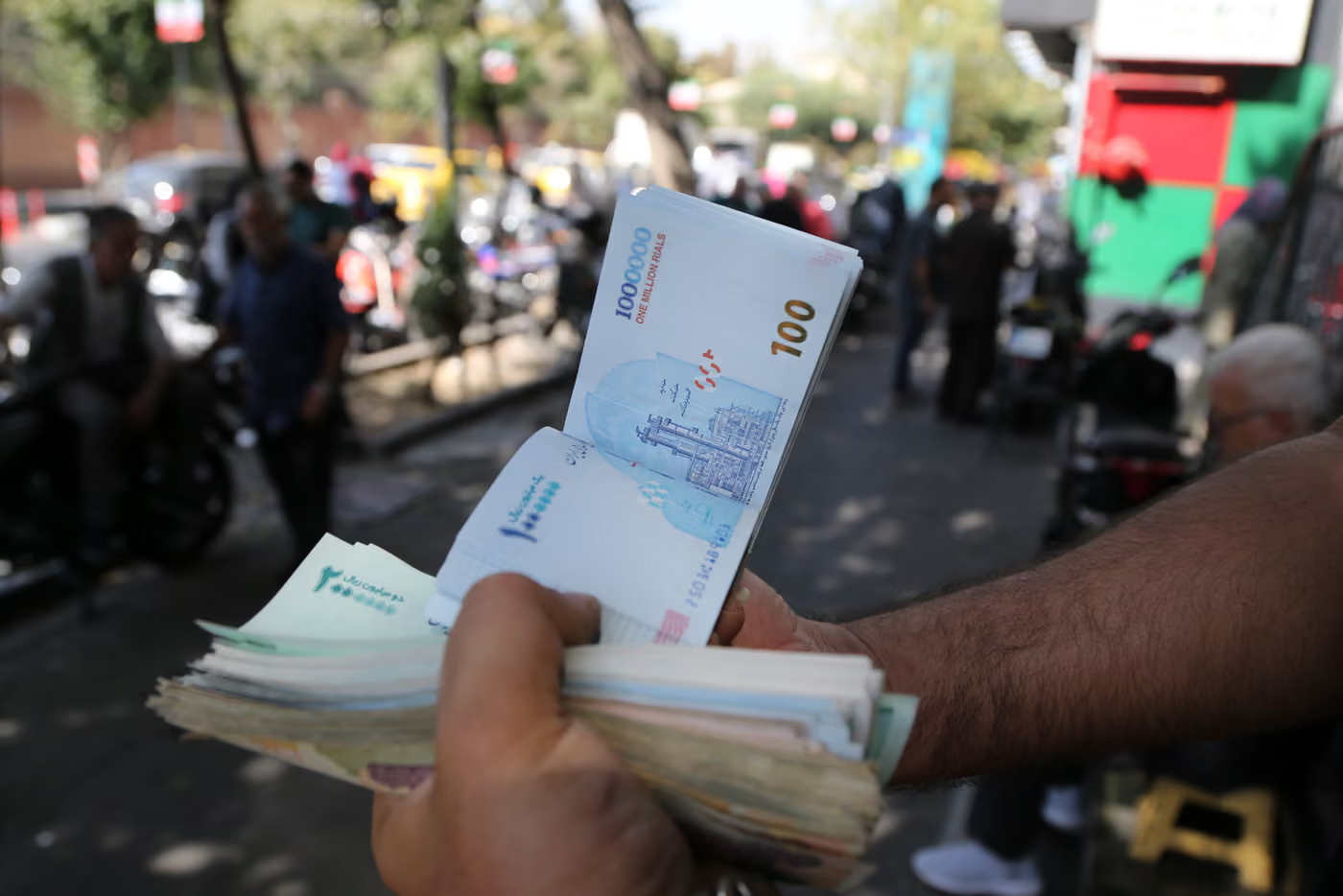

Currency approaches two million rials per dollar as Washington intensifies economic pressure after nearly six months of conflict
TEHRAN: Iran’s rial plunged to a record low against the US dollar on Monday as Washington prepared to announce additional sanctions aimed at intensifying economic pressure on Tehran.
The rial traded at around 1.992 million per dollar on Iran’s unregulated market, according to Bloomberg, citing figures from currency-tracking website Bonbast. The currency has fallen about 4.5 per cent since US President Donald Trump announced what he called a “crushing economic operation” against Iran last week.
Meanwhile, another unofficial tracker, TGJU, indicated that the rial briefly crossed the psychologically significant two-million-per-dollar level on Sunday before closing below that threshold.
Oil Export Disruptions Deepen Economic Pressure
The latest decline comes as the United States seeks to isolate Iran economically by increasing pressure on its remaining trading partners, restricting maritime commerce and targeting Iranian oil exports.
Iranian Central Bank Governor Abdolnaser Hemmati said last week that the country’s crude exports had “virtually stopped.” Furthermore, the United Arab Emirates, traditionally an important Iranian trading partner, announced a suspension of financial transactions with Iran until further notice.
Iranian financial newspaper Donya-e Eqtesad attributed the rial’s weakness to disruptions in foreign-exchange transfers, declining exports, stronger import demand and growing expectations of inflation.
Washington Signals Major Financial Offensive
US Treasury Secretary Scott Bessent is expected to announce additional sanctions against Tehran at a scheduled press conference as Washington expands its campaign against the Iranian economy.
Bessent described the initiative as an “economic D-Day” and said Washington intended to sever Iran’s remaining economic lifelines.
Consequently, pressure on the rial could intensify if tighter sanctions further restrict Tehran’s access to foreign currency and international trade.
The currency’s historic decline also threatens to increase domestic inflation by raising the cost of imported goods, adding further pressure on Iranian households and businesses already confronting the economic consequences of months of conflict.

