
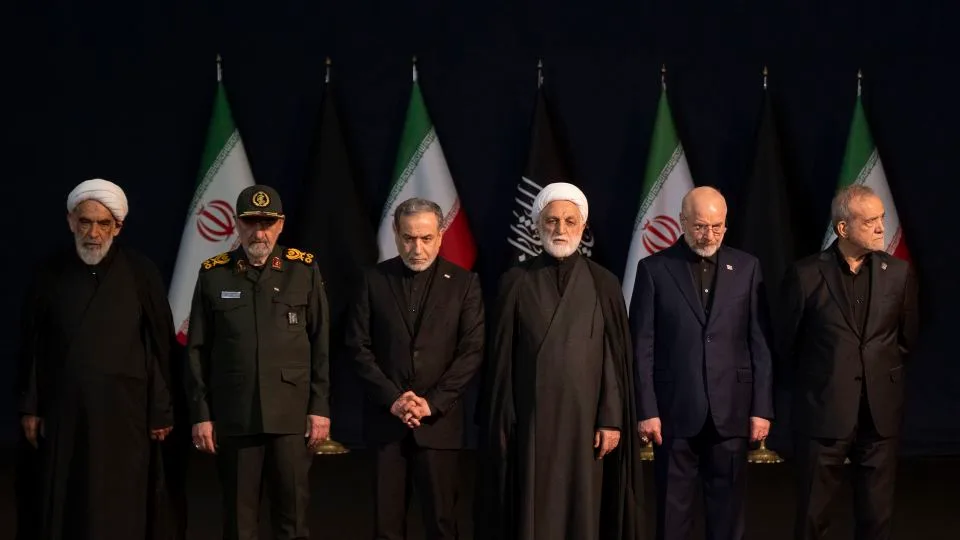

Iran’s hardline factions have accused senior government officials of attempting a “soft coup” following a ceasefire agreement with the United States. The allegations come as political tensions deepen after the death of Supreme Leader Ali Khamenei.
Hardliners Target Senior Iranian Officials
During Ali Khamenei’s funeral in Tehran, some mourners directed hostile chants at President Masoud Pezeshkian. Instead of paying tribute, they accused him of compromising Iran’s revolutionary principles.
Meanwhile, Foreign Minister Abbas Araghchi reportedly left the funeral after protesters threw rocks and called him a traitor. Araghchi recently helped negotiate a ceasefire with the Trump administration that eased some sanctions.
Hardline groups argue that officials accepted the agreement instead of avenging Khamenei’s killing. Consequently, they accuse Iran’s visible leadership of abandoning the country’s revolutionary ideals.
The accusations have intensified as Supreme Leader Mojtaba Khamenei, the late leader’s son and successor, has remained largely out of public view. His continued absence has fuelled speculation within Iran’s political circles.
Political Tensions Deepen After Ceasefire
Hardliners claim senior officials have ignored Mojtaba Khamenei’s directives during negotiations with Washington. They also allege attempts to suspend parliament and weaken influential street demonstrations.
Mahmoud Nabavian, a prominent hardline lawmaker, publicly questioned whether a coup was underway. Furthermore, he called for resistance against what he described as efforts to seize power.
With Mojtaba Khamenei absent from public appearances, Parliament Speaker Mohammad Bagher Ghalibaf, President Pezeshkian, and Foreign Minister Araghchi have become the country’s most visible leaders.
According to Iran expert Arash Azizi, hardliners have increasingly focused their criticism on these officials. He said their allegations stem from frustration over limited access to the new supreme leader rather than verified evidence of a coup.

