
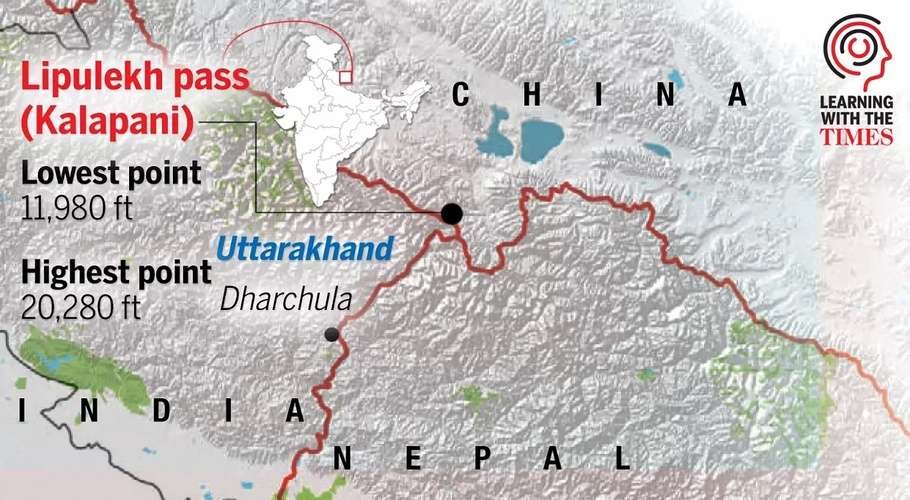

NEW DELHI: India’s Neighborhood First policy is encountering renewed pressure as a diplomatic dispute with Nepal over the Lipulekh Pass intensifies regional uncertainty.
On May 3, India’s Ministry of External Affairs rejected Nepal’s objection to the Kailash Manasarovar Yatra route Lipulekh, which Kathmandu claims under the 1816 Sugauli Treaty. In response, MEA spokesperson Randhir Jaiswal dismissed Nepal’s position as unjustified and lacking historical evidence. Consequently, the difference highlights a growing strain in what was once a stable bilateral relationship.
Meanwhile, India maintains that Lipulekh has served as a traditional route since 1954. However, the public nature of this disagreement suggests a shift in Nepal’s diplomatic posture. At the same time, Kathmandu’s internal political dynamics appear to encourage more assertive engagement with New Delhi.
Beyond Nepal, India faces broader regional challenges. Its long-standing tensions with China and Pakistan remain unresolved, keeping borders under constant strain. Additionally, relations with Bangladesh have cooled following political changes in Dhaka, where a new government has shown willingness to publicly challenge India on key issues.
As a result, analysts observe a pattern of increasing diplomatic friction across South Asia. India’s emphasis on legal and structured responses contrasts with the more vocal and nationalist approaches adopted by its neighbors. Furthermore, these developments indicate a gradual shift away from India’s traditional regional influence.
Ultimately, India now confronts a more complex neighborhood, where cooperation is less predictable and disputes more visible. Whether this trend signals a temporary phase or a longer-term realignment remains uncertain, but it clearly poses a significant test for India’s foreign policy strategy.

