
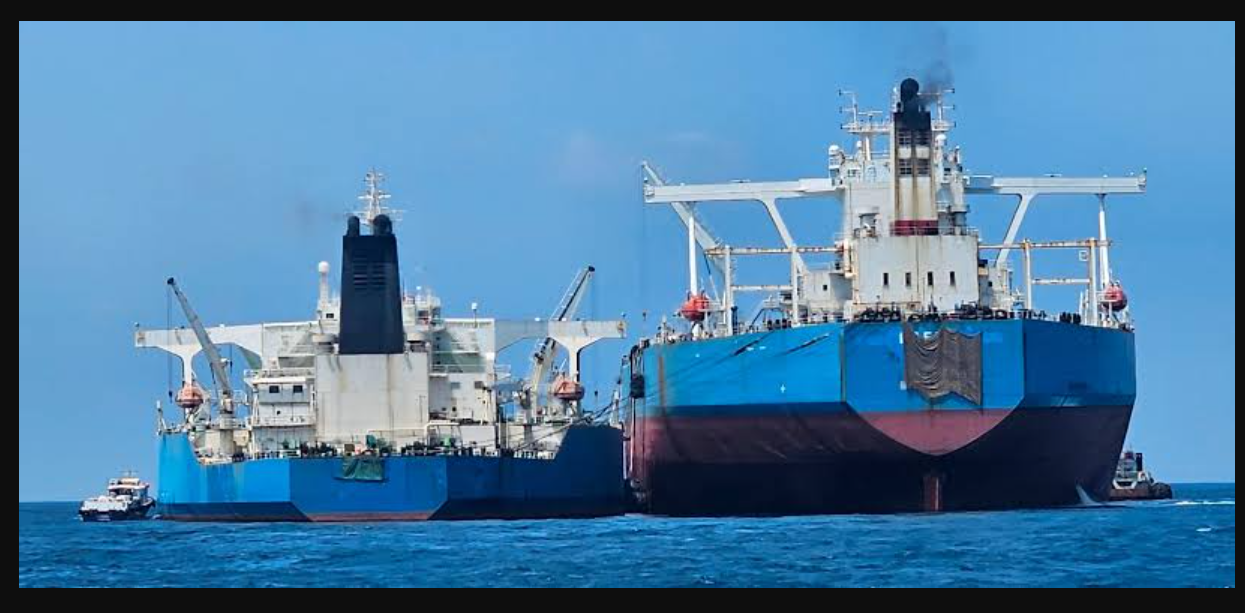

Iranian oil exports are continuing despite sanctions and military blockades, with waters off Malaysia remaining a key hub for ship-to-ship transfers.
Maritime experts say the Eastern Outer Port Limits (EOPL), located off Malaysia’s coast, continues to facilitate the movement of sanctioned crude oil. Although regional tensions have intensified, activity in the area has remained largely uninterrupted.
Most of the transferred oil is believed to be heading toward China through complex shipping networks.
Tanker Activity Continues Near Malaysia
Last week, the Iranian oil tanker Humanity passed through the Straits of Malacca and Singapore before changing course toward Malaysia.
Satellite tracking data showed the vessel arriving at the Eastern Outer Port Limits, an anchorage area in the South China Sea located about 70 kilometres from Malaysia’s coastline.
After reaching the area, the tanker switched off its Automatic Identification System (AIS).
According to maritime security experts, vessels often go “dark” before conducting ship-to-ship cargo transfers.
Experts believe the oil is transferred to intermediary vessels before eventually reaching buyers in China.
EOPL Remains a Major Trading Hub
Analysts say the EOPL has served for decades as an offshore marketplace for sanctioned Iranian, Russian and Venezuelan oil.
Satellite monitoring indicates that activity continued throughout the five-month conflict involving Iran, despite a US naval blockade targeting Iranian ports.
Maritime monitoring experts reported that dozens of ships have used false or inactive identities while travelling between the Gulf region, Malaysia, Hong Kong and northern China.
These vessels are believed to form part of a network that helps transport Iranian crude to China’s independent refineries.
Ship Transfers Help Conceal Oil Origins
Experts explain that Iranian crude often changes vessels several times before reaching its final destination.
These ship-to-ship transfers make it more difficult to determine the oil’s origin.
Independent Chinese refineries are considered more willing to purchase discounted Iranian crude because they have limited exposure to the US financial system.
Meanwhile, large state-owned energy companies generally avoid such transactions due to sanctions risks.
Calm Waters Support Offshore Operations
Maritime experts describe the waters near Malaysia’s EOPL as one of the busiest offshore anchorage areas in the region.
The location offers calm waters while remaining outside Malaysia’s territorial boundaries.
Although the area falls within Malaysia’s Exclusive Economic Zone, enforcement has remained challenging because of its size and jurisdictional limitations.
In June, Malaysia amended its Exclusive Economic Zone Act to strengthen regulations against unauthorised anchoring, refuelling and ship-to-ship cargo transfers.
Despite those changes, experts estimate that nearly 200 vessels may anchor in the area on any given day.
Many of those ships are believed to have links to Iranian oil trade.
Satellite data also showed several Iranian-flagged tankers arriving at the EOPL before disabling their tracking systems.
In addition, dozens of vessels already sanctioned by the United States or the European Union continued broadcasting AIS signals in the area.
Alternative Payment Systems Keep Trade Moving
Experts say Iranian oil sales are also supported by payment systems operating outside the US-monitored SWIFT network.
Transactions can instead be processed through China’s Cross-Border Interbank Payment System using the Chinese renminbi.
Although China does not officially report importing Iranian crude, analysts point to trade data showing oil imports from Malaysia exceeding Malaysia’s domestic production.
According to experts, those figures suggest that part of the imported crude may have originated elsewhere.
China has repeatedly opposed unilateral sanctions imposed by the United States and has argued that such measures lack international legal authority.
Earlier this year, the United States imposed sanctions on several independent Chinese refineries and companies accused of handling Iranian oil.
However, experts believe alternative shipping networks have continued operating despite those restrictions.
One maritime analyst said, “Sanctions never stopped any of this. The market mechanism, the payment mechanism, evolved because of the sanctions, but it never stopped anything. The only thing that physically stopped oil from going from Iran to China is the blockade.”
Although exports have reportedly declined since the conflict intensified, experts say the offshore trading network continues to play a significant role in keeping Iranian oil flowing to international markets.

