

Sindh launches inquiries while authorities introduce measures to strengthen infection control
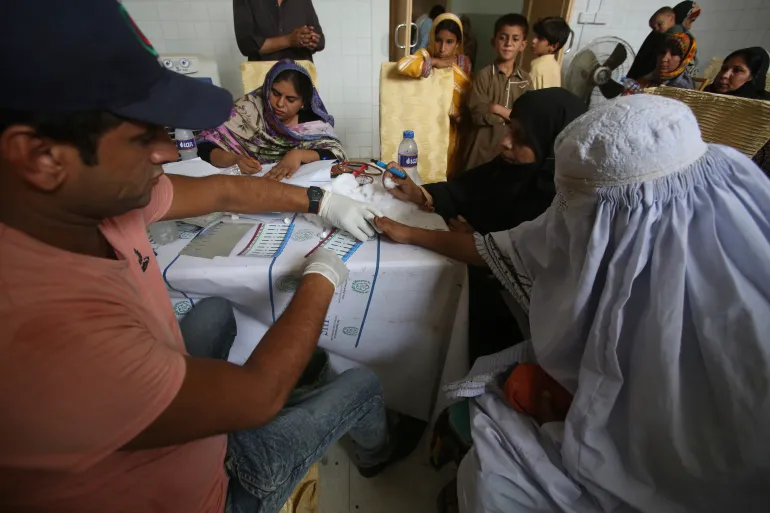
KARACHI: More than 130 people, most of them children, have tested positive for HIV in connection with an outbreak linked to Karachi’s government-run Kulsum Bai Valika (KBV) Hospital, prompting intensified investigations and new public health measures.
Sindh Labour Minister Saeed Ghani said health authorities screened more than 10,500 people in and around KBV Hospital, where 120 cases were identified. An additional 10 infections were later detected during a separate screening campaign at another Sindh Employees’ Social Security Institution (SESSI) facility in Karachi’s Landhi area.
Officials traced the outbreak to October 2025, when the first HIV cases were reported. Two official inquiries later identified serious lapses in infection prevention, including failures to follow safety protocols, inadequate use of protective equipment and improper handling of single-use syringes. Authorities said investigations remain ongoing to determine responsibility.
Government announces accountability measures
Meanwhile, provincial authorities issued show-cause notices to 37 doctors and hospital employees over alleged administrative and supervisory failures. Officials said disciplinary action and criminal proceedings could follow if investigations establish negligence.
The Sindh government has also approved a Rs2 billion endowment fund to support affected children, while ordering a third-party audit of KBV Hospital’s procurement and infection control systems. Additionally, authorities plan to establish a dedicated isolation ward for patients requiring specialised care.
Broader public health concerns persist
The outbreak has renewed concerns over infection control practices across Pakistan’s healthcare system. According to the World Health Organization and UNAIDS, Pakistan has one of the fastest-growing HIV epidemics in the Eastern Mediterranean Region, with infections increasing substantially over the past decade.
Federal authorities have announced a nationwide ban on reusable conventional syringes from January 2027 and plan to introduce mandatory HIV screening before certain surgical procedures.
Public health experts caution that improving injection safety, strengthening oversight of healthcare facilities and expanding surveillance will be essential to preventing similar outbreaks. They also emphasise that investigations are continuing and that the exact causes of individual infections will require further scientific and epidemiological assessment before final conclusions are reached.

