
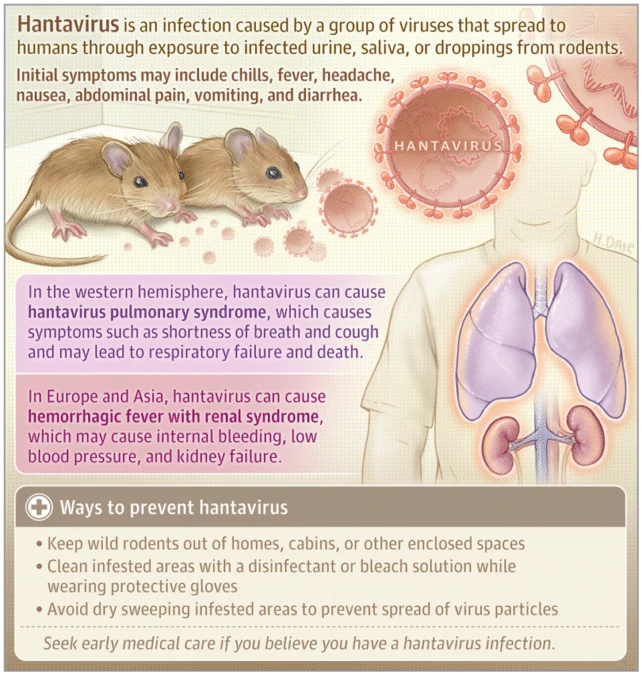

Health experts continue monitoring hantaviruses because the infections can cause serious respiratory, cardiac, and haemorrhagic illnesses in humans. Scientists explained that rodents primarily spread these viruses, while human infections usually occur through contact with contaminated droppings, urine, or saliva.
Medical researchers stated that hantaviruses exist in different regions worldwide and can trigger several dangerous diseases depending on the virus strain involved. In some cases, patients develop severe respiratory complications, while other infections may lead to haemorrhagic fever and kidney-related illnesses.
According to public health specialists, individuals face greater risk when they enter areas heavily populated by rodents, including poorly ventilated buildings, storage spaces, farms, and forests. Consequently, authorities continue advising preventive measures to reduce exposure.
Health experts explain symptoms and transmission risks
Doctors reported that early hantavirus symptoms often resemble common viral illnesses. Patients may initially experience fever, muscle pain, headaches, fatigue, and nausea before more severe complications appear.
Furthermore, some infections can rapidly progress into hantavirus pulmonary syndrome, a potentially life-threatening respiratory condition affecting the lungs and heart. Other strains may cause haemorrhagic fever with renal syndrome, which damages blood vessels and kidneys.
Health authorities clarified that hantaviruses generally do not spread easily between humans. Instead, most infections occur after people inhale virus particles released from rodent waste or contaminated dust.
Preventive measures remain essential for public safety
Public health agencies continue encouraging people to maintain clean environments and limit contact with rodents. Experts recommended sealing homes, safely disposing of waste, and using protective equipment when cleaning potentially contaminated areas.
Meanwhile, researchers continue studying hantaviruses to improve diagnosis, treatment, and disease prevention strategies. Although no universally approved cure exists, early medical attention can significantly improve survival chances and reduce severe complications.
Additionally, global health organizations stressed the importance of public awareness campaigns to help communities recognize symptoms and avoid high-risk exposure situations.
What is a hantavirus?
Hantaviruses are a type of virus mainly transmitted to humans by rodents. They can cause respiratory and cardiac problems, as well as haemorrhagic fevers. Here’s what to know about them.#geneu_AFP pic.twitter.com/c7lPF6vEAQ
— AFP News Agency (@AFP) May 7, 2026

