
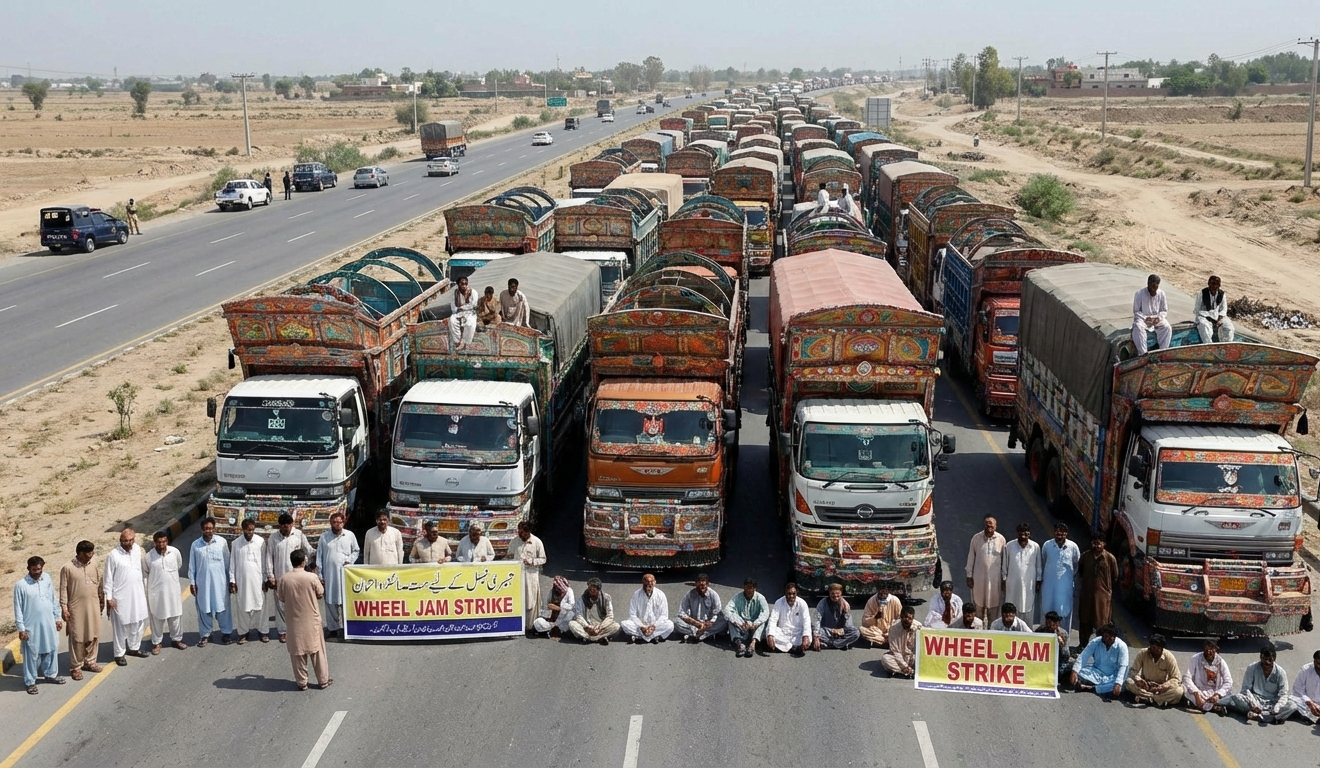

A nationwide strike by goods transporters and oil tankers has disrupted industrial supply chains. The protest began Saturday and threatens export operations. Transporters plan to continue their strike until talks with government officials on Monday.
Pakistan Goods Transporters Alliance Chairman Nisar Hussain Jafry confirmed the strike. He said more than 400,000 goods vehicles remain off roads nationwide. Transporters unloaded their containers at ports before suspending operations.
Fuel pricing dispute fuels transporters’ protest
The transporters oppose the government’s new daily fuel price mechanism. They argue that frequent price changes make transportation costs difficult to calculate.
Intercity vehicle movement usually takes one to three days. Therefore, transporters cannot provide freight rates under daily fuel price adjustments.
Jafry urged the government to restore monthly fuel price adjustments. He also demanded a reduction in withholding tax for transporters. Oil carriers currently pay two percent withholding tax on services.
Transporters also cited an earlier agreement with the government. They said officials signed a charter of demands in December 2025. However, Jafry said authorities have yet to fulfill several commitments.
Toll, parking and licensing issues add pressure
Toll plazas operate at intervals of roughly 30 kilometres. Transporters consider the number of plazas and rates excessive.
They also face difficulties parking heavy vehicles near major ports. The strike could increasingly pressure manufacturers if negotiations fail on Monday.
The disruption may affect deliveries of raw materials, fuel, and finished products. It could affect industrial centers nationwide across Pakistan.
Exporters may also face shipment delays and rising logistics costs. Therefore, both sides face pressure to resolve the dispute quickly. A prolonged stoppage could disrupt industrial output and weaken export commitments.

